As of May, USAID is suspending all operations in Bolivia, immediately removing support for critical conservation and sustainable livelihood work in the Amazon!
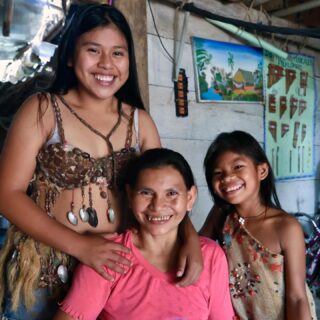
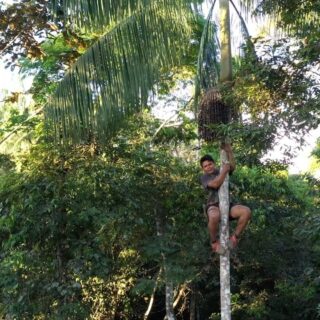
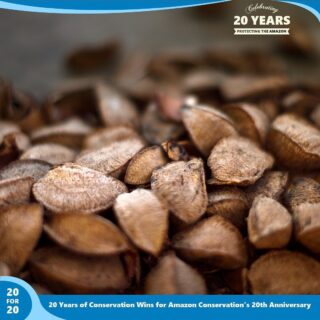
The indigenous Tacana people protect a vast tract of rainforest in the Bolivian Amazon. They rely on the sustainable harvest of wild Brazil nuts and other natural resources from their forest for income and for food, shelter, and medicine. Even in this remote region , the threat of deforestation is growing.
Amazon Conservation Association and the Tacana people of the Madre de Dios River have worked together since 2006 to protect their ancestral territory, build the communities’ capacity for forest management, and allow them to earn a living from the harvest of Brazil nuts. Today, all our progress in this area is being threatened with the withdrawl of USAID.
That is why we are reaching out to our supporters. We need to raise $86,000 to carry out the work already planned with the Tacana in the Bolivian Amazon through the end of 2013. Thankfully, a generous ACA board member has already offered a dollar-for-dollar match for all donations we receive toward this project. That means your donation will have double the impact.
Can YOU contribute today to help us ensure that this vital work with the Tacana people continues? A donation of any size will help us meet this goal. THANK YOU!
Produced by ACA board member Sarah duPont and starring ACA co-founder Enrique Ortiz, Amazon Gold is an account of the environmental destruction caused by illegal gold mining along Peru's Madre de Dios River. Narrated by Academy Award winners Sissy Spacek and Herbie Hancock, the film has had several screenings in the U.S., and was written about in the February 2012 edition of the Smithsonian Magazine. For more information about illegal mining in Madre de Dios and what you can do to help, please see our fact sheet on the issue or watch the short video above from LinkTV.
ACA is pleased to welcome Jeff Woodman as Executive Director as of January 14, 2011. Jeff has been a key member of ACA's leadership team since 2009 as a member of the Board of Directors and its Treasurer since 2011; he looks forward to stepping into a day-to-day management role. A former futures and options trader for Vitol, Inc., Jeff is an expert financial analyst, serves on the boards of several conservation organizations, and is a passionate birder and conservationist. We wish outgoing Executive Director, Luis Felipe Duchicela, the very best in his new appointment as a Senior Adviser for Indigenous Peoples at the World Bank where he will develop safeguards for Bank programs in consultation with indigenous peoples around the world.
ACA is partnering with the Amazon Aid Foundation (AAF) through its AcreCare program to help protect 100,000 acres of Amazonian rainforest in the Madre de Dios department of Peru. Founded by ACA board member Sarah DuPont, AAF's mission is to bring awareness and environmental sustainability to the Amazon rainforest through multi-media educational materials while assisting partners on the ground who provide solutions to the issues.
AcreCare is an exciting, interactive way to adopt a piece of rainforest and protect it for 40 years. Please visit AcreCare's website and adopt an acre to help ACA and AAF protect the rainforest of southeastern Peru … one acre at a time!
Amazon Conservation Association (ACA) is delighted to share news of some recent successes in community-based conservation. With ACA support, three new protected areas were established in the Andes-Amazon region over the past few months! Created with community engagement and participation, these new private conservation areas (PCA), covering 46,659 acres, will contribute to the protection of one of the most biologically rich places on the planet: the tropical Andes of southeastern Peru.
The highland community of Japu created the 46,196-acre Ukumari Llaqta PCA, which ranges from Andean highlands to Amazonian foothills in the Cusco department, and ensures a refuge for those species expected to be forced to migrate upslope to escape the impacts of climate change. The Pillco Grande community also established the 406-acre Pumataki PCA in Cusco, whose rich grassland and cloud forest ecosystems share a border with the world-famous Manu National Park. ACA worked closely with the Japu and Pillco Grande communities to train and equip community park guards as well as to move the PCA designation process forward. These activities and new conservation area declarations in Cusco were made possible in part through the generous support of the Norwegian Agency for Development Cooperation (Norad). Watch a video about this project here.
In addition, the new 57-acre San Juan Bautista PCA, located in the buffer zone of the Tambopata National Reserve in the department of Madre de Dios, was set aside by a local family who wishes to preserve forests for their grandchildren and to carry out ecotourism, research, and education activities. With support from the Gordon and Betty Moore Foundation, ACA provided technical support, along with the legal documentation to obtain the PCA designation. This very recent addition to the National System of Protected Areas will help to guarantee conservation efforts in this brilliantly diverse region that is part of the Manu-Tambopata biological corridor.
Peru’s Andes-Amazon region’s rich biological diversity is matched only by its cultural diversity. In the case of two communities in southeastern Peru near Manu National Park, the lowland Wachiperi and the highland Q’eros, Amazon Conservation Association’s conservation programs are complemented by the work of ethnomusicologist Dr. Holly Wissler, who is partnering with the communities to preserve their cultures through music. We were pleased to invite friends and supporters in the Washington, DC area on November 14th and 15th, 2011, to two talks by Dr. Wissler, one at the ACA office and one at the National Museum of the American Indian. See a flyer about this event.
In August 2011, ACA hosted its inaugural Birdathon in celebration of the immense diversity of bird species in southeastern Peru. For ACA's Birdathon, a group of conservationist birders traveled a route from the highlands to the lowlands alongside Manu National Park for a week while counting the number of bird species they saw. Their goal was to support conservation of southeast Peru’s globally important forests and the birds dependent on them by seeking sponsors to pledge an amount per bird seen or make a donation to the event. Read more »
ACA recently collaborated with WWF’s Conservation Science Programme, WWF Peru, the Carnegie Institution’s Department of Global Ecology, and the Peruvian Ministry of the Environment (MINAM) to create the first high-resolution maps of natural carbon storage in the forests around Madre de Dios, Peru. This development is exciting, as it provides us with the data necessary to explore and promote the value of standing forests.
These forests store immense amounts of carbon dioxide. Deforestation prevents the trees from performing this important service, and thus forest preservation and reforestation are being pursued as an innovative mechanism to address climate change. This strategy, commonly referred to as REDD (Reduced Emissions from Deforestation and forest Degradation), would provide an economic incentive for developing countries to participate in forest management and protection programs.
The maps were created using a unique combination of satellite, laser (LiDAR) and ground plot methodologies. This is considered the most accurate and efficient evaluation in history. The project’s success will allow similar surveys to be implemented in other parts of the world, helping countries to assess and understand the value of leaving their forests intact. These findings were originally published in the Proceedings of the National Academy of Sciences. Funding for the work was provided by the Government of Norway and the Gordon and Betty Moore Foundation. Read more (pdf) and see the article on Mongabay »
The Amazon Conservation Association (ACA), in partnership with the American Bird Conservancy and the World Land Trust, recently provided funding for the purchase of 7,576 acres (3,066 hectares) of land in southern Peru by ACA's sister organization, La Asociación para la Conservación de la Cuenca Amazónica (ACCA). Located near the Rio Pini Pini and the Rio Tono in the Manu Biosphere Reserve, the land is particularly esteemed for its bird activity, as it is home to more than 600 known species. This purchase will help to ensure the protection and prosperity of wildlife in the region.
The property, known as Villa Carmen, contains old-growth rainforest, streams, waterfalls, and a wide variety of flora and fauna. It also has an all-weather road and an airstrip, accessible by both car and plane. ACCA will oversee management of Villa Carmen, which will be used to promote sustainable agroforestry and aquaculture, host educational programs, and further incorporate local communities into conservation efforts. ACA is extremely excited about these developments, and encourages you to check back for updates on Villa Carmen’s progress!
An October 2009 newsletter from USAID features Sara Hurtado, a Brazil nut harvester in the Madre de Dios region of Peru, who has turned her three-month-per-year Brazil nut harvesting job into a year-round sustainable enterprise. Sara has been working in conjunction with the ACA’s Brazil nut program which has helped nearly 500 local families acquire Brazil nutconcessions and organic or FSC certifications since 1997, including Sara’s. By establishing a line of Brazil nut candies and desserts Sara is now able to sell her value-added products throughout the year and earn a sustainable livelihood to support her family. Read more (pdf) about Sara’s story. Or watch her on the BBC (video in Spanish).
NPR's "All Things Considered" recently ran a series about Peru's Interoceanic Highway after accompanying ACA staff on a trip starting in the high Andes and ending in the Amazon. This four-part series by Lourdes Garcia-Navarro, featuring quotes from ACA Board members Enrique Ortiz, Adrian Forsyth, and Bruce Babbitt, was aired September 14-17, 2009. Part 1 is about economic opportunity and the highway. Part 2 is about gold. Part 3 focuses on threats to conservation and Brazil nut concessions. And Part 4 is about ACA's Los Amigos Conservation Concession! Read more about the series on the NPR site.
The Amazon Conservation Association partnered with Jack Johnson to help offset the carbon emissions from his summer 2008 “Sleeping through the Static” tour. Carbon emissions from buses, trucks, planes, hotels, and other emissions by the band and tour staff were calculated and converted into a monetary equivalent. These funds were donated to ACA through Jack Johnson's charitable fund “All at Once” and will help protect over 1,000 acres of rainforest in the Los Amigos Biological Station in the Peruvian Amazon, offsetting more than 2,000 tons of carbon dioxide each year.
Offsetting carbon is one of many important ways to support ACA in protecting the rainforest and preserving its rich biodiversity. You too can support ACA by donating now.
On May 22, 2009, ACA’s Peruvian sister organization, ACCA (Asociación para la Conservación de la Cuenca Amazónica), was officially recognized by the Professional Association of Peruvian Biologists (Cusco, Apurimac and Madre de Dios chapters) for excellence in sustainable resource management. The award ceremony was held at the Cusco Town Hall.
Previous to this, on June 5, 2008, ACCA also won an award for environmental management from the regional government of Cusco for its work supporting the Haramba Queros Wachiperi indigenous community in establishing an ecological reserve. The award also recognized ACCA’s protection of 360,000 acres of land at the Los Amigos Conservation Concession and the 618,000-plus acres of Brazil nut conservation concessions ACCA has helped to establish, benefiting 420 families.
Community guards of the new Pumataki Private Conservation Area in Cusco, Peru. Photo: Karen Eckhardt
How many birds were counted during the first annual birdathon?? Find out. Long-tailed Sylph (Aglaiocercus kingi) at Wayqecha. Photo: Francisco Llacma
ACA supported the development of a new high-resolution airborne and satellite mapping approach that provides detailed information on carbon stocks in the Amazon. Source: Carnegie Airborne Observatory, Carnegie Institution for Science
Former ACA Executive Director César Morán and Ecosystem Services Coordinator Augusto Mulanovich, second and third from right with members of the Peruvian congress and the Ministry of Environment. Photo: Augusto Mulanovich
View of Villa Carmen, the new 7,400 acre property purchased by ACA for conservation. Photo: Megan MacDowell
Brazil nut harvester and entrepreneur Sarah Hurtado. Photo: Miguel Moran

Participants registering for REDD Workshop. Photo: Miguel Moran
Jack Johnson at Pavilhao Atlantico, Lisbon, Portugal. Photo: K. Johnson
ACCA Cusco staff receiving award on May 22, 2009. Photo: ACCA
Recognition plaque awarded to ACCA by the Regional Government of Cusco. Photo: Miguel Moran
© Amazon Conservation Association. All rights reserved. / Home
1822 R St NW · Fourth Floor · Washington DC 20009 · USA / 202-234-2356 /
U.S. Federal Employees: Consider a contribution to ACA through the Combined Federal Campaign! CFC code: #49371