When Technology Meets Action: Driving Down Illegal Deforestation in the Amazon
February 20, 2026
Illegal deforestation in the Amazon often moves faster than governments can respond, especially in remote Indigenous territories affected by illegal gold mining. Over the past five years, Amazon Conservation’s Technology Meets Policy initiative worked to close that gap by linking real-time monitoring with coordinated enforcement and stronger governance. Indigenous leadership and strengthening of local partners through technology transfer were central to this effort, because ancestral and territorial knowledge is often what transforms data into real protection on the ground.
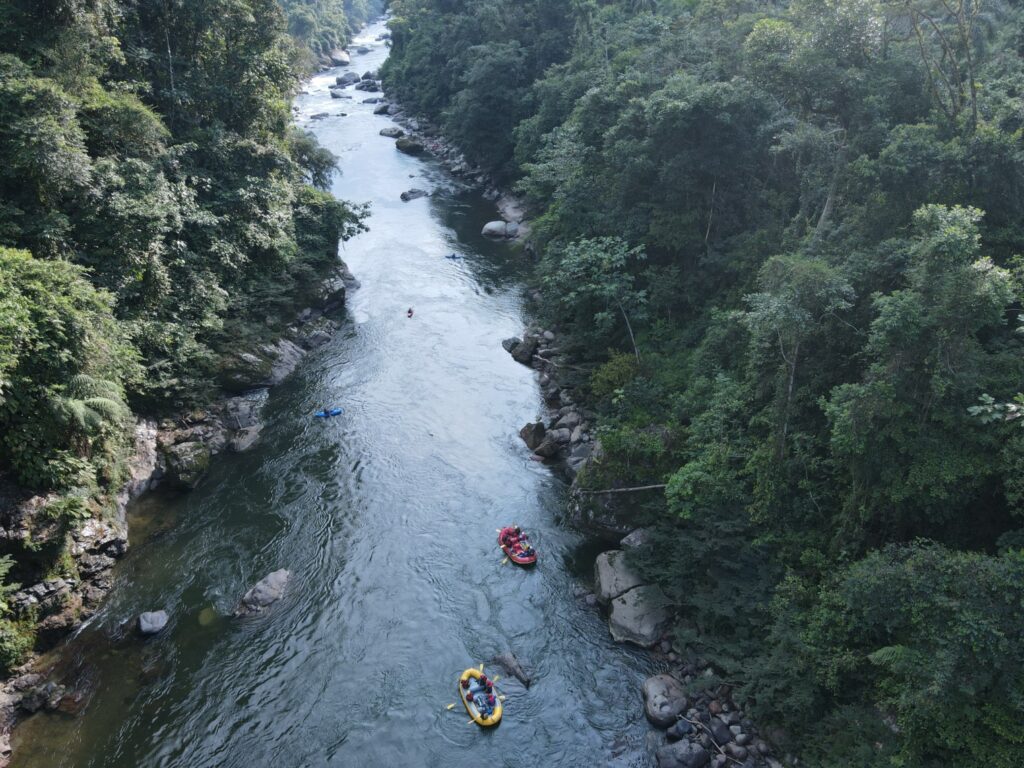 The results are measurable and reflected in concrete enforcement actions. Illegal deforestation dropped significantly across Indigenous territories supported by the project. In Peru, deforestation fell 43% across FENAMAD beneficiary communities compared to 2020 levels. In Ecuador, deforestation also declined in Waorani and Shuar Arutam territories over the same period. These gains reflect improved detection and stronger coordination among Indigenous leaders, civil society organizations, and government authorities responding to illegal mining and other drivers of forest loss.
Closing the gap between detection and enforcement
Illegal mining and forest clearing can expand quickly, while investigations, coordination, and legal processes often lag behind. This project addressed these challenges by connecting Amazon Conservation’s MAAP (Monitoring of the Andes Amazon Program), which delivers high-resolution, timely satellite analysis, with strengthened Indigenous territorial monitoring, legal collaboration, and improved government coordination.
Satellite alerts did not remain data points. Community monitors translated them into documented evidence, supported through legal channels, and shared through confidential intelligence reports with environmental agencies, prosecutors, and police. In Peru, the project strengthened and helped decentralize the National System of Monitoring and Control, an inter-institutional mechanism that supports faster coordination among environmental, prosecutorial, police, and other authorities to respond to forest crime. In Ecuador, Fundación EcoCiencia now leads 100% of MAAP’s real-time monitoring nationally, reinforcing independent civil society leadership and sustained collaboration with public institutions.
Through sustained collaboration, technical exchange, and joint analysis, local partners deepened their ability to interpret satellite data, document cases, navigate legal pathways, and engage directly with public authorities. In Peru, this included close coordination with FENAMAD to reinforce Indigenous leadership in territorial defense. In Ecuador, collaboration with Fundación EcoCiencia helped institutionalize an independent national monitoring capacity. Together, these efforts strengthened governance systems that can respond to forest crime over time.
From satellite image to government response
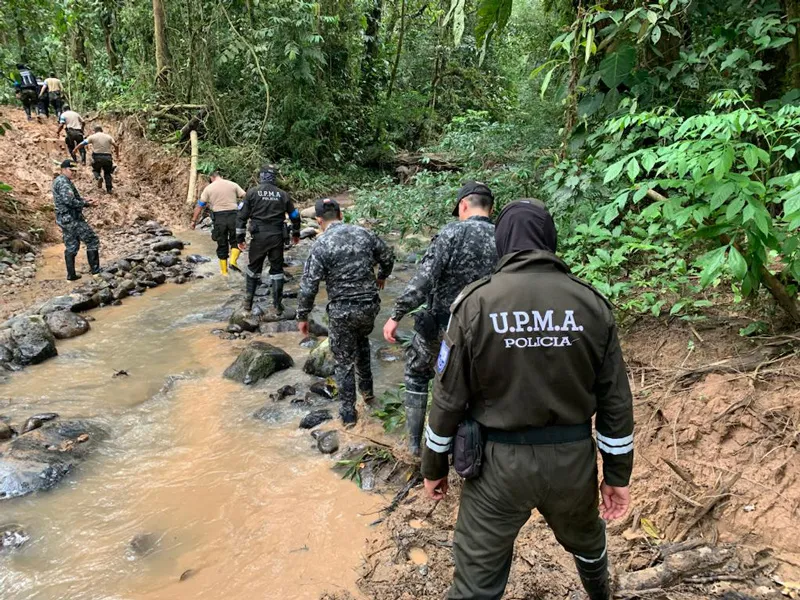 By linking monitoring to action, MAAP analysis supported concrete enforcement efforts, including, for example, Ecuador’s Operation Manatí III in 2023, which covered 8,500 acres (about 3,500 hectares) and resulted in the seizure of excavators and mining equipment. In Peru, timely confidential reports and Indigenous-led monitoring supported investigations and government operations in high-risk areas affected by illegal gold mining.
For communities facing invasions into their territories, satellite imagery, photos, and field documentation strengthen legal pathways and reinforce safeguards for environmental defenders operating under increasing pressure. As Julio Cusurichi Palacios, Indigenous leader from the Peruvian Amazon and former president of FENAMAD, explains, “The information is very important because in one way or another it supports what one can make known. If there is an invasion in a community’s territory, it can be relayed by phone, but it is much better when there is photographic or video evidence.”
The project also contributed to policy progress. In 2025, Ecuador advanced its Organic Law to Strengthen Protected Areas, reinforcing the legal framework governing protected areas. Across both countries, Indigenous organizations, civil society partners, and public authorities worked to ensure that monitoring insights could move through institutional channels and prompt timely responses.
What comes next
The results show that technology alone does not reduce illegal deforestation. Impact comes when timely data is paired with Indigenous leadership, coordinated civil society engagement, and institutions prepared to respond.
Building on this five-year foundation, supported by the Norwegian government through Norad and its International Climate and Forest Initiative (NICFI), and as MAAP marks its 10th anniversary, Amazon Conservation is now scaling this approach, with our Norwegian partners continuing to support the next phase of this work.
In addition to continuing efforts in Peru and Ecuador, the expansion now includes Bolivia, strengthening Indigenous and civil society leadership while broadening coordinated monitoring and enforcement across priority regions of the Amazon. Timely detection of mining-driven deforestation, together with Amazon Mining Watch, a new AI-based monitoring platform that tracks mining-related deforestation across the Amazon, will further reinforce basin-wide efforts to address forest crime.
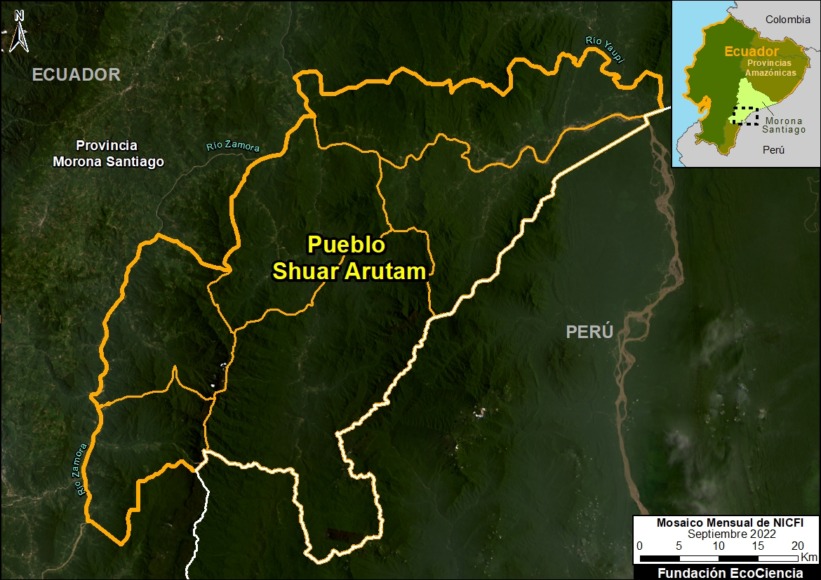 For Indigenous peoples and local communities, this work is about rights, safety, and the ability to defend territories for future generations. As Marco Martinez, Territorial Executive of the Shuar Arutam Indigenous Community of Ecuador, put it: “The Shuar Arutam will always fight because that is our right. To those who want to silence our voice, behind me stand other generations, our children’s children, and all the Indigenous peoples of the world who will continue fighting against those who threaten our communities.”
Working alongside Conservación Amazónica ACCA in Peru, Fundación EcoCiencia in Ecuador, and the Federación Nativa del Río Madre de Dios y Afluentes FENAMAD, this collaboration strengthened regional coordination to turn monitoring into action. With continued support from the Norwegian government’s International Climate and Forest Initiative NICFI, the initiative is now expanding to Bolivia through Conservación Amazónica ACEAA.
Regional partners:


Supported by:



Implemented by:
 Loading...