Amazon Conservation At The GCF Task Force Annual Meeting in Caquetá, Colombia
June 1, 2026
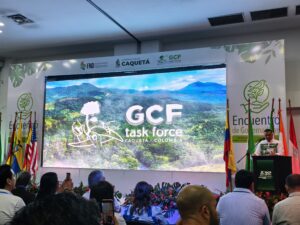 Earlier this month, Amazon Conservation joined climate and forest leaders from around the world at the 16th Annual Meeting of the Governors’ Climate and Forests Task Force (GCF Task Force), held in Caquetá, Colombia from May 18–22, 2026. The GCF Task Force unites 45 subnational governments across 11 countries, representing more than a third of the world’s tropical forests.The meeting brought together subnational governments, Indigenous Peoples and local communities, civil society, and the private sector around the theme “New Forest Economy for Climate Action: Territorial Development and Innovation.”
At the meeting, Amazon Mining Watch was highlighted as a valuable tool in the fight against illegal gold mining across the Amazon basin . Discussions made clear that more tools of this kind are urgently needed. Amazon’s Conservation participation in spaces like this is invaluable for building the alliances and cross-sector collaboration required to make lasting progress.
Andrés Santana, Amazon Conservation’s Senior Manager for Combating Illegal Deforestation, shared his reflections on the meeting: “Since its creation, the GCF Task Force has been mainly oriented to building a forest-based economy, highlighting the role that regional governments can play. This year’s annual meeting was a milestone because organizers and members are increasingly acknowledging the importance of tackling environmental crimes that are preventing the enabling conditions necessary for a thriving bioeconomy.”
The week also included field visits across Caquetá, where participants explored community-led initiatives in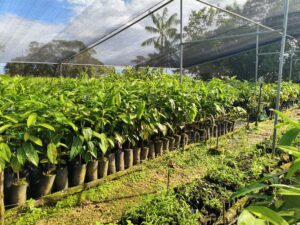 sustainable ranching, agroforestry, and bioeconomy, living proof that forest-compatible economies are not just possible, but already being built. “During the field visit to the “Territorial Space for Training and Reintegration – ETCR Aguabonita” we could witness first hand how a new and prosperous forest economy can help social reconciliation in post conflict zones by harvesting and transforming fruits such as Açaí, Canangucha, Copoazú and other Amazonian products. That is true peace with nature” states Santana.
At Amazon Conservation, we recognize the importance of these initiatives for long-term forest conservation. Visiting them is an opportunity to learn, connect, and strengthen our work across the region.
 Loading...