When Technology Meets Action: Driving Down Illegal Deforestation in the Amazon

Illegal deforestation in the Amazon often moves faster than governments can respond, especially in remote Indigenous territories affected by illegal gold mining. Over the past five years, Amazon Conservation’s Technology Meets Policy initiative worked to close that gap by linking real-time monitoring with coordinated enforcement and stronger governance. Indigenous leadership and strengthening of local partners through technology transfer were central to this effort, because ancestral and territorial knowledge is often what transforms data into real protection on the ground.

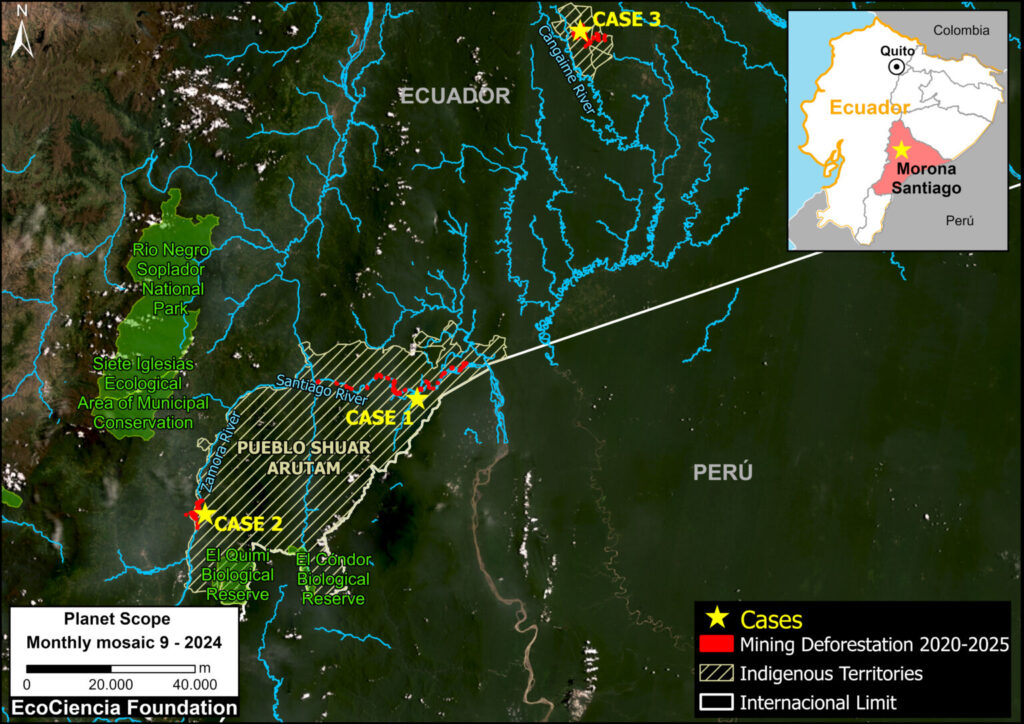
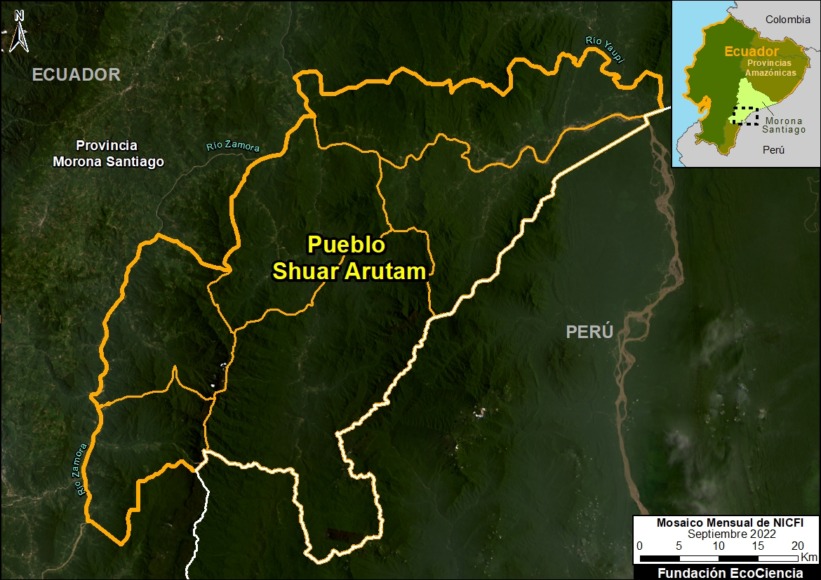
The results are measurable and reflected in concrete enforcement actions. Illegal deforestation dropped significantly across Indigenous territories supported by the project. In Peru, deforestation fell 43% across FENAMAD beneficiary communities compared to 2020 levels. In Ecuador, deforestation also declined in Waorani and Shuar Arutam territories over the same period. These gains reflect improved detection and stronger coordination among Indigenous leaders, civil society organizations, and government authorities responding to illegal mining and other drivers of forest loss.
Closing the gap between detection and enforcement

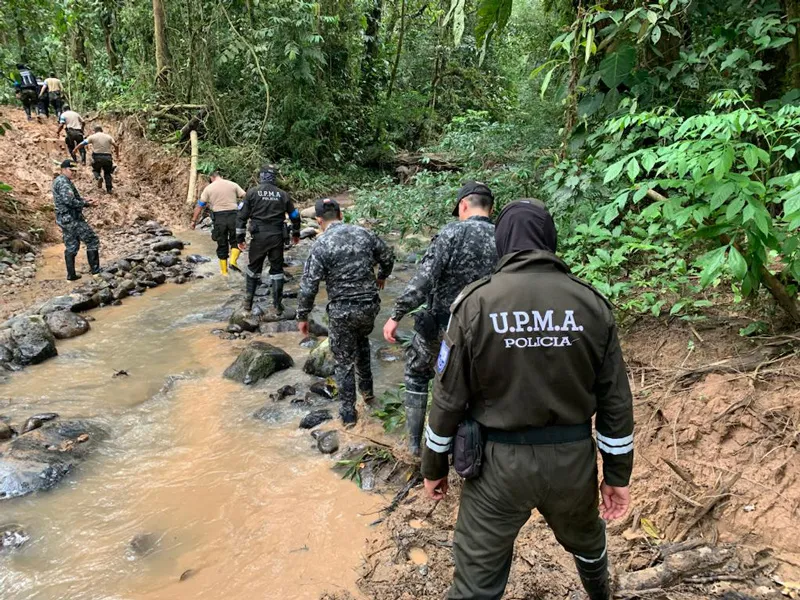
Illegal mining and forest clearing can expand quickly, while investigations, coordination, and legal processes often lag behind. This project addressed these challenges by connecting Amazon Conservation’s MAAP (Monitoring of the Andes Amazon Program), which delivers high-resolution, timely satellite analysis, with strengthened Indigenous territorial monitoring, legal collaboration, and improved government coordination.

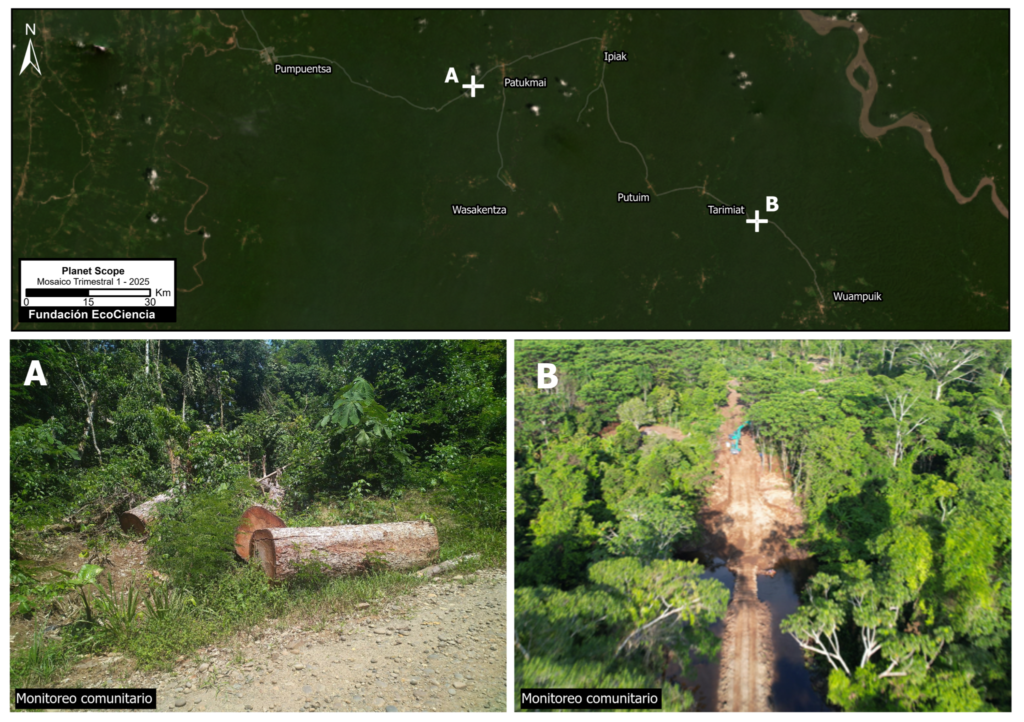
Satellite alerts did not remain data points. Community monitors translated them into documented evidence, supported through legal channels, and shared through confidential intelligence reports with environmental agencies, prosecutors, and police. In Peru, the project strengthened and helped decentralize the National System of Monitoring and Control, an inter-institutional mechanism that supports faster coordination among environmental, prosecutorial, police, and other authorities to respond to forest crime. In Ecuador, Fundación EcoCiencia now leads 100% of MAAP’s real-time monitoring nationally, reinforcing independent civil society leadership and sustained collaboration with public institutions.

Through sustained collaboration, technical exchange, and joint analysis, local partners deepened their ability to interpret satellite data, document cases, navigate legal pathways, and engage directly with public authorities. In Peru, this included close coordination with FENAMAD to reinforce Indigenous leadership in territorial defense. In Ecuador, collaboration with Fundación EcoCiencia helped institutionalize an independent national monitoring capacity. Together, these efforts strengthened governance systems that can respond to forest crime over time.

From satellite image to government response

By linking monitoring to action, MAAP analysis supported concrete enforcement efforts, including, for example, Ecuador’s Operation Manatí III in 2023, which covered 8,500 acres (about 3,500 hectares) and resulted in the seizure of excavators and mining equipment. In Peru, timely confidential reports and Indigenous-led monitoring supported investigations and government operations in high-risk areas affected by illegal gold mining.
For communities facing invasions into their territories, satellite imagery, photos, and field documentation strengthen legal pathways and reinforce safeguards for environmental defenders operating under increasing pressure. As Julio Cusurichi Palacios, Indigenous leader from the Peruvian Amazon and former president of FENAMAD, explains, “The information is very important because in one way or another it supports what one can make known. If there is an invasion in a community’s territory, it can be relayed by phone, but it is much better when there is photographic or video evidence.”

The project also contributed to policy progress. In 2025, Ecuador advanced its Organic Law to Strengthen Protected Areas, reinforcing the legal framework governing protected areas. Across both countries, Indigenous organizations, civil society partners, and public authorities worked to ensure that monitoring insights could move through institutional channels and prompt timely responses.

What comes next

The results show that technology alone does not reduce illegal deforestation. Impact comes when timely data is paired with Indigenous leadership, coordinated civil society engagement, and institutions prepared to respond.

Building on this five-year foundation, supported by the Norwegian government through Norad and its International Climate and Forest Initiative (NICFI), and as MAAP marks its 10th anniversary, Amazon Conservation is now scaling this approach, with our Norwegian partners continuing to support the next phase of this work.

In addition to continuing efforts in Peru and Ecuador, the expansion now includes Bolivia, strengthening Indigenous and civil society leadership while broadening coordinated monitoring and enforcement across priority regions of the Amazon. Timely detection of mining-driven deforestation, together with Amazon Mining Watch, a new AI-based monitoring platform that tracks mining-related deforestation across the Amazon, will further reinforce basin-wide efforts to address forest crime.

For Indigenous peoples and local communities, this work is about rights, safety, and the ability to defend territories for future generations. As Marco Martinez, Territorial Executive of the Shuar Arutam Indigenous Community of Ecuador, put it: “The Shuar Arutam will always fight because that is our right. To those who want to silence our voice, behind me stand other generations, our children’s children, and all the Indigenous peoples of the world who will continue fighting against those who threaten our communities.”

Working alongside Conservación Amazónica ACCA in Peru, Fundación EcoCiencia in Ecuador, and the Federación Nativa del Río Madre de Dios y Afluentes FENAMAD, this collaboration strengthened regional coordination to turn monitoring into action. With continued support from the Norwegian government’s International Climate and Forest Initiative NICFI, the initiative is now expanding to Bolivia through Conservación Amazónica ACEAA.


Regional partners:
           

Supported by:


Implemented by:

Amazon Conservation Convenes Regional Partners to Combat Illegal Gold Mining in the Amazon

Illegal gold mining continues to grow exponentially across the Amazon Basin, crossing the borders of the nine countries it encompasses, and causing far-reaching environmental and social impacts everywhere it reaches. 

“Gold mining has become a transnational activity that affects the Amazon at scale,” said Andrés Santana, Senior Manager for Combating Illegal Deforestation at Amazon Conservation. “Addressing it effectively requires coordinated action between local organizations, Indigenous leaders, scientific institutions, and governments that goes beyond national borders.”

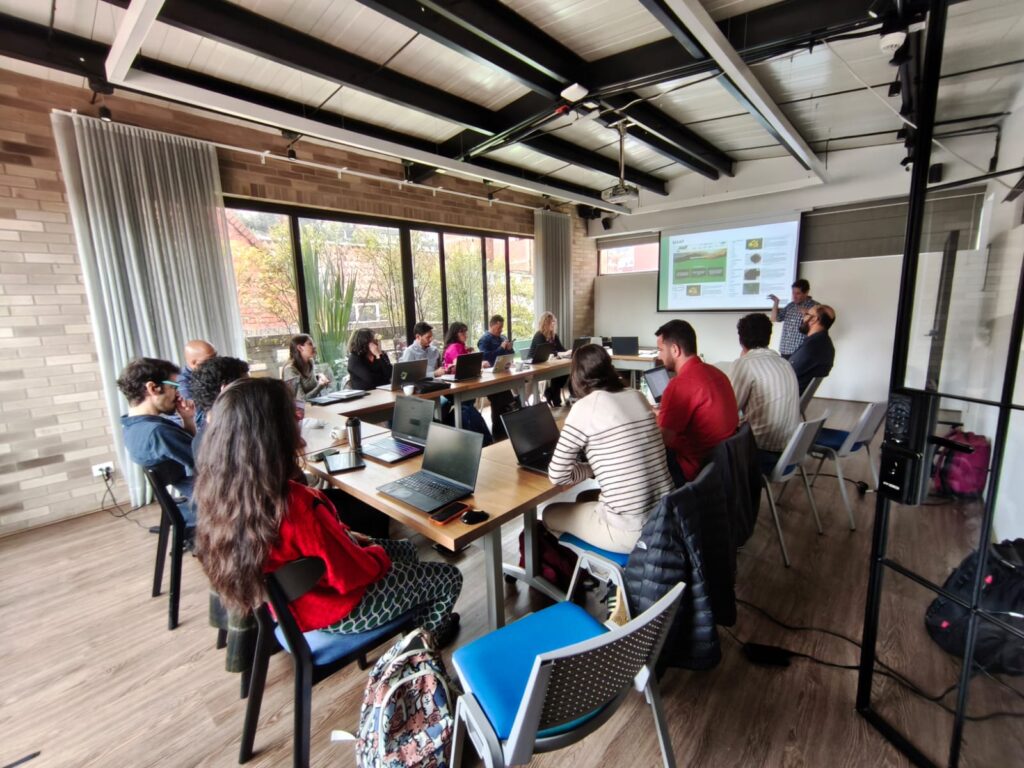
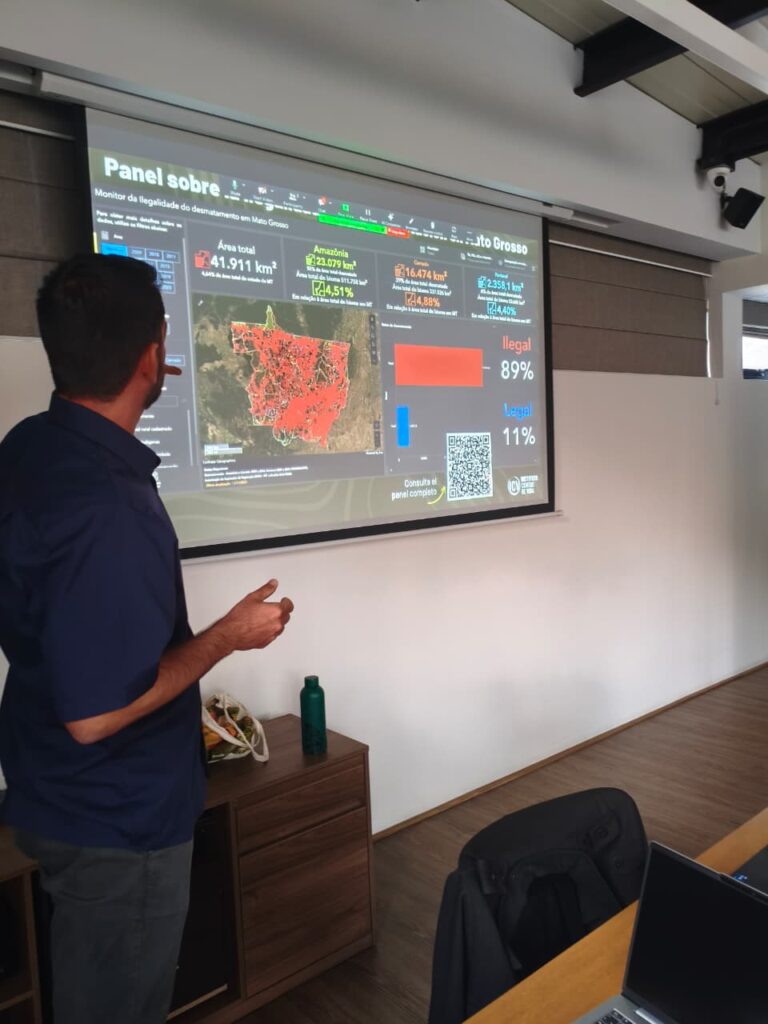
With this shared understanding, Amazon Conservation hosted a high-impact forum in Bogotá, Colombia, with representatives from our network of local partners to strengthen regional coordination to combat illegal gold mining through science, collaboration, and collective action.

From January 28 to 30, technology, policy, and communications experts from seven Amazonian countries had the rare opportunity to share experiences, learn from one another, and advance a shared approach to address Amazon-wide gold mining deforestation, grounded in common methodologies and lessons learned.

Building on Amazon Conservation’s efforts to date to halt deforestation, our team highlighted the tools and advances that are driving progress, including Amazon Mining Watch, a new AI-based monitoring platform created jointly with Earth Genome and the Pulitzer Center, and stronger ongoing analysis from the satellite monitoring experts at our Monitoring of the Andes Amazon Program (MAAP). 

Representatives from our partners Conservación Amazónica-ACCA, Conservación Amazónica-ACEAA, Amazon Conservation Team, Conservation Strategy Fund, Federación Nativa del Río Madre de Dios y Afluentes (FENAMAD), Fundación EcoCiencia, Fundación para la Conservación y el Desarrollo Sostenible (FCDS), Instituto Centro de Vida (ICV), and Instituto Socioambiental (ISA) shared monitoring innovations in each country and how they are converting data into action on the ground.

For Fundación EcoCiencia, the forum reinforced why collaboration across the entire Amazon is essential. “We can’t address these threats in isolation,” said Jorge Villa, MAAP Coordinator at Fundación EcoCiencia. “Working together at an Amazon-wide level allows us to learn from what has worked and what has not, and to better engage governments across countries to combat illegal mining more effectively.”

Sessions at a glance

The technical and policy sessions were focused on strengthening regional responses to illegal gold mining across the Amazon. Topics included real-time monitoring with Amazon Mining Watch and MAAP, the use of mining impact assessment tools, coordination protocols with government 

authorities, Indigenous and civil society-led monitoring experiences, country-level responses to illegal mining, and comparative analysis of mining policies across the Amazon basin, including emerging trends in Suriname and Guyana.

The event also included a dedicated communication and advocacy session focused on strengthening the translation of scientific analyses into awareness, education, and activism to drive greater policy and field action. Representatives from the Pulitzer Center and the Foundation for Conservation and Sustainable Development (FCDS) shared successful case studies to showcase the role of investigative journalism, strategic storytelling, and data-driven narratives to inform public opinion and influence decision-making. Building on each other’s experience, participants took vital steps to develop a common communication strategy to support coordinated advocacy and policy efforts at national and pan-Amazonian scales. By bringing together fellow civil society organizations, Indigenous leaders, and technical experts, the forum marked an important step toward deeper regional collaboration to combat illegal gold mining and protect the Amazon.

This forum was made possible by generous support from the Gordon and Betty Moore Foundation.

Gold Mining Expands into Protected Areas in Suriname, New Study Finds

Drawing on 24 years of satellite data, the analysis maps gold-mining deforestation across the country and shows recent incursions into protected areas.

A new analysis by Amazon Conservation Association’s Monitoring of the Andes Amazon Program (MAAP), combining over two decades’ worth of satellite data with recent AI monitoring results from Amazon Mining Watch, reveals that gold mining has impacted an estimated 92,000 hectares (approximately 227,000 acres) of forest in Suriname over the past 24 years, an area larger than New York City.

Just as similar MAAP analyses have revealed rapid expansions of gold mining across the Amazon in countries such as Peru, Ecuador, and Colombia, the data now show a comparable pattern emerging in Suriname.

Using high-resolution satellite imagery dating back to 2001, this report provides the first comprehensive, data-driven assessment focused exclusively on deforestation caused by gold mining activities in the Surinamese Amazon. The long-term historical analysis is based on data from the University of Maryland, while evidence of new mining activity is provided by Amazon Mining Watch, a recently launched AI platform developed through a partnership between Amazon Conservation Association, Earth Genome, and the Rainforest Investigations Network of the Pulitzer Center, with support from the Gordon and Betty Moore Foundation. A gold mining path is clearly visible in the satellite images. 

Approximately 3,000 hectares (equivalent to 7,400 acres) of new gold mining deforestation have been detected over the past five years, with activity increasingly encroaching on protected areas. In recent years, nearly 10% of Brownsberg Nature Park has been affected by mining-driven deforestation, while Brinckheuvel Nature Reserve is beginning to experience a mining invasion, highlighting growing pressure on conservation areas.

“The intensifying gold mining deforestation in Suriname is particularly concerning,” notes Matt Finer, Senior Research Specialist and Director of Amazon Conservation Association’s MAAP initiative. “It reflects the same expanding pattern that we have heavily documented in other Amazonian countries, including Peru, Ecuador, and Colombia. This deforestation is having a devastating impact on many iconic protected areas such as Brownsberg Nature Park.”

Turning Information into Action

These findings have already contributed to ongoing dialogues with key decision makers in Suriname. A confidential report based on this analysis was shared with the Surinamese government, helping inform discussions on responses to illegal gold mining in the region. According to Finer, “this type of precise monitoring is essential for enabling authorities and partners on the ground to respond more effectively to illegal mining and prevent irreversible environmental damage.” In response to this report and related information, the Suriname government has indicated plans to tighten its approach to illegal gold mining in Brownsberg Nature Park.

This analysis was developed in collaboration with Amazon Conservation Association’s local partner, Amazon Conservation Team, and was generously made possible by the Gordon and Betty Moore Foundation.

Read the full report here: https://www.maapprogram.org/gold-mining-suriname/ 


About Amazon Conservation Association, MAAP, and Amazon Mining Watch

Amazon Conservation is an international conservation nonprofit that has worked for more than 25 years to build a thriving Amazon. Its holistic approach focuses on partnering with local organizations and allies to protect wild places, empower people, and put science and technology to work for conservation.

As part of Amazon Conservation’s efforts to use the latest in science and technology for conservation, the organization leads initiatives such as the Monitoring of the Andes Amazon Program (MAAP) and Amazon Mining Watch. MAAP provides cutting-edge, real-time technical analysis to report on the most urgent cases of deforestation and fires across the Amazon, using the latest satellite-based technology, and produces pan-Amazonian reports on basin-wide issues – such as unsustainable infrastructure, agricultural expansion, and climate change impacts – to drive conservation and policy action. Amazon Mining Watch, a collaboration between Amazon Conservation Association, Earth Genome, and the Pulitzer Center, complements this work by integrating near-real-time AI-based detection of new gold mining activity with land-designation and policy data, helping assess whether mining is likely unauthorized or illegal, and estimating the socio-environmental costs of mining impacts for a more robust analysis. Together, these tools strengthen transparency, accountability, and decision-making to help protect priority areas in the Amazon before irreversible damage occurs.

For more information, visit amazonconservation.org.

Press Contacts

Priscila Steffen, Communications & Public Relations Manager: info@amazonconservation.org.