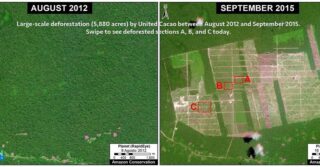
In just eight months illegal gold mining deforestation increased by up to 660% inside protected areas in Brazil’s Juruena River Basin. Rapid expansion of illegal mining inside Juruena National Park highlights persistent challenges for environmental enforcement and protected area governance. Source: MAAP (Monitoring of the Andes Amazon Program), Amazon Conservation.
Cuiabá, Brazil — August 6, 2026 — Illegal gold mining inside Juruena National Park, in the Brazilian Amazon state of Mato Grosso, increased dramatically over an eight-month period, with mining-related deforestation expanding by 660%, according to a new analysis released today by Amazon Conservation and the Instituto Centro de Vida (ICV).
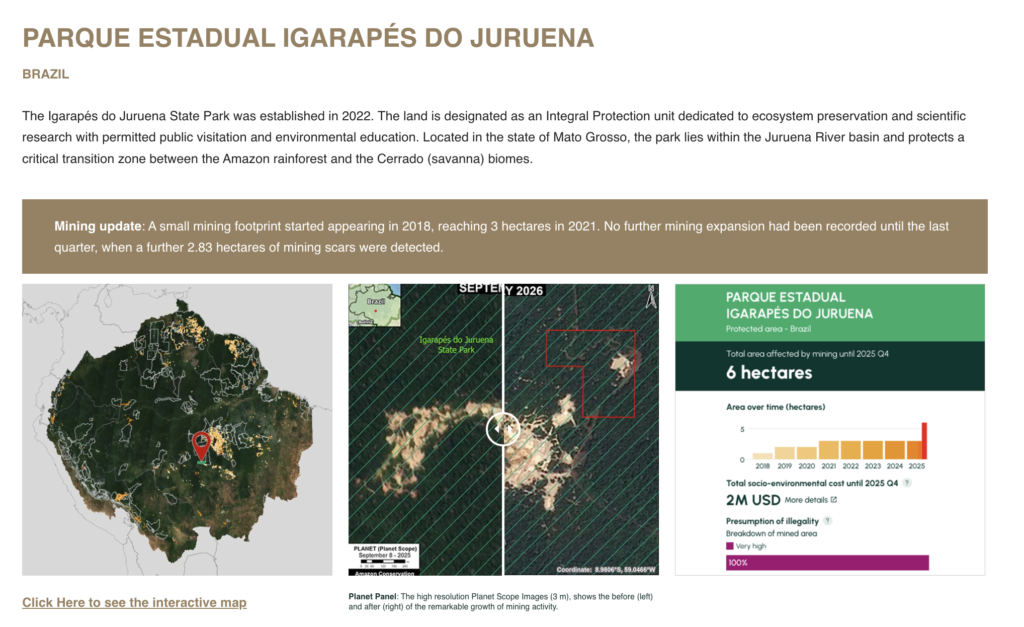
The study also examined illegal mining in the neighboring Igarapés do Juruena State Park, where the area affected by mining-related deforestation increased by 408% during the study period.
Together, these protected areas form a critical conservation mosaic in the southern Brazilian Amazon, helping preserve biodiversity, maintain essential ecosystem services, and slow the advance of deforestation across the region.
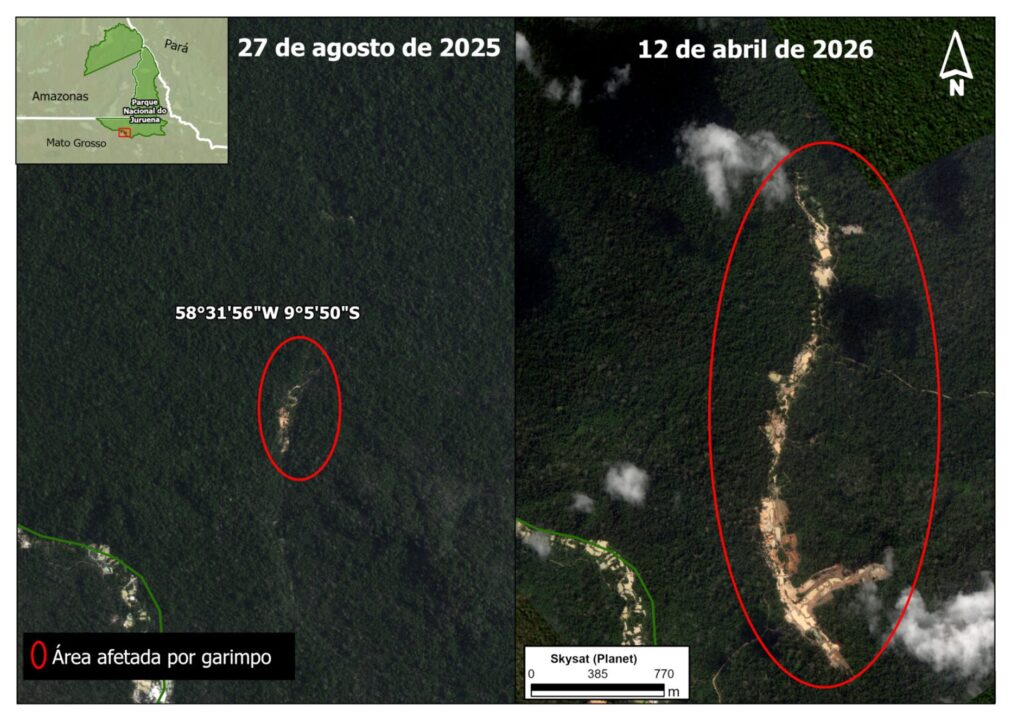 However, the findings show that the rapid expansion of illegal mining is placing increasing pressure on these protected areas, threatening both their ecological integrity and the effectiveness of existing legal protection and enforcement mechanisms.
The analysis is based on mining deforestation alerts generated by MAAP (Monitoring of the Andes Amazon Program), an initiative of Amazon Conservation, using the interpretation of very high-resolution satellite imagery. These alerts were then combined with publicly available geospatial datasets, according to Vinícius Silgueiro, Coordinator of the Territorial Intelligence Center at ICV. “Mining deforestation alerts are validated using satellite imagery with an extremely high level of detail, allowing impacted areas to be accurately mapped and measured. These locations are then cross-referenced with environmental violation records and embargoes issued by IBAMA, ICMBio, and Mato Grosso’s State Environmental Secretariat (SEMA-MT), making it possible to identify where enforcement actions have taken place against illegal mining operations,” said Silgueiro.
Illegal mining deforestation continues to rise
In Juruena National Park, illegal mining activity is concentrated primarily in the park’s southwestern region. Between August 2025 and April 2026, the area deforested by illegal mining increased from 10.5 hectares to 79.5 hectares. The 660% increase in just eight months reflects an intense and rapid expansion of mining operations, including the use of heavy machinery, construction of access roads, and establishment of mining camps. A similar trend was observed in Igarapés do Juruena State Park, where illegal mining is concentrated in the central-southern portion of the protected area. Between June 2025 and March 2026, mining-related deforestation increased from 8.6 hectares to 43.7 hectares. These activities have severe environmental consequences, including forest loss, river sedimentation, increased sediment and organic matter loads in waterways, and the potential contamination of aquatic ecosystems by mercury, threatening biodiversity as well as the food security of local communities.
Repeated enforcement, continued expansion
The increase in illegal mining has not occurred unnoticed by public authorities. Data from Brazil’s Chico Mendes Institute for Biodiversity Conservation (ICMBio) and the Brazilian Institute of Environment and Renewable Natural Resources (IBAMA) show that 15 enforcement operations targeting illegal mining have been conducted inside Juruena National Park since 2010.
Meanwhile, Mato Grosso’s State Environmental Secretariat (SEMA-MT) carried out enforcement actions related to environmental crimes in Igarapés do Juruena State Park in 2020, 2025, and 2026. “Satellite monitoring is already an essential tool in the fight against illegal gold mining. The next step is to connect these alerts with up-to-date information on mining concessions and protected area boundaries, strengthening authorities’ ability to respond and making enforcement actions even more effective,” said Matt Finer, Director of MAAP (Monitoring of the Andes Amazon Project) and Senior Research Specialist at Amazon Conservation.
Read the full report
https://www.maapprogram.org/illegal-mining-juruena-brazil/
Available in English and Portuguese.
Press contact: communications@amazonconservation.org
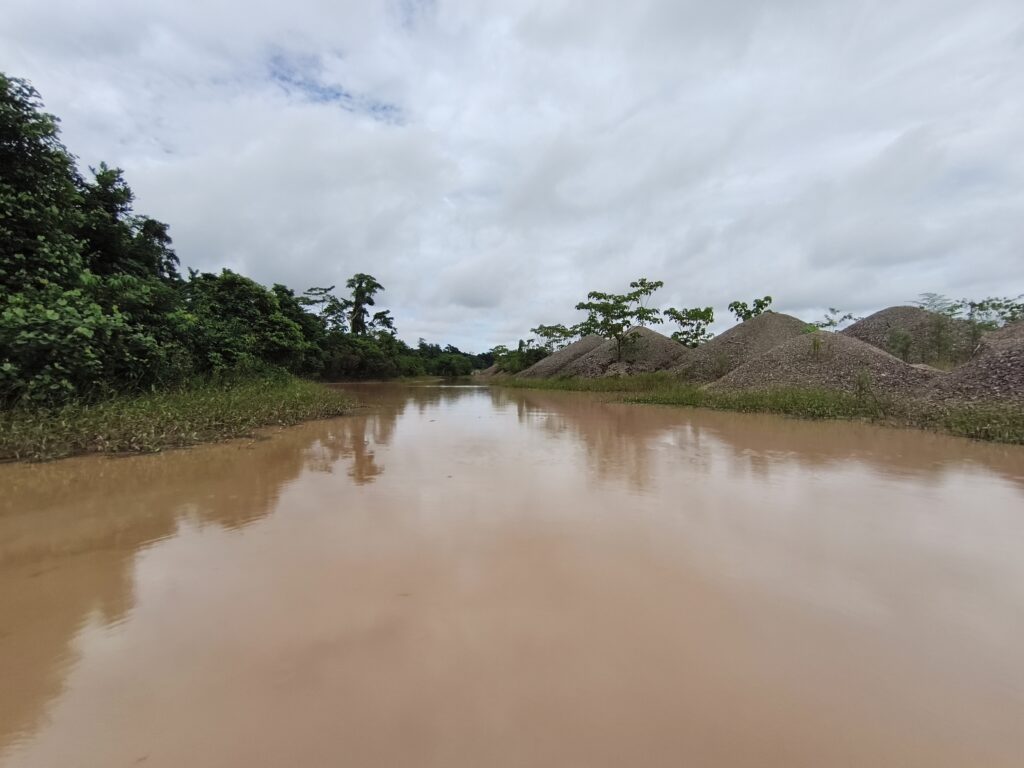
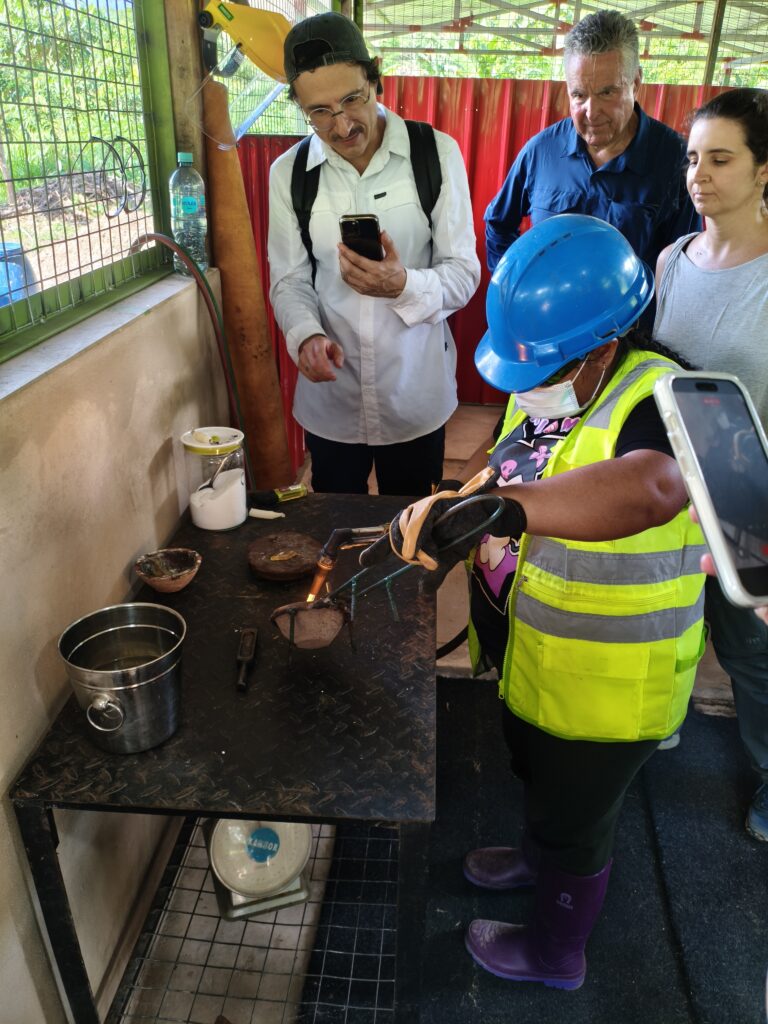 As part of the summit, assistants traveled to the Madre de Dios region of the Peruvian Amazon, one of the areas most heavily impacted by gold mining. There, they witnessed firsthand the scale of forest destruction and water contamination caused by illegal mining operations. At the same time, the visit also highlighted examples of more responsible practices being implemented by some mining cooperatives, including mercury-free gold processing methods and ecological restoration efforts in previously mined areas. The field visit underscored both the complexity of the challenge and the need for solutions that combine environmental protection, responsible livelihoods, and regional cooperation.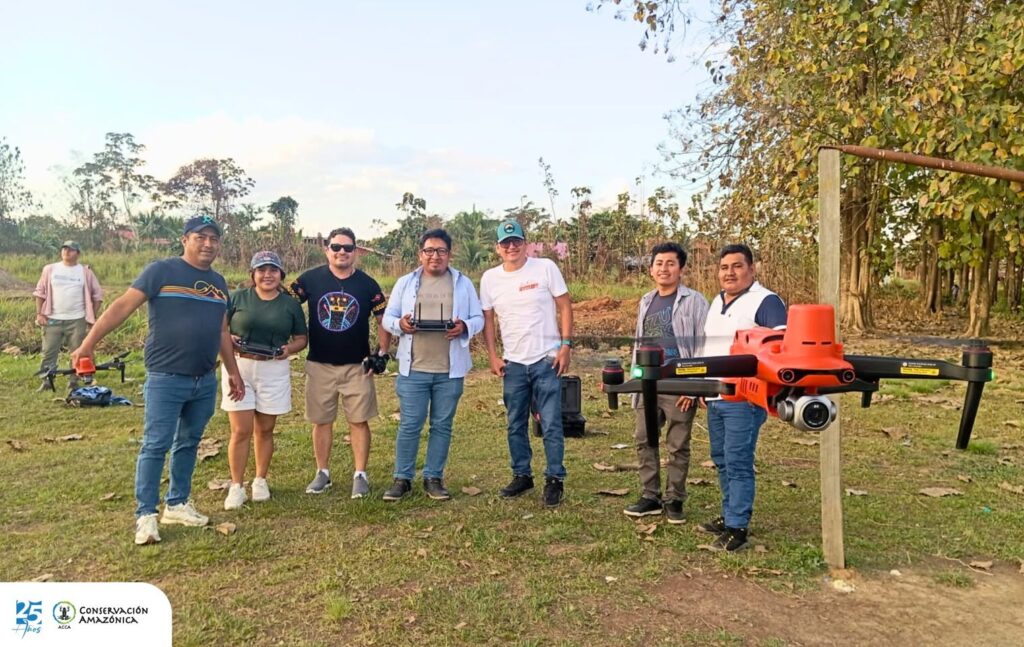
 .
. 
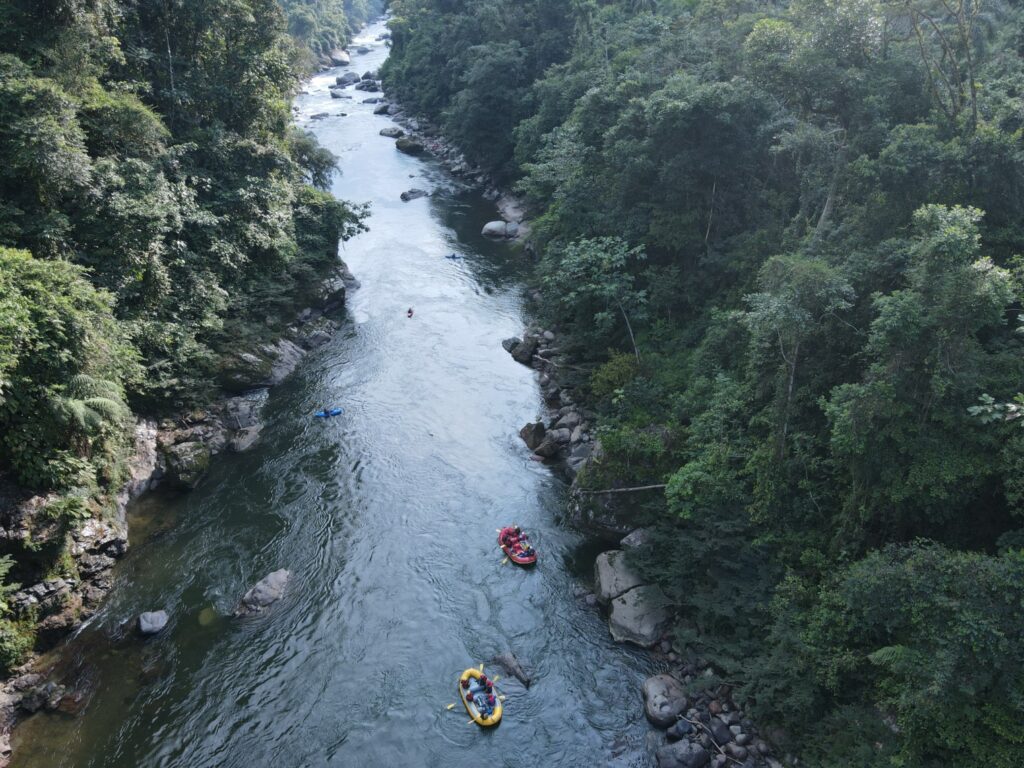 The results are measurable and reflected in concrete enforcement actions. Illegal deforestation dropped significantly across Indigenous territories supported by the project. In Peru, deforestation fell 43% across FENAMAD beneficiary communities compared to 2020 levels. In Ecuador, deforestation also declined in Waorani and Shuar Arutam territories over the same period. These gains reflect improved detection and stronger coordination among Indigenous leaders, civil society organizations, and government authorities responding to illegal mining and other drivers of forest loss.
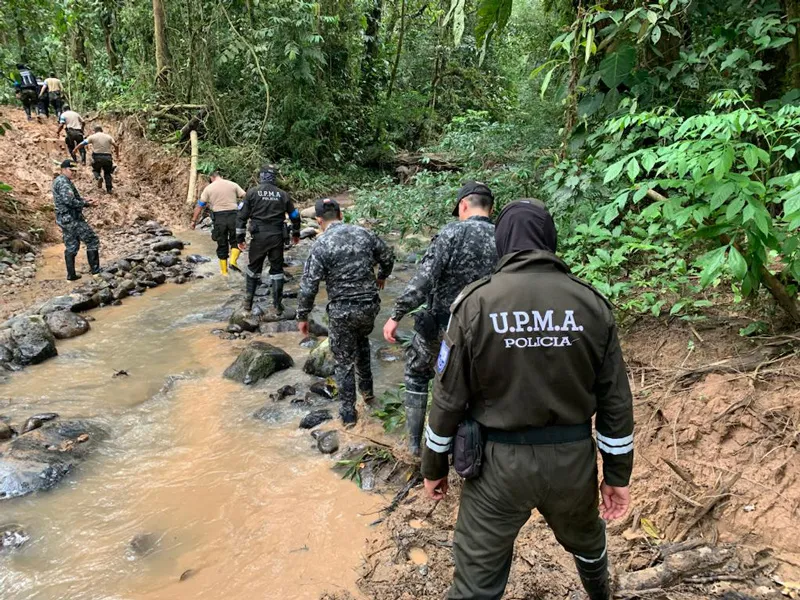 By linking monitoring to action, MAAP analysis supported concrete enforcement efforts, including, for example, Ecuador’s Operation Manatí III in 2023, which covered 8,500 acres (about 3,500 hectares) and resulted in the seizure of excavators and mining equipment. In Peru, timely confidential reports and Indigenous-led monitoring supported investigations and government operations in high-risk areas affected by illegal gold mining.
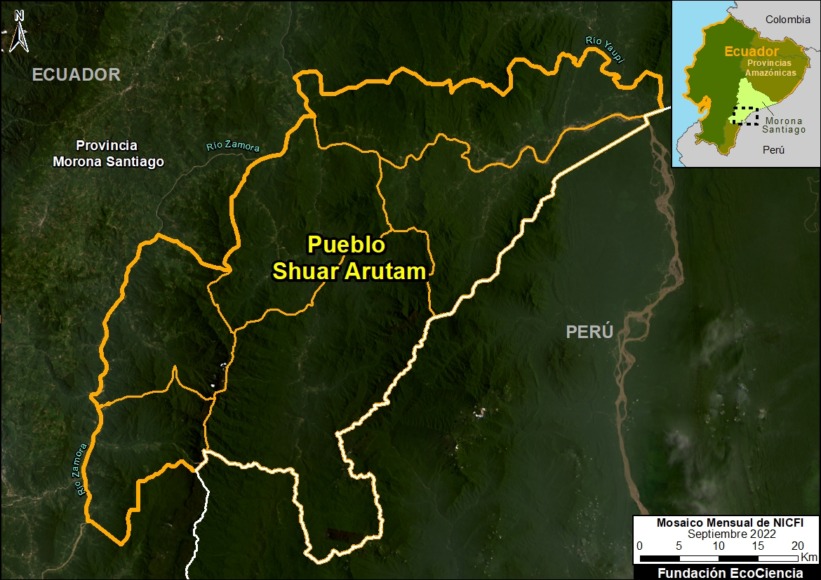 For Indigenous peoples and local communities, this work is about rights, safety, and the ability to defend territories for future generations. As Marco Martinez, Territorial Executive of the Shuar Arutam Indigenous Community of Ecuador, put it: “The Shuar Arutam will always fight because that is our right. To those who want to silence our voice, behind me stand other generations, our children’s children, and all the Indigenous peoples of the world who will continue fighting against those who threaten our communities.”








 A key pillar of this collaboration is equipping journalists with the tools and knowledge needed to investigate and report on illegal mining. The Pulitzer Center is supporting journalists in learning
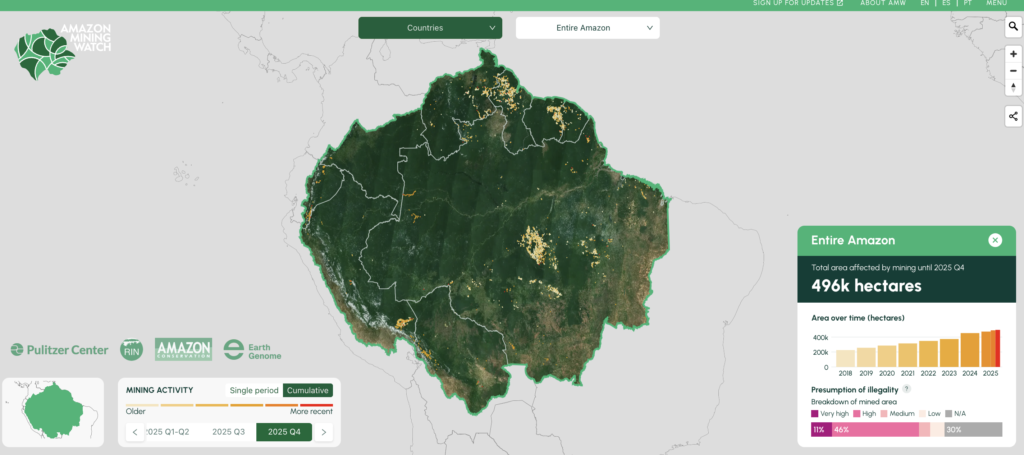
 The first edition of the Panorama, covering October–December 2025, confirms the continued expansion of gold mining across all nine Amazonian countries. In the last quarter alone, the report estimates approximately 6,000 hectares (over 14,000 acres) of new mining-related deforestation across the Amazon, highlighting the scale and urgency of the crisis facing the world’s largest tropical forest. That’s an area equivalent to about seven times the size of Central Park in New York City.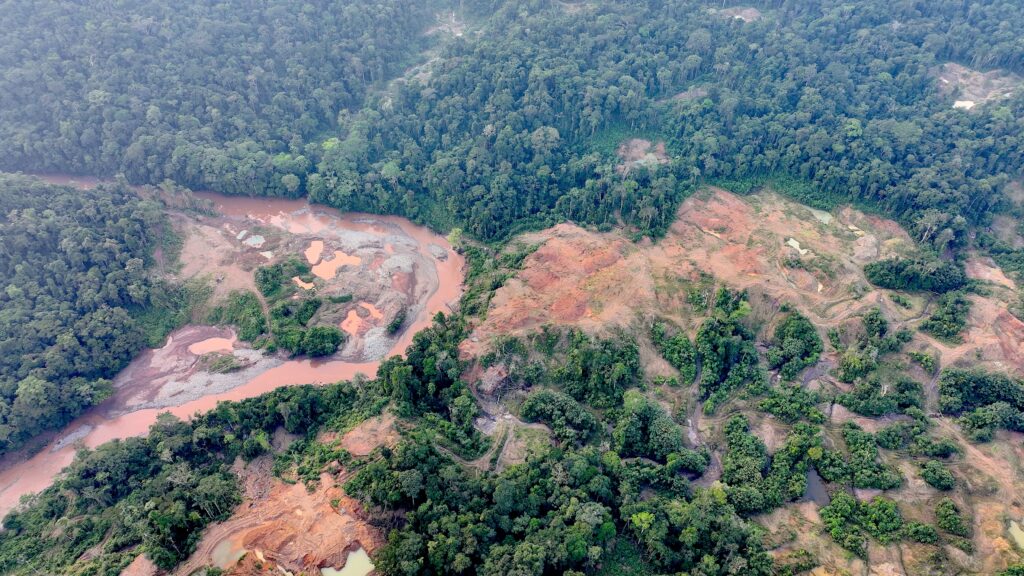
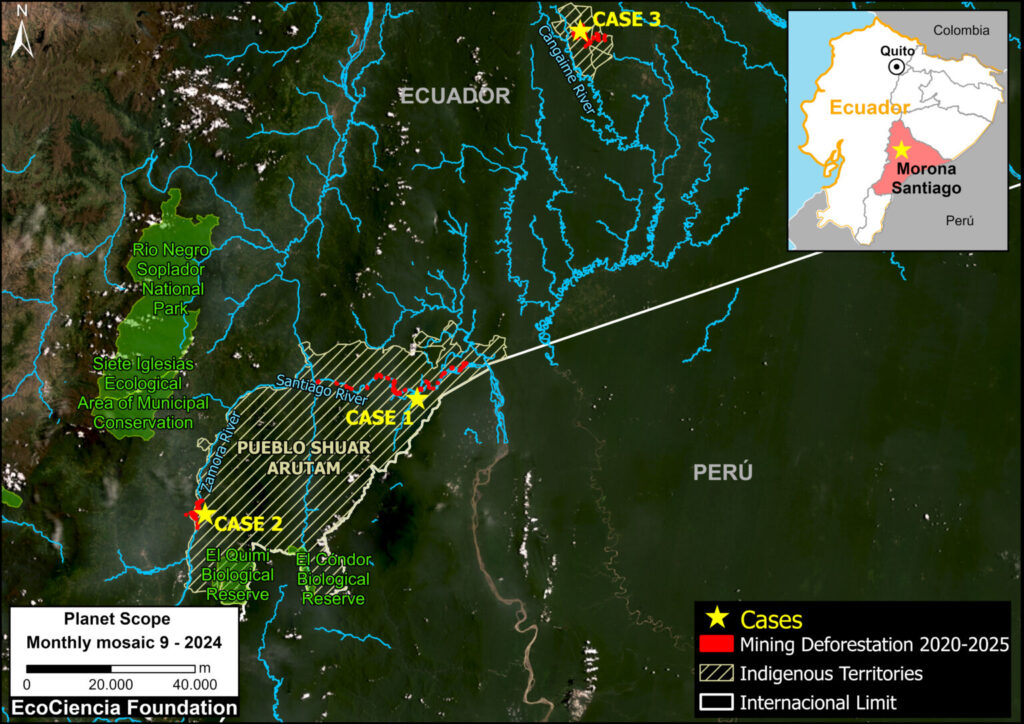 Mining activity in Morona Santiago, located in the southern Ecuadorian Amazon, has grown rapidly over the past four years. According to the latest analysis, based on data from Fundación EcoCiencia and Amazon Conservation, the area affected by mining nearly doubled between 2020 and 2024, revealing sustained expansion across Amazonian territories of high ecological importance.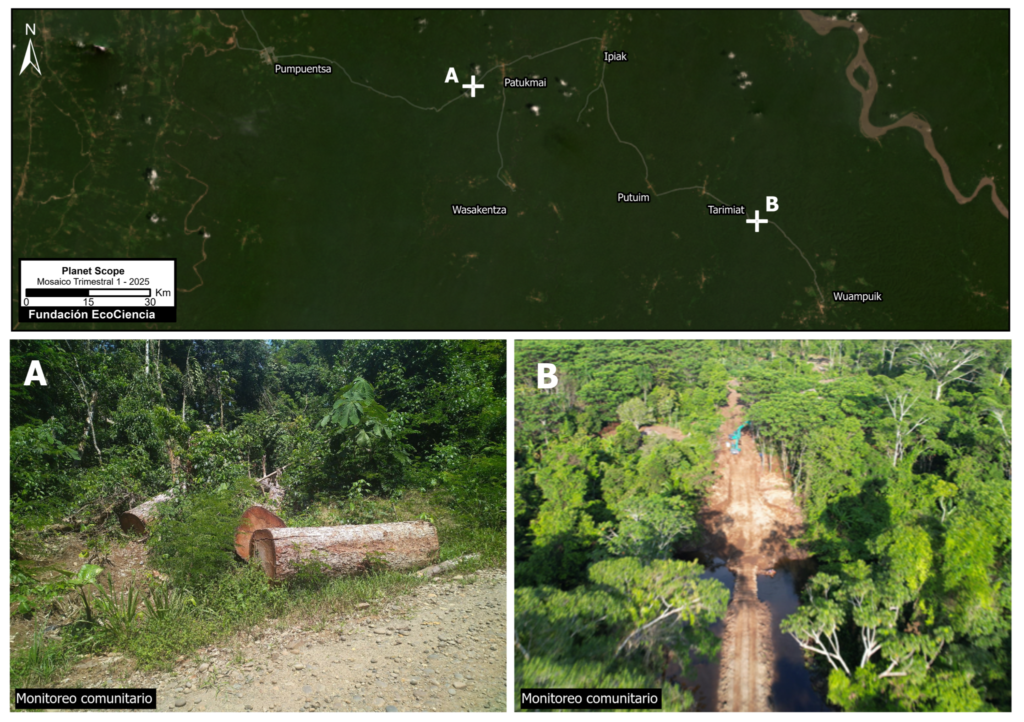

 Loading...