Board Member Q&A: Andrew’s Journey From the Concrete Jungle to the Amazon Rainforest

Behind every success at Amazon Conservation is an array of individuals with a shared passion for the Amazon: our generous donors and funders, dedicated staff (bothon the ground in Latin America and at our headquarters in Washington,DC), and world-class Board of Directors. Our Board brings together passionate leaders in science, business, and conservation who selflessly lend their invaluable expertise, vision, and financial support to help protect the rainforest we all love and the people who depend on it.

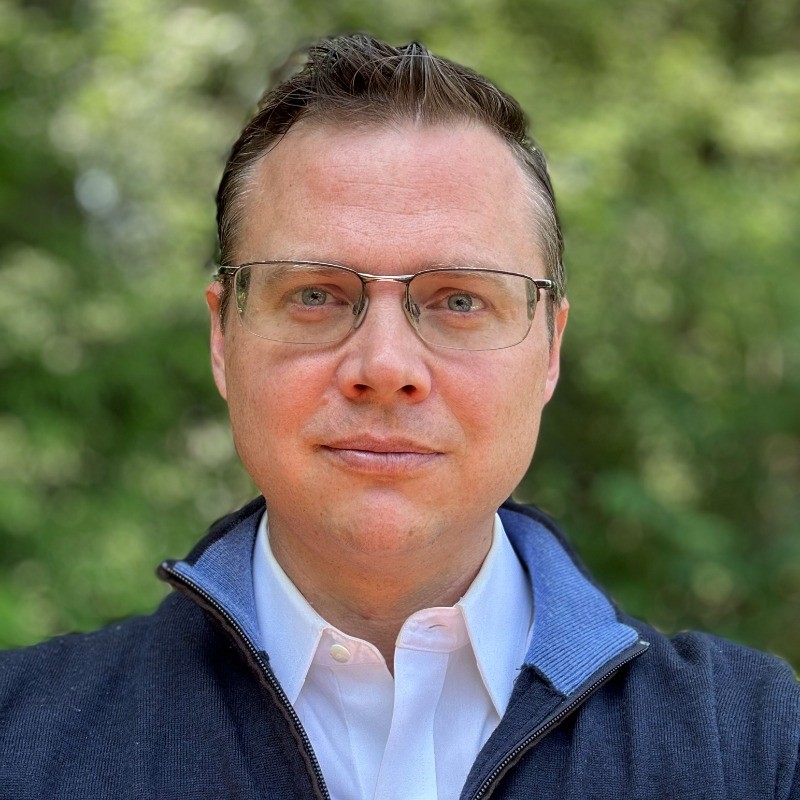
Andrew Wilcox hit the ground running when he joined the Amazon Conservation Board not too long ago in 2023. Andrew boasts an extensive background in the field of bioeconomy, including in the Amazon, with professional experience in the sustainable commercialization of forest products such as açaí and Brazil nuts — a perfect complement to our forest-based economy initiative. He’s been hard at work behind the scenes at Amazon Conservation, actively leading several exciting pilot projects within the Board.

Keep reading to discover how Andrew found his way from the concrete jungle of New York City to the forests of the Amazon – and to Amazon Conservation!


_________________________________________________________________________________________________________________________________

Tell us a little bit about yourself.

I was born and raised in Brooklyn, New York, but some of my happiest memories are from summers spent exploring the Housatonic River in Connecticut, which sparked my lifelong curiosity about and love of nature. After studying Economics and History in undergrad, I joined the Peace Corps and spent more than half a decade living and working in rural Latin America (Paraguay, Peru, and Brazil), followed by two years on an organic farm in New York’s Hudson Valley. Later, I earned Master’s degrees in Sustainability and Forestry, worked at a nature- and space-tech startup, and eventually joined Unilever, where I’ve spent the past eight years sourcing ingredients and commodities sustainably, from palm oil in Indonesia to soybeans in Iowa. My current role is Associate Director of Sustainability for Procurement Strategy & Insights at Unilever.

These days, I live outside Boston with my wife and young daughter. And a fun family fact: one of my distant ancestors actually explored and mapped parts of the northeastern Amazon back in the 1600s in what’s now the Brazilian state of Amapá!


What sparked your interest in conservation?

I’ve had an affinity for nature since childhood, but my first hands-on experience with conservation (or what I like to call “applied nature”) came during my Peace Corps service in Paraguay. I learned so much from the Paraguayans’ deep connection to nature – especially medicinal plants (“pohã” in the native Guarani language) — knowledge I applied when starting a business exporting yerba mate, a caffeinated herbal tea endemic to South America, to a new US consumer market. While operating my yerba mate business, I focused heavily on the lessons I’d learned from local Indigenous peoples with regard to agroforestry, novel ingredients, and the reforestation of key watersheds in the eastern Amazon. 
How did you first connect with Amazon Conservation? 

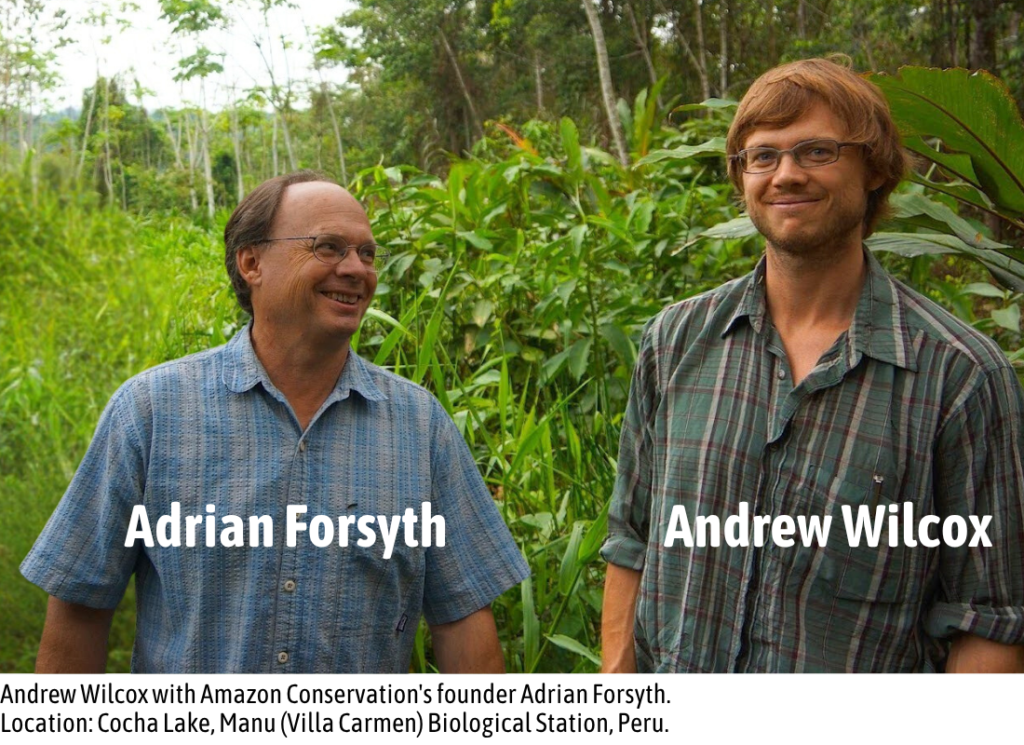
After my yerba mate business ended, I decided to take a leap of faith and follow a lifelong dream: I went to “the greatest wild forest on Earth.” Amazon Conservation was well-established by then, so I found Amazon Conservation through my online research and applied for a volunteer position at the Manu Biological Station in Peru. I eventually managed a project focused on improving soils for sustainable agriculture and had the incredible opportunity to learn directly from Amazon Conservation’s co-founders, Adrian Forsyth and Enrique Ortiz, whose mentorship played a formative role in how I think about the Amazon, sustainability, and life. 

From your perspective as a Board Member, what is it that sets Amazon Conservation apart from other similar organizations?

Reaching 25 years is an amazing accomplishment! But what really stands out to me is how Amazon Conservation combines innovation with deep community partnership. From deforestation monitoring to expanding the bioeconomy, Amazon Conservation ensures that technology isn’t just state-of-the-art, but also that it’s accessible to and scalable for the people who live and work in the Amazon. To me, as someone who has spent a significant portion of my career working with technology – in big corporations, startups, and academic research – it is that human-centered approach to conservation that truly makes Amazon Conservation exceptional.

What have you learned from your Board service thus far?

That relationships are everything. Lasting conservation isn’t just about protecting forests; it’s about nurturing the relationships that make protection possible. Amazon Conservation’s widespread impact is possible only thanks to close collaboration with our sister organizations in Peru (Conservación AmazónicaACCA) and Bolivia (Conservación Amazónica–ACEAA), alongside all of our collective networks of local partners. Having an organization in the Global North working with organizations in the Global South on a complementary and co-equal basis is a unique and potent collaborative model that we believe is the most effective pathway for positive impact – and the whole enterprise relies on good, trusting relationships. 

Why is our mission of protecting the Amazon so important?
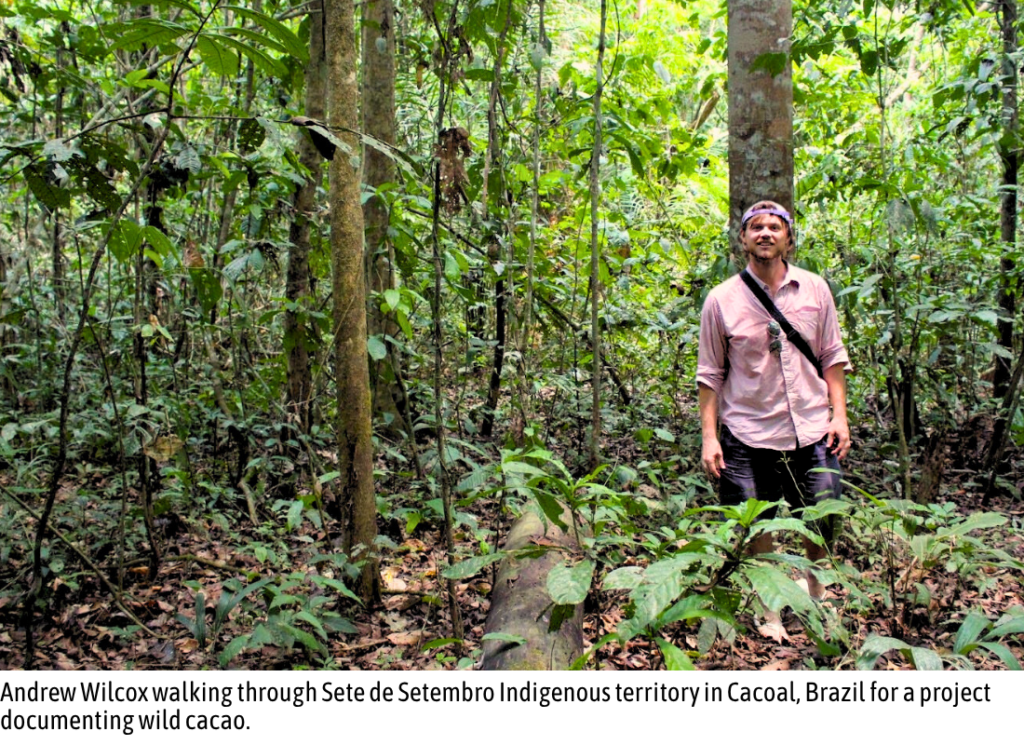
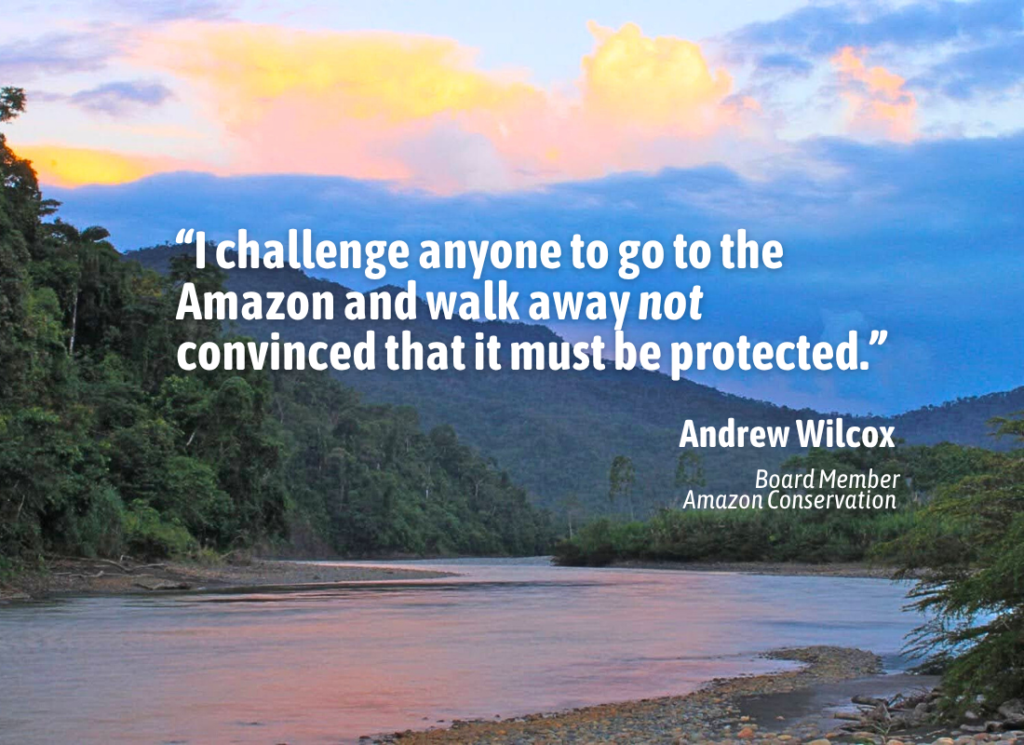
The Amazon is essential for life on Earth. It stores vast amounts of carbon, regulates rainfall across South America, and sustains millions of people and an unparalleled diversity of species. But beyond its global importance, the Amazon is a place of transcendental beauty, awesome scale, and inconceivable creativity in both the life strategies of the plants and animals it supports and the cultural expressions of the Indigenous and traditional communities that call it home. It’s an irreplaceable part of the Earth’s patrimony that we share with all life. I challenge anyone to go to the Amazon and not walk away convinced that it must be protected.

What advice would you give to others seeking to make a difference? 

Support Amazon Conservation! But beyond donating, simply learning about the Amazon – caring about it and sharing that passion with others – makes a big impact. Awareness leads to action, and it takes ongoing attention and focus to stay engaged with what really matters. Attention is the scarcest resource of all these days, but if we stay committed for the long haul, we can build a future for the Amazon, and for the world, that’s both prosperous and sustainable.

Is there anything else you’d like people to know about Amazon Conservation? 

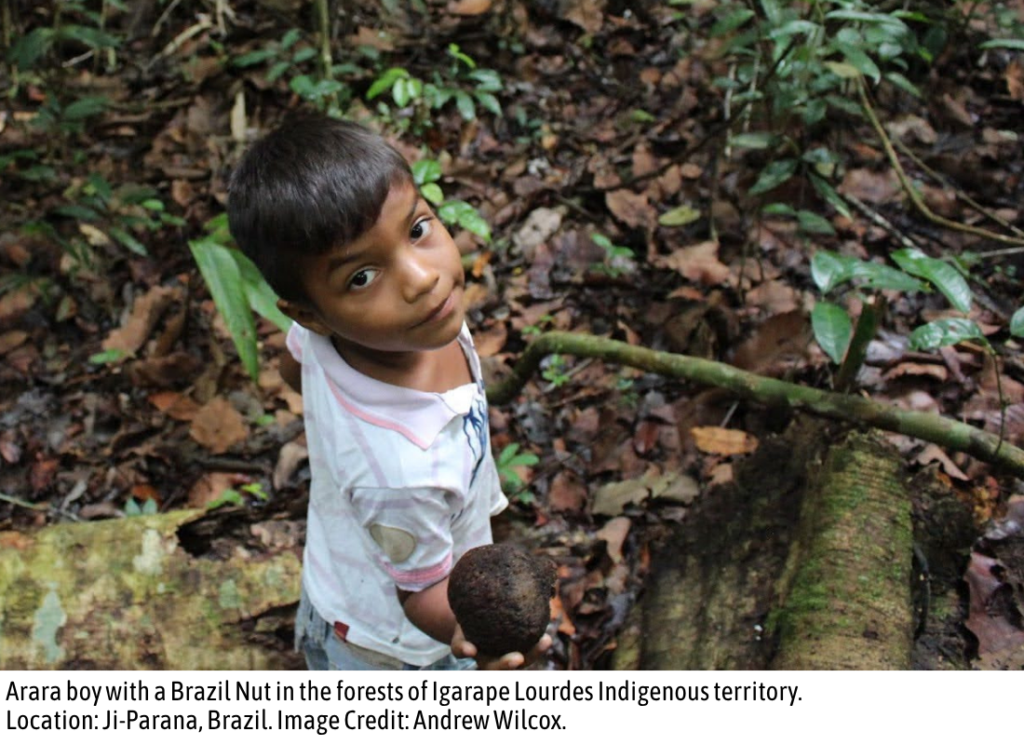
Despite our name, Amazon Conservation isn’t just about protecting forests; it’s about reimagining what development can look like. The Amazon can and should contribute to human wellbeing and prosperity, but in ways that regenerate, not deplete, its natural and human capital. Currently, huge swaths of the Amazon are still being converted to cattle pastures, soybean fields, and gold mining, all of which are extractive in nature. But it doesn’t have to be this way; there is a path forward in which the region benefits from producing high-demand materials in such a way that regenerates the natural and human capital required for production. The transition starts small, maybe with a handful of Brazil nuts or an açaí smoothie, but it leads to something much bigger: a new vision for the region’s future that’s as dynamic, abundant, and beautiful as the forest itself. 

As Andrew’s journey shows, lasting change for the Amazon starts with people who care deeply, think creatively, and act boldly. Join us in protecting this irreplaceable forest and the people and nature that depend on it by making a tax-deductible gift to Amazon Conservation today.


Securing the Future of the Amazon: National Estate Planning Awareness Week

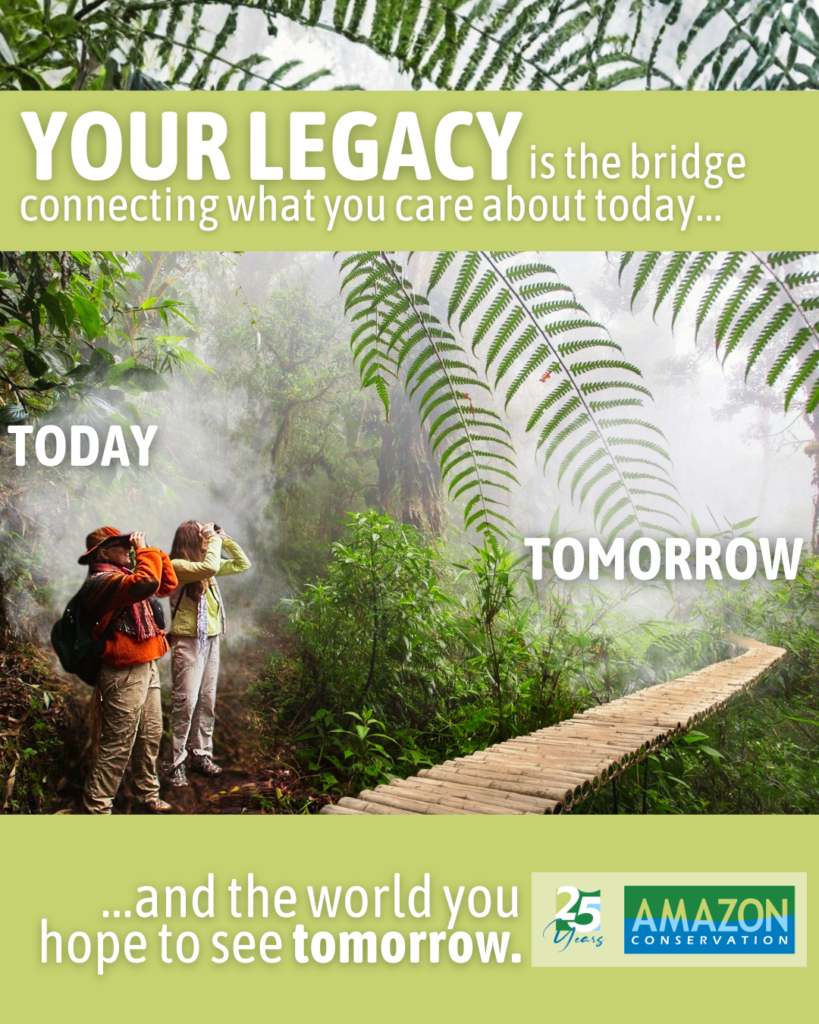
This National Estate Planning Awareness Week (NEPAW), October 20-26, Amazon Conservation invites you to be a bridge builder, connecting your actions today with a sustainable future for the greatest wild forest on Earth. Together, we can preserve nature’s treasures for future generations, ensuring that the Amazon’s vibrant biodiversity remains uninterrupted.

Estate planning is more than just financial security for your loved ones; it’s also a powerful tool for creating a legacy that reflects your values and passion for the planet. By including Amazon Conservation in your estate plan, you are not only protecting your family’s future but also supporting the continuous efforts to conserve the Amazon’s remarkable habitats.

No matter your age or circumstances, it’s never too early to guarantee that the Amazon thrives long after you’re gone. And it’s never been easier to make or update your plan. Through Amazon Conservation’s partnership with FreeWill, a secure online tool, you can create or update your will for free from the comfort of your home in just 20 minutes.a

Not sure where to start? We’ve got blueprints and guidance to help you build your bridge to tomorrow. Start my estate plan today!


Join us this week and explore the many giving options available to you. Consider how your thoughtful planning can protect the Amazon and become a legacy of conservation and hope. 

More than 1.3 million fellow legacy builders who have created a will with FreeWill. This week, take the opportunity to join them and add an optional gift to Amazon Conservation (EIN 52-2211305). You can include us in your will by naming us as a primary beneficiary of a specific gift, such as an amount of money, a stock, or your IRA, or by allocating a certain percentage of your estate to charity (10% is a common choice).

👉 Consider naming Amazon Conservation as a beneficiary.

For more information on including Amazon Conservation in your estate plan, please visit our website or reach out to our team. Together, we can ensure that the Amazon continues to be a thriving haven for wildlife and a crucial player in the planet’s health.

This National Estate Planning Awareness Week, let’s create a future where the Amazon thrives—because the world needs its wonders now more than ever.

P.S. Already named us as a beneficiary in your plan? Let us know here!


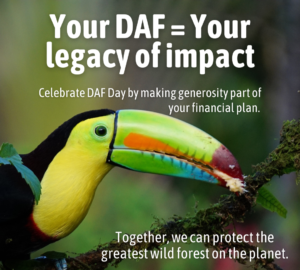
What Will Your DAF Do This DAF Day?

October 9 is DAF Day — a national celebration of giving through Donor-Advised Funds!

This year, Amazon Conservation is proud to join nonprofits nationwide in highlighting the power of DAF giving and how it can protect the Amazon, its wildlife, and the people who call it home.

Your Donor-Advised Fund can do incredible things when you put it to work for both you and the planet.

What Is a Donor-Advised Fund (DAF)?

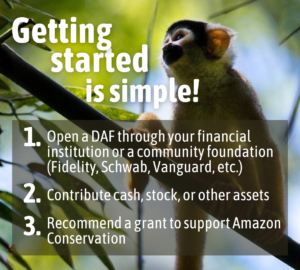
A Donor-Advised Fund, or DAF, is a simple, flexible, and tax-advantaged way to give back. Anyone can open a DAF through one of more than 1,000 providers nationwide (such as Vanguard Charitable or Fidelity) and receive an immediate tax deduction when contributing to it.

Then, when you’re ready, you can recommend grants to support the causes you care about — like safeguarding the Amazon’s forests, wildlife, and communities through Amazon Conservation.

Why DAF Day Matters

DAF giving is one of the fastest-growing ways people are fueling conservation around the world. And if you already have a DAF, you’re holding philanthropic dollars ready to make a difference right now — no additional cost to you.

By recommending a DAF grant to Amazon Conservation this DAF Day, you can:

  • Protect vital rainforest habitat from illegal deforestation and fires.

  • Support Indigenous and local communities who have stewarded these forests for generations.

  • Advance cutting-edge science and technology, like our MAAP satellite monitoring program, to defend millions of acres of forest in real time.

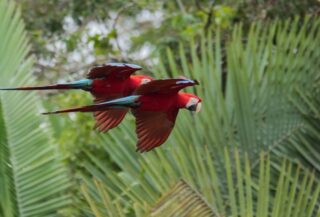
  • Preserve biodiversity, from jaguars and macaws to rare medicinal plants found nowhere else on Earth.

Every single DAF gift, big or small, creates a ripple effect that lasts for generations.

How You Can Take Part

Making your DAF Day gift is quick and easy. You can use our secure DAF giving tool (linked below) to connect directly with your provider, recommend a grant to Amazon Conservation, and help us keep accurate records of your generous support.

👉 Make Your DAF Day Gift Now

Together, We Can Protect the Amazon for the Future

2025 has been a year of both challenges and hope for the Amazon. From halting illegal deforestation to restoring critical headwaters and empowering Indigenous partners, our work is making measurable progress — but we can’t do it without you.

When you make your DAF grant recommendation today, you are joining dozens of others DAF donors to drive immediate, on-the-ground conservation across Peru, Bolivia, and beyond.

This DAF Day, let’s put generosity into action. What will your DAF do for the Amazon?


A new chapter for Bolivia’s Amazon: Communities from Nueva Esperanza led the creation of the Río Negro Protected Area

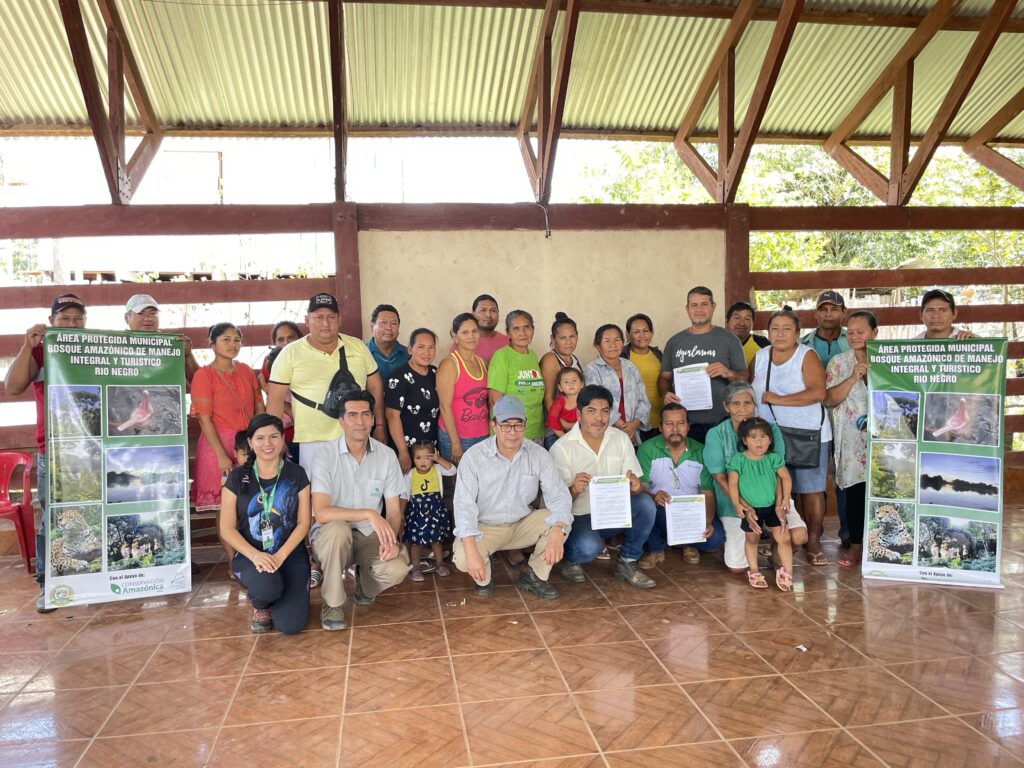
In a milestone for Bolivian Amazon conservation, local communities and the Municipal Government of Nueva Esperanza, with support from our sister organization Conservación Amazónica–ACEAA and the Andes Amazon Fund, have joined forces to establish the Río Negro Forest for Integrated Management and Ecotourism (called BAMIT Río Negro). This new protected area strengthens conservation and sustainable development in northern Bolivia’s Amazon.

Spanning more than 209,000 hectares (approximately 516,000 acres), this community-driven initiative was established in response to growing environmental threats to the region, including wildfires, illegal mining, deforestation, and land invasions. The Río Negro Forest will serve as a cornerstone for biodiversity protection, sustainable livelihoods, and the preservation of Bolivia’s Amazonian cultural heritage.

A Natural and Cultural Treasure

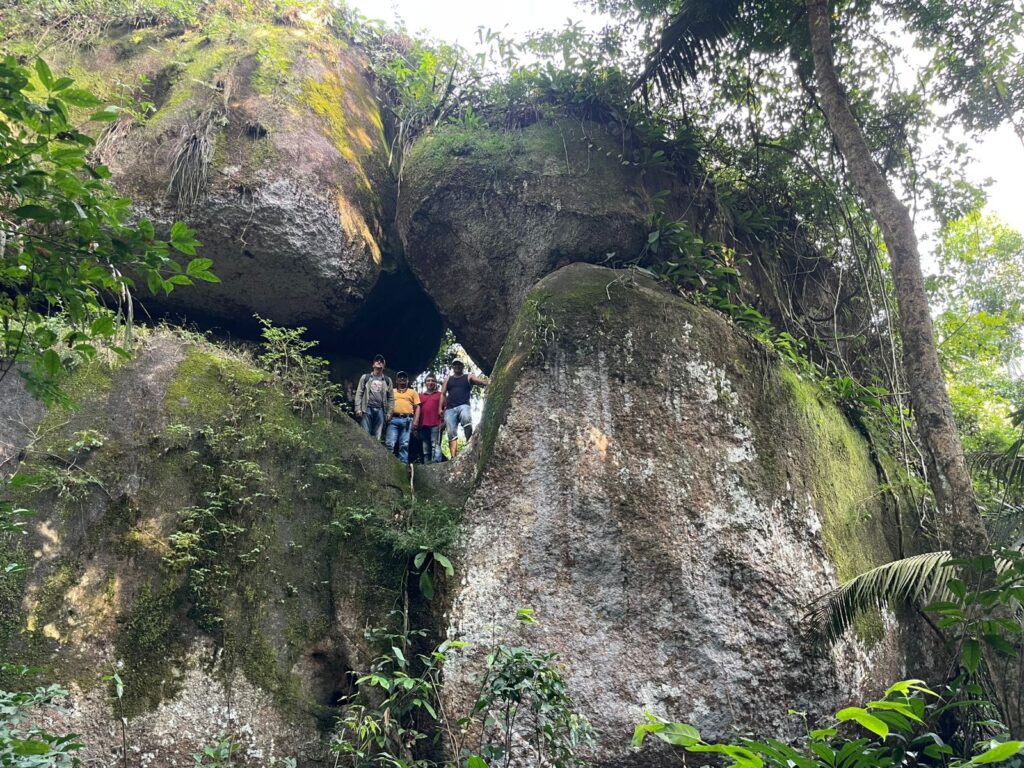
The protected area is home to unique ecosystems, including Brazil nut forests (Bertholletia excelsa), flood-prone palm groves, floodplains, and ancient geological formations. In addition, researchers have identified petroglyphs and megalithic structures that reveal the ancestral presence of Indigenous peoples such as the Tacanas, Esse Ejjas, Pacahuaras, Cavineños, Yaminahuas, and Machineri.  

.         

Community Participation and Shared Commitment

The creation of the Río Negro Forest was the result of a collaborative, participatory process involving Indigenous and campesino (rural farming) communities, social organizations, and the Nueva Esperanza FarmWorkers Union.

Throughout this journey, Conservación Amazónica–ACEAA provided technical and strategic support to help design and consolidate the proposal. The Municipal Government will lead the management of the area with support from  local committees, technical coordination teams, and an environmental volunteer program that will strengthen monitoring, enforcement, and education.

A Model for the Future of Conservation

Now part of Bolivia’s National System of Protected Areas, the Río Negro Forest will be managed through a management plan, zoning system, and strategic agenda aimed at ensuring the long-term conservation and sustainable use of its natural resources.

This initiative promotes food security, sustainable economic opportunities, and a balanced relationship between people and nature. It stands as a forward-looking model for conservation, reaffirming Nueva Esperanza’s and its allies’ commitment to protecting the natural and cultural richness of the Amazon for generations to come.

Amazon Conservation is proud to have supported this milestone through the Amazon Conservation Alliance, working alongside its sister organization Conservación Amazónica–ACEAA in Bolivia and local partners to strengthen community-led conservation efforts across the Amazon.


Flying Rivers Hold the Key to the Amazon’s Tipping Point, New Report Reveals

Groundbreaking analysis shows how the “rivers in the sky” connect the fate of  the entire rainforest and identify which regions are most at risk.

Washington, DC, 16 Sept 2025 – The Amazon will not collapse everywhere at the same time. A new special report by Amazon Conservation’s Monitoring of the Andes Amazon Program (MAAP) reveals how “flying rivers” determine which regions of the Amazon are most at risk of reaching the tipping point that will turn irreplaceable rainforests into dry savannas.

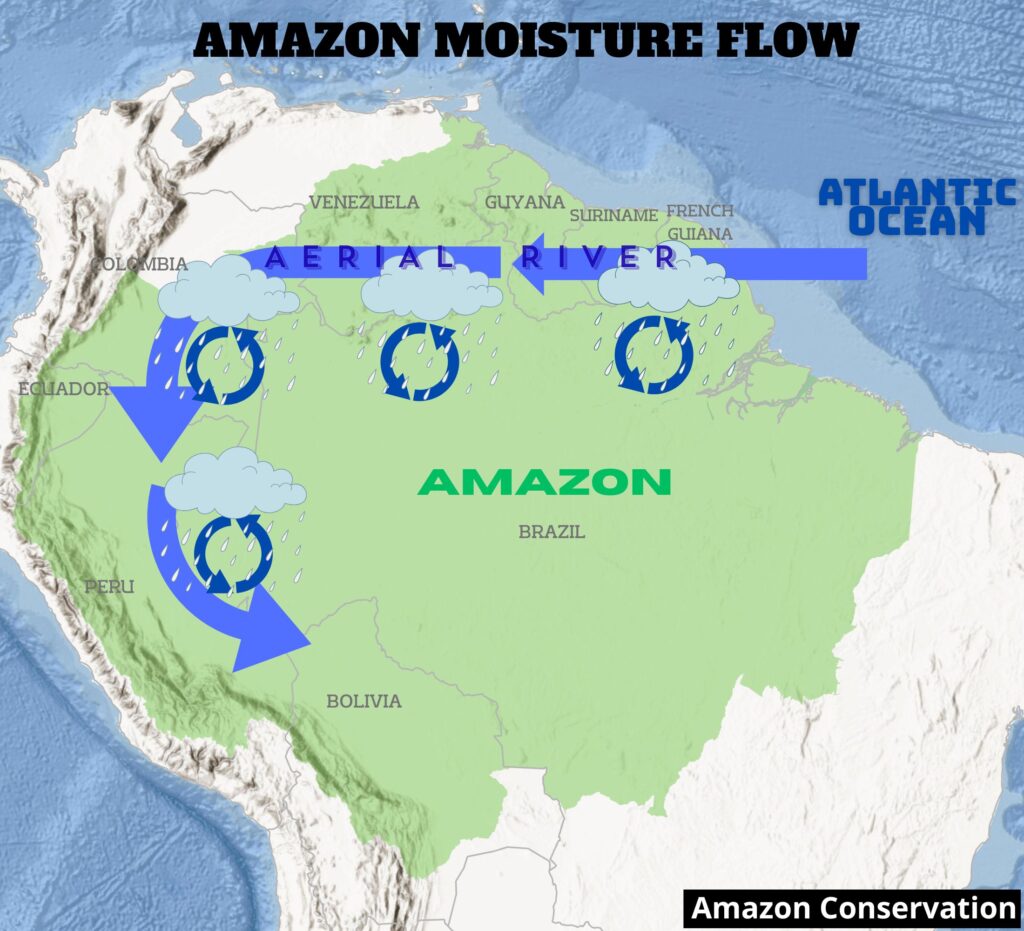
“Flying rivers” are moisture highways in the atmosphere, like rivers of rain in the sky, that travel from the Atlantic Ocean to the Andes Mountains and provide vital water resources to the nine countries that form the Amazon Basin. They are the silent and invisible force that drives the water cycle of the entire region, making the rainfall that gives the Amazon its title of “rainforest” possible. As this delicate “flying river” is disrupted by human-caused deforestation and the effects of climate change, the impact on people, nature, and wildlife will be catastrophic, potentially including species extinction, increased droughts and lack of water access, and the end of the forest as we know it. 


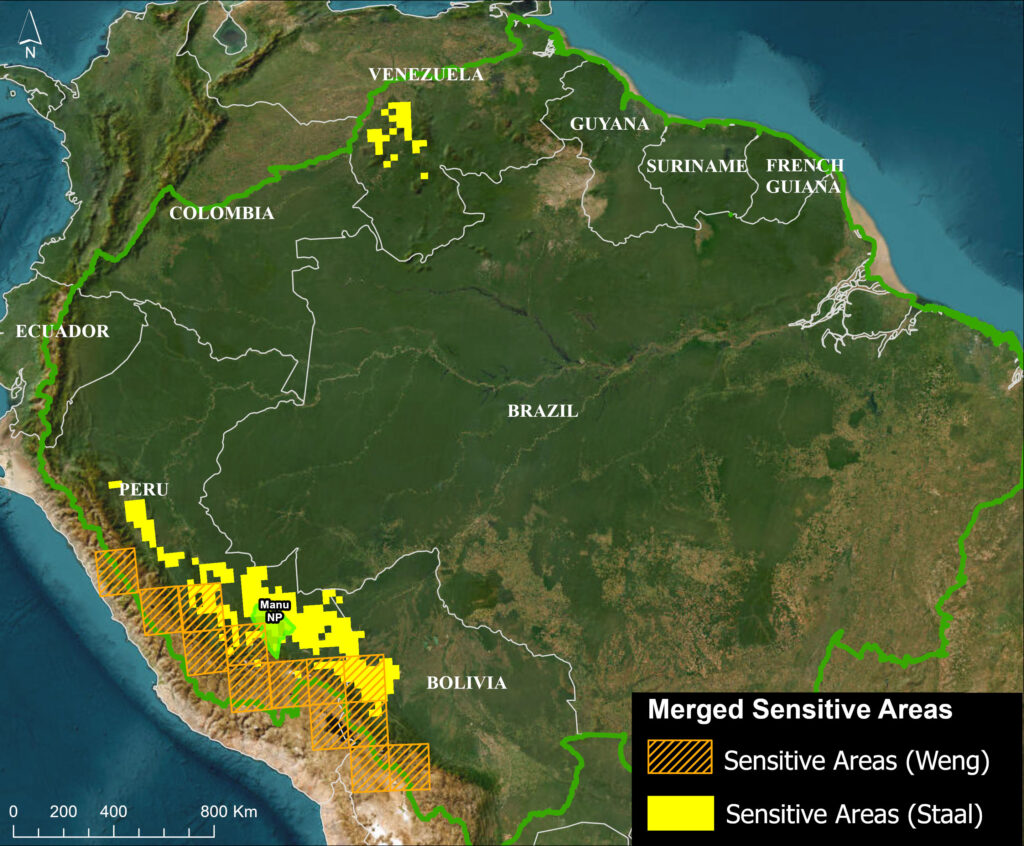
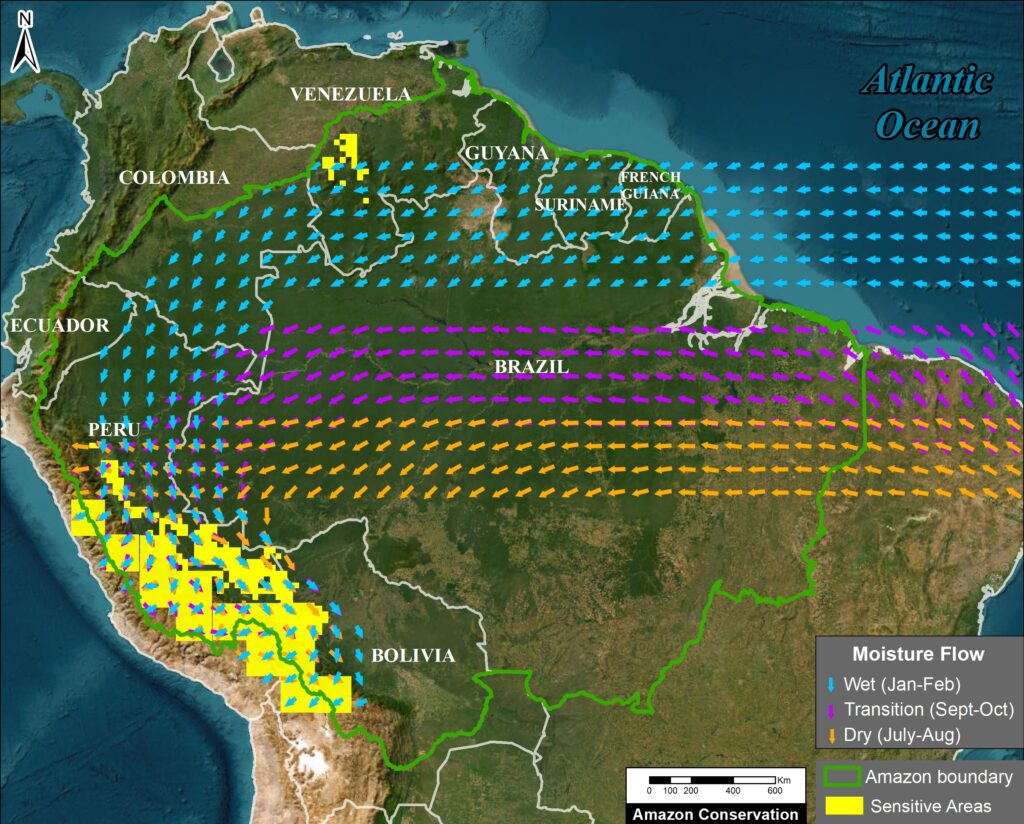
Amazon Conservation’s latest analysis has identified that key areas of the Peruvian and Bolivian Amazon are most susceptible to the negative consequences of the breakdown of the region’s flying rivers. This includes areas in southern Peru and northern Bolivia that are home to some of the most iconic and biodiverse places on the planet, such as Manu National Park and Madidi National Park, which together protect 8.9 million acres of rich forests from the high Andes to the lowland Amazon. 

Corine Vriesendorp, Director of Science at Amazon Conservation’s Peruvian sister organization Conservación Amazónica-ACCA, oversees three biological stations along an altitudinal gradient near Manu National Park: “This research shows that some of the most wild places on the planet, like Manu, are at tremendous risk. We need to come together across the whole Amazon to protect these increible flying rivers to have a chance to avoid the tipping point.” The areas identified by this report as most vulnerable to a possible tipping point directly depend on the continued, uninterrupted water cycle provided by these flying rivers, which begins in Amazonian countries that border the Atlantic Ocean, like Brazil and Guyana. The state of deforestation and conservation in these countries on the “eastern” side of the Amazon will determine how much water will get to countries on the “western” side of the region – like Peru and Bolivia – showing the interconnectedness of the rainforest’s ecosystems that goes beyond country borders.

A threat that crosses borders

“The western Amazon relies on flying rivers to bring water all the way from the Atlantic Ocean, crossing millions of acres of forests in the eastern Amazon before it gets there,” said lead author Matt Finer, Senior Research Specialist and Director of Amazon Conservation’s MAAP initiative. “So the survival of rainforests in Peru and Bolivia actually depends on intact forests in Brazil to the east, since if those forests are destroyed, the water cycle that creates the flying rivers is broken, and it can’t reach the western Amazon. It’s all connected.”

Finer highlights that an important contribution of this analysis is that it reveals that, contrary to the common misconception that the tipping point will happen suddenly and uniformly across the region, it will likely happen progressively, beginning in particularly vulnerable areas and escalating from there.  


Seasonal shifts will also intensify the impact on these vulnerable areas. As rainforests tend to experience only two seasons (wet, or rainy, and dry seasons), the amount of water carried through the flying rivers is significantly limited during dry seasons, and exacerbated by human-caused deforestation and the effects of climate change, such as droughts.

Daniel M. Larrea, Director of Science and Technology at Amazon Conservation’s Bolivian sister organization Conservación Amazónica–ACEAA, added that  “this report sheds light on the critical role that flying rivers play in preserving standing forests and water access in the Amazon. Understanding their dynamics allows us to better protect vulnerable regions in Peru and Bolivia, where conservation is not only a local priority but a regional imperative. Science, innovation, and technology must guide our actions to ensure these forests can survive and thrive for generations to come.”

Urgent call in the run-up to COP30

These findings come at a crucial moment, with COP30 approaching in Belém and countries negotiating their updated Nationally Determined Contributions (NDCs), which establish their climate action plans under the Paris Agreement. It highlights how forest conservation is central not only to climate goals but also to the water security for the millions of people and wildlife that call the Amazon home and for the collective survival of entire ecosystems across country borders. Decisions and policies made by Brazilian authorities will directly shape rainfall patterns in neighboring countries, making international cooperation essential.

This groundbreaking analysis was made possible by the Leo Model Foundation, in collaboration with nine scientists and researchers from across the Amazon Basin. It represents the first comprehensive mapping of flying rivers across wet, dry, and transition seasons, with an extensive literature review.

Read the full report here. 


About MAAP

Monitoring of the Andean Amazon Project (MAAP), an initiative of Amazon Conservation, Conservación Amazónica–ACCA (Peru), and Conservación Amazónica–ACEAA (Bolivia), provides cutting-edge, real-time technical analysis on deforestation and fires across the Amazon. MAAP uses satellite imagery, data science, and field information to generate timely reports that support conservation action and policy.

About Amazon Conservation Association
Amazon Conservation is an international conservation nonprofit working for the past 25 years towards building a thriving Amazon. The organization’s holistic approach focuses on working with local partners and allies to protect wild places, empower people, and put science and technology to work for conservation. Visit amazonconservation.org for more information.

Eyes in the Sky: Drone Training Strengthens Indigenous Monitoring in Peru

In the heart of the Peruvian Amazon, Indigenous leaders are adding a new tool to their forest protection efforts: drones.

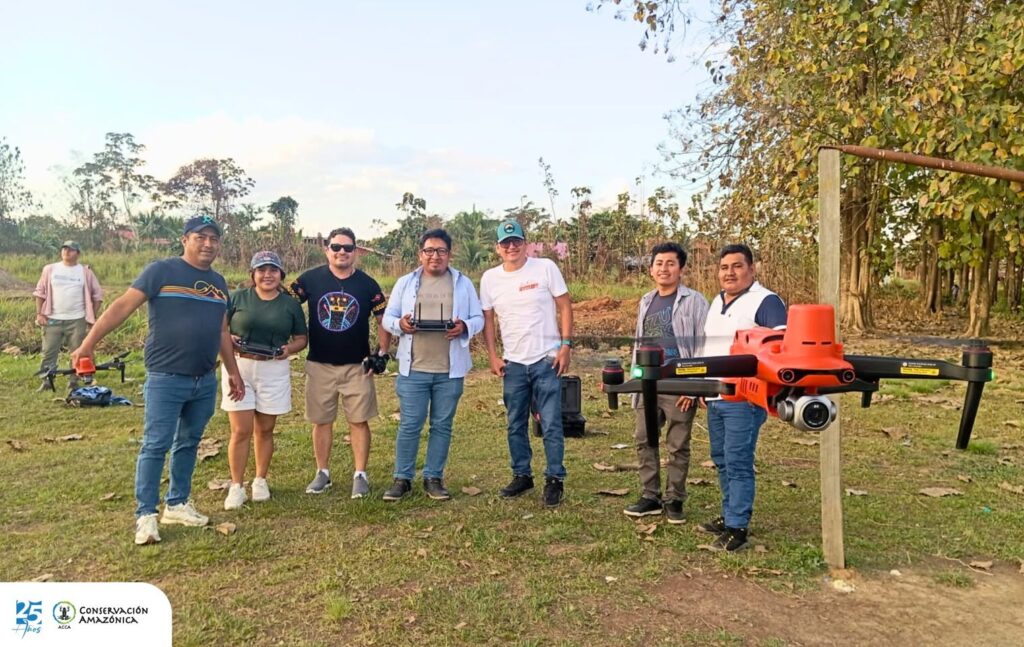
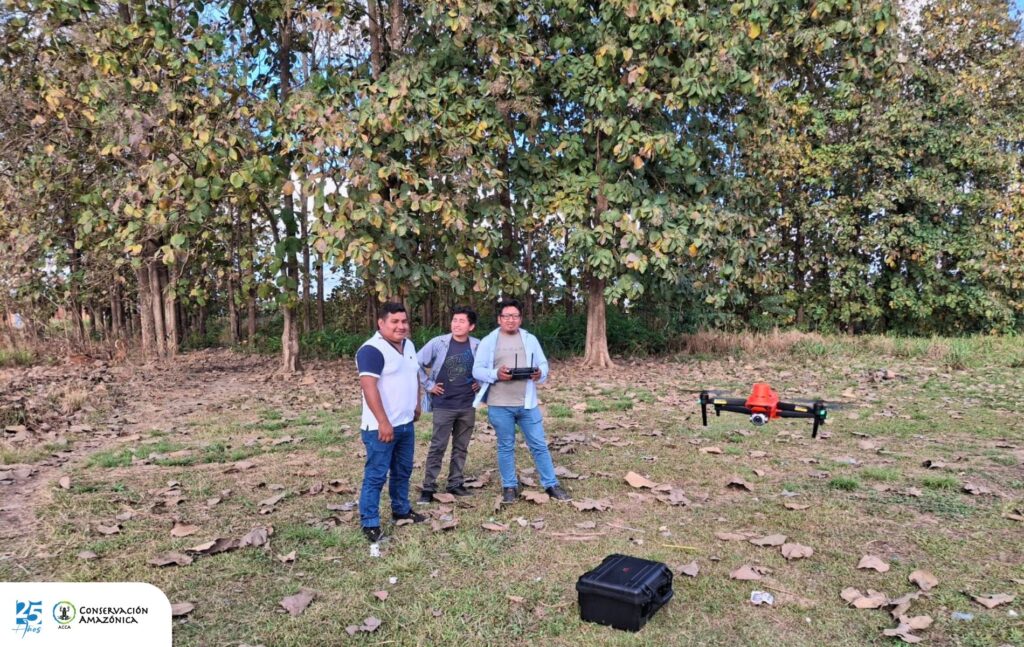
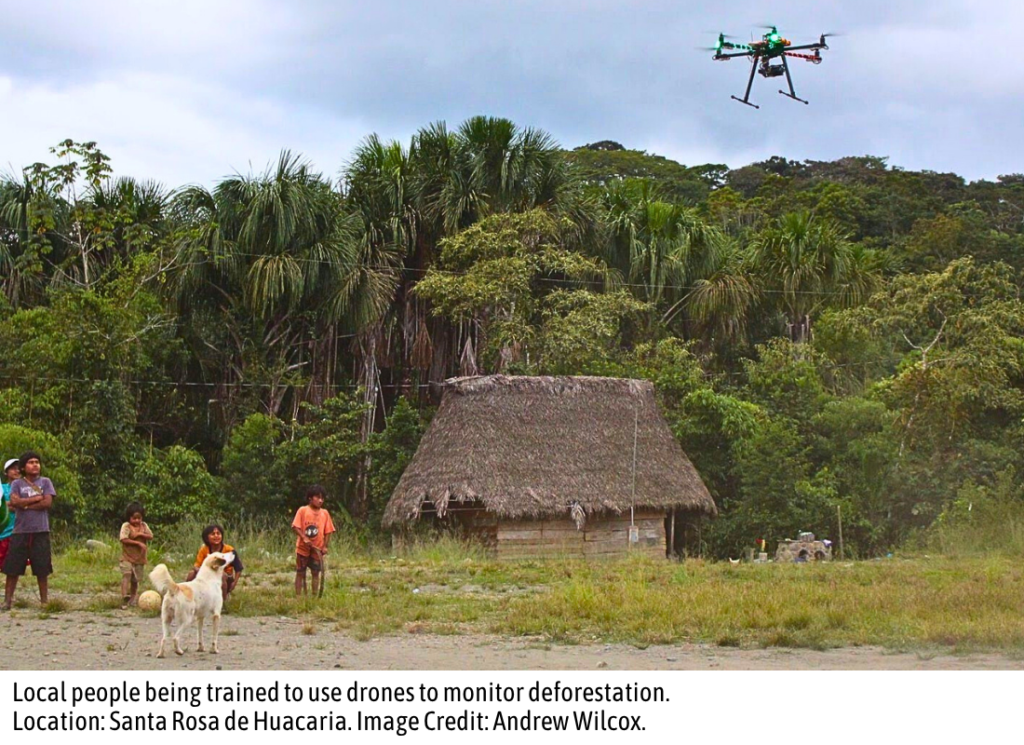
Earlier in August, representatives from the Native Federation of the Madre de Dios River and Tributaries (FENAMAD) and leaders of the Indigenous Council of the Lower Madre de Dios (COINBAMAD) took part in a hands-on training on the use of the latest in drone technology. Over the course of the workshop, participants learned how to safely operate, service, and apply cutting-edge drones to monitor their territories and safeguard their forest homes.


  .


Organized by our sister organization, Conservación Amazónica-ACCA, with support Aktion Amazonas, the Erol Foundation, and the D.N. Batten Foundation, this initiative represents a step forward in transferring technology directly to the Indigenous communities.

“Putting science and technology to work is a central pillar of our conservation work,” said John Beavers, President of Amazon Conservation. “Being able to share this technology with communities that need it to safely protect their resources and rights is essential. This continuous support helps ensure the forest stays standing for local people and for all of us.”

By combining ancestral knowledge with cutting-edge technology, communities in the Madre de Dios region of Peru are strengthening their ability to detect threats such as illegal logging, mining, and deforestation and to safely patrol their forests, avoiding direct conflict with illegal actors that could be deadly to them. These trainings not only provide technical skills but also reinforce the autonomy of Indigenous peoples to defend their territories.

At Amazon Conservation, we believe that empowering communities with tools like drones and satellite monitoring is key to long-term conservation. Together with our partners and donors, we are proud to support these efforts that put technology and decision-making directly in the hands of those who know the forest best.

Big win for people and nature: Tacana II, in Bolivian Amazon, finally granted title to ancestral lands after 20 years

Ixiamas, Bolivia – August 2025 – This month, we celebrate a landmark victory in the Bolivian Amazon, as the Tacana II Indigenous people finally receive the formal title to their territory, guaranteeing the legal protection of over 670,000 acres of forests.

This historic achievement is the result of over two decades of persistence, commitment, and collective vision to overcome the many challenges in the process, led by the Indigenous communities of Puerto Pérez, Las Mercedes, Toromonas, and El Tigre. This triumph was supported by our sister organization, Conservación Amazónica – ACEAA, in collaboration with strategic allies such as the Andes Amazon Fund (AAF), Conservation International Bolivia, Fundación TIERRA, CIDOB, CPILAP, the Inter-American Development Bank, and other partners who contributed throughout the process. Amazon Conservation and many of our donors – including the International Conservation Fund of Canada (ICFC), the D.N. Batten Foundation, among others – also backed this monumental effort throughout the years.

We would like to thank all the donors, partners, and supporters of Amazon Conservation and our sister organization, Conservación Amazónica – ACEAA, for making this important achievement possible for both people and nature.

A Territory of High Ecological Value

The Tacana II Indigenous Territory is an area of high ecological and strategic importance for the conservation of the Bolivian Amazon. This territory harbors:

– Primary Amazonian forests with high tree diversity, including Brazil nuts (Bertholletia excelsa), palms, and hardwoods.

– Key watersheds such as the Madre de Dios River and its tributaries, which sustain aquatic ecosystems and provide access to water and transportation for local people.


– Iconic wildlife such as jaguars, tapirs, spider monkeys, macaws, and hundreds of bird, reptile, and amphibian species.

– Medicinal plants and food that are fundamental to Tacana ancestral knowledge and for their sustainable ways of life.

This territory also serves as a biological corridor, connecting national and transboundary protected areas and contributing to climate resilience, water regulation, and carbon sequestration, especially critical in a context of increasing pressure on Amazonian forests.


Territorial Sovereignty and Collective Rights

The Tacana II Indigenous Territory is home to four communities, comprising approximately, and this recognition strengthens their territorial sovereignty, guarantees legal protections for collective land rights, and enables communities to exercise autonomy in territorial management, sustainable use of natural resources, and protection of their culture. 

“This is a great achievement from years of sustained effort,” commented John Beavers, President of Amazon Conservation. “It shows that conservation requires long-term commitment and strong partnerships. Our role is to work together with communities, strengthen them, and protect the forests and rivers that allow the Amazon to thrive.”


A Process Built by and Celebrated in Community

For more than two decades, Amazon Conservation and Conservación Amazónica-ACEAA have supported this process, fostering collaboration between communities, public institutions, and partners. This achievement is shared and celebrated collectively, as a symbol of resistance, dignity, and hope. 

“We are deeply grateful to all our supporters and to Amazon Conservation, whose trust and collaboration helped keep this collective effort alive,” said Marco Terán, Executive Director of Conservación Amazónica-ACEAA. “Their belief in these goals for so many years made this historic moment possible.”

The formal titling of the Tacana II Indigenous Territory represents a victory for environmental justice, biodiversity conservation, and the recognition of Indigenous peoples as guardians of the Amazon.


Today, we rise. Will you stand with the Amazon?

Rise for the Amazon Day is here.

The Amazon, one of the world’s most extraordinary places, is at a crossroads. From deforestation to fires, this vital forest faces unprecedented threats. Yet its people, wildlife, and ecosystems endure with remarkable strength. Now, on September 5th, we rise together in solidarity.

Your support can make all the difference as we stand side by side with Indigenous leaders, forest guardians, and communities putting everything on the line. Every gift, fundraiser started, and message of solidarity adds strength to the movement.


The Amazon needs us.
Together, we can protect it.


In this moment of urgency, Amazon Conservation Board Member and donor Marie Arana wants to share a personal message with you about why protecting the Amazon matters now more than ever:


This special day is more than a call to action—it’s also a perfect opportunity to explore smart giving strategies that maximize your impact. As we come together tomorrow for Rise for the Amazon Day, we invite you to take part—whether by sharing the message, making a gift, or finding new ways to stand with the forest and its people. And remember, there are also tax-smart ways to give, such as donating appreciated stock, creating a will, or making gifts directly from your IRA, that can maximize your impact today without impacting your current budget and taking advantage of tax benefits.

Exclusive for donors: When you give today, you’ll receive access to our donor webinar on September 16, where our experts share an inside look into their current conservation work, show how your support is making an impact, and answer donor questions in real time. Donate today for access to this special event.
 
Every gift helps protect wildlife, support Amazonian families, and keep forests standing and thriving.
 

Together, we can protect the Amazon Rainforest–for us all.


Tomorrow is Rise for the Amazon Day – Here’s Why It Matters

On September 5, we celebrate the inaugural Rise for the Amazon Day—a day of awareness and action for the greatest wild forest on Earth. This day reminds us of the Amazon’s importance to life everywhere and calls us to take action to protect it.

The Amazon shapes weather, regulates our climate, and is home to millions of people and species found nowhere else. It is one of the most biodiverse places on Earth, and its resilience is deeply tied to our own. Yet pressures from deforestation, extractive industries, and climate change are pushing this forest to a dangerous tipping point.

That’s why this day matters. It is a chance to pause, to reflect, and most importantly to rise together in defense of the forest and all it sustains.

A Glimpse Into the Amazon’s Hidden Life

To celebrate Rise for the Amazon Day, we’re sharing a new video from our research team at Wayqecha Biological Station in Peru, who give us a rare look at the Andean bear, also known as the spectacled bear.

Through the use of camera traps and GPS collars, we’re uncovering the secret lives of these bears and learning just how vital they are to the ecosystem. Scientists call the Andean bear an umbrella species because protecting it means protecting everything else within its vast range—over 230 square miles. When the bear thrives, so do deer, foxes, pumas, dwarf deer, and countless plant and insect species. Its survival is tied to the survival of an entire landscape.

This is what conservation makes possible: a single species, safeguarded, becoming a keystone for the health of the entire forest.


Tomorrow, Join Us in Rising Together

As we prepare to celebrate Rise for the Amazon Day tomorrow, we are reminded that protecting the Amazon is not an isolated act. It is a collective responsibility. Every effort to keep forests standing ripples outward: securing sustainable livelihoods for communities, preserving biodiversity and ecosystems, and stabilizing the global climate we all depend on.

As we come together tomorrow for Rise for the Amazon Day, we invite you to take part—whether by sharing the message, making a gift, or finding new ways to stand with the forest and its people. And remember, there are also tax-smart ways to give, such as donating appreciated stock, creating a will, or making gifts directly from your IRA, that can maximize your impact today without impacting your current budget and taking advantage of tax benefits.

By rising together, we can ensure that the Amazon—and the Andean bear within it—continues to thrive for generations to come.


Together, we can protect the Amazon Rainforest–for us all.


Rising for the Amazon: How Your Support Strengthens Communities

For 25 years, Amazon Conservation has worked hand in hand with Indigenous communities and local partners to protect the Amazon’s most important forests and rivers. Your generosity makes it possible for people across the Amazon to build better futures while protecting the forest we all depend on. Thanks to donors like you, communities are finding sustainable alternatives to destructive industries such as illegal mining and logging. 

One of those livelihoods is sustainable fish farming. In a region where illegal mining and logging too often provide the only income opportunities, fish farming offers families a way to earn a living while keeping the forest and rivers healthy.

In the Madre de Dios region of Peru, Nemésio has become a leader in this effort. With support from Amazon Conservation and our sister organization, Conservación Amazónica-ACCA in Peru, Nemésio raises native Amazonian fish through responsible aquaculture (or fish farming) practices. His ponds are designed to work in harmony with the surrounding ecosystem, providing food and income for his family without turning to destructive industries.

Sustainable aquaculture is more than just a source of food and income – it is part of a growing movement of community-led conservation across the Amazon. Families are finding new opportunities that protect rivers and forests, improve food security, and show that there are viable alternatives to activities like illegal mining that threaten both people and the environment.

For Nemésio, this work represents hope for the future: “More than anything, we want to succeed and show to others that there is an alternative to work in mining and illegal logging that actually protects our forest patrimony.”

Watch Nemésio’s story here:


By supporting sustainable initiatives like Nemésio’s, you are proving that conservation and prosperity can go hand in hand. Families have the tools to thrive, forests remain intact, and the Amazon becomes stronger for generations to come.

Why This Matters for Rise for the Amazon Day

On September 5, we will celebrate our inaugural Rise for the Amazon Day, a global call to action to protect the forests that give the world so much – in the form of air, food, water, medicine, and climate stability – and to support the communities who depend on them.

Stories like Nemésio’s show what is possible when conservation is done in partnership with local people: forests stay standing, families prosper, and the Amazon’s future becomes more secure for us all.

Make a Gift Today

Your donation makes stories like Nemésio’s possible. By giving today, you support sustainable livelihoods, protect critical forests, and ensure that both people and nature can thrive in the Amazon.


Together, we can protect the Amazon Rainforest–for us all.