________________________________________________________________________________________________________________________________________________
Can you tell us about your background and your business, Plant Protect?
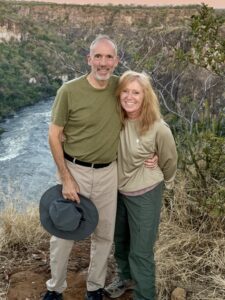
My name is Pam Moore and I’m the founder of Plant Protect. I was born in Liverpool in 1967 and grew up through the seventies in a city I love deeply, though the areas I moved through as a child were often quite deprived, with little greenery to speak of. What I noticed early on, and this stayed with me for the rest of my life, was that the places with trees, flowers and open green spaces were always the beautiful areas, the ones with lovely houses and thriving shops. In my young mind people who lived around big open spaces with lots of trees and greenery were happy and had lots of money.
Pam’s granddaughter, Ava.
I’m a grandmother now. My granddaughter Ava is fourteen and she is honestly the reason I do everything I do. When I look at her I think about the world she is going to inherit, and that thought doesn’t leave you alone once it takes hold.
Plant Protect is a UK-based conservation partnership that connects businesses to real, verified environmental impact. We work with two extraordinary organisations, Ripple Africa in Malawi, planting trees and fruit trees that feed families and keep children in school, and Amazon Conservation in Peru and Bolivia, protecting some of the most precious rainforest on the planet. Every business that joins us gets specific, traceable numbers, not estimates or vague promises, and a genuine story to tell. We work with businesses of every size, from smaller businesses taking their first proper step into sustainability, to larger organisations who want a named conservation partnership their people can genuinely feel proud of and share with the world.
Could you explain about how your business model works, as well as how and why it incorporates charitable giving?
The model is built around something I felt was missing when I first started looking at sustainability for businesses. Most options available to a business were either very complex, full of frameworks and audits and compliance language, or very transactional, a one-off contribution with little ongoing connection to the impact it created. I wanted to build something different. Something that didn’t just take a payment and move on, but stayed present, kept the story alive, and gave businesses something they could genuinely point to and feel proud of over time. Something real, structured and human.
For smaller businesses, Plant Protect works as a membership. They join at a tier that suits their size, and a portion of every membership goes directly to conservation, funding trees planted and forests preserved in Malawi, and supporting Amazon Conservation’s work in Peru and Bolivia. Alongside the conservation impact, they get a practical sustainability framework, a questionnaire, a personalised action plan and regular check-ins, so the membership gives them both something to feel and something to build on.
For larger businesses, the model is different. These are organisations that often already have sustainability covered on paper. What they are missing is a human story, something their teams across multiple countries can connect with and feel proud of rather than another policy sitting in a document nobody reads. For these clients we create a named Conservation Partnership, with specific verified impact numbers, quarterly reports featuring real photographs and stories from the field, and a fully managed relationship so they receive content and connection rather than another thing to administer.
What Plant Protect does for larger businesses goes far beyond packaging the work of our conservation partners. We create, manage and deliver a named, verified conservation partnership that belongs entirely to the client. Their specific impact numbers, their certificate, their story. We maintain the relationships with both Amazon Conservation and Ripple Africa on their behalf, we commission and structure the quarterly reports, we write the context and narrative that connects the field updates to the client’s own people and purpose, and we ensure that the extraordinary work happening on the ground in Peru, Bolivia and Malawi is translated into something a company’s people can hold, share and feel genuinely proud of. The photographs, the stories, the verified numbers, packaged and presented in a way that travels through an organisation and keeps the partnership alive and visible, not just at the moment of joining, but every single quarter for as long as the partnership continues.
In doing that, Plant Protect becomes the voice that tells the world what a business truly stands for. We showcase their empathy, their commitment to the planet, its people and its wildlife, in a way that reaches far beyond a policy document or a sustainability report. We help create real cultural change inside organisations, because when a member of staff sees that their CEO has chosen to plant trees in Malawi, to protect the Amazon, to feed families and support indigenous communities, something shifts. They don’t just work for a company anymore. They work for something worth talking about.
What initially inspired you to support environmental causes through your business?
Honestly, I never thought my passion for hugging trees and being in nature could become a business. I have always been that person, the one who stops to look at the trees, who feels genuinely restored by time outdoors, who has walked through green spaces since I was a child and felt something shift inside. But turning that into something commercially viable felt like a stretch for a long time.
What changed everything was a chance meeting with someone who was doing something similar, building a business with conservation at its heart. That conversation opened a door I hadn’t known was there. I thought, if they can do this, maybe I can too, but in my own way, in a way that fits who I am and what I genuinely believe.
And underneath all of it was Ava. My granddaughter is fourteen now and she is the emotional anchor for everything I build. I grew up in an era before we understood what we were doing to the planet. I think about my generation’s footprint, and I feel a real responsibility to spend whatever working years I have left doing something that matters for her future. Plant Protect is my answer to that feeling.
For you, why is it important to protect the Amazon?
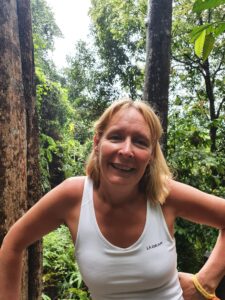
Pam in the rainforests of Cambodia
I have always had a passion for the Amazon, ever since I can remember, and one of my genuine dreams is to visit it one day. There is something about the sheer scale and aliveness of it that has always moved me, even from a distance.
When I originally set up Plant Protect, I was working exclusively with Ripple Africa in Malawi. About two months in, I felt strongly that I wanted to do more, that the Amazon had to be part of the picture. So, I did my research, looked carefully at who was doing the most credible and serious work protecting it, and that research led me to Amazon Conservation. I am so glad it did.
Because once the Amazon is gone, it’s gone. That’s not a dramatic statement, it is simply true, and I think we need to say the plain truth more often rather than dressing it up in frameworks and targets. The Amazon is home to around ten percent of all species on Earth, it regulates our climate, shelters indigenous communities who have been its greatest protectors for generations, and supports biodiversity at a scale nothing else on the planet can replicate. Protecting it is not one option among many. It is essential.
What stands out about Amazon Conservation compared to other organizations and why did you choose to support their work?
I have to start by saying how much I love working with Nikki and Heather. They are both so genuinely helpful, warm and committed to what they do, and that matters enormously when you are building a partnership that you want to feel real rather than transactional. I very much hope one day to visit, to meet them both in person and to see for myself the extraordinary work this organisation is doing on the ground.
What drew me to Amazon Conservation above other organisations goes right to the heart of what I care about most deeply, and that is the indigenous communities and the wildlife. I get genuinely frustrated when I hear about the pressure on indigenous peoples to leave or change the way they have lived for generations. These communities are not obstacles to progress, they are the Amazon’s greatest protectors, and they deserve to have their territorial rights defended, not eroded. And the wildlife, the extraordinary, irreplaceable wildlife that exists nowhere else on Earth, the thought of losing species that have evolved over millions of years simply because we failed to act in time genuinely distresses me. What Amazon Conservation is doing on both of these issues, standing firmly alongside indigenous communities and using science and technology to protect the habitats that wildlife depends on, is exactly the kind of serious, committed, long term work that gives me real hope. That’s why I chose this organisation above all others, and why I am so proud to call this a genuine partnership.
I also love that Amazon Conservation never overclaims. The communication is honest, evidence-based and grounded in reality. For a business like Plant Protect, where integrity in everything we say is completely central to what we stand for, that alignment of values is not something I take for granted.
How have your business’s community and clients responded to this partnership?
With genuine emotion, which still surprises me sometimes even though it probably shouldn’t. When businesses receive their first update from the field with real photographs of the Amazon and the families in Malawi, something shifts. It stops being a line item or a badge on a website and becomes something their people actually talk about. I’ve had clients tell me their staff brought it up unprompted in a team meeting. One client told me their Managing Director shared it with his family over dinner.
That’s the thing about real stories. People remember them. A carbon reduction percentage doesn’t travel through an organization the way a photograph of a child standing next to a fruit tree their company funded does.
Our Circet partnership has been a particularly meaningful example of this. Circet is one of the UK and Ireland’s leading telecoms and infrastructure companies, operating across six countries, and their teams across all those countries are now connected to the same Amazon Conservation story. That reach, that breadth of human connection through one partnership, is exactly what Plant Protect was built to make possible.
Is there a favorite program or initiative that has stood out to you or your clients most?
For me it has to be the work Amazon Conservation does alongside indigenous communities. The combination of respecting and protecting the territorial rights of people who have called the Amazon home for generations, while at the same time using that deep local knowledge to strengthen conservation efforts, feels like exactly the right approach. These communities are not separate from the forest, they are part of it and supporting them is inseparable from protecting it.
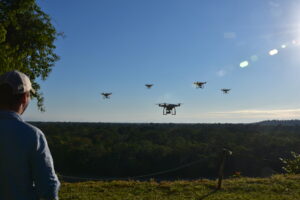
The use of science and technology to monitor threats to the forest also genuinely excites me every time I learn more about it. The idea that deforestation and illegal activity can be tracked and responded to in near real time, that the people working to protect the Amazon have access to tools that give them a fighting chance against the forces that would destroy it, feels like the kind of innovation the planet desperately needs more of.
For our clients, the thing that tends to resonate most is simply knowing the scale of what Amazon Conservation protects, over ten million acres of the most biodiverse forest on Earth. When that number lands in a quarterly report alongside a photograph of the forest and the communities living within it, people feel the weight of it. It stops being an abstract statistic and becomes something worth fighting for.
What would you say to other environmentally-conscious people and businesses about how they can help make a difference and help conserve the Amazon and the planet?
Start. Just start. Don’t wait until you have a net zero strategy and a sustainability director and a perfectly formed ESG framework. Don’t wait until you feel qualified enough or informed enough or big enough. None of that is a prerequisite for doing something real.
The businesses that have moved me most since I started Plant Protect are not the ones with the biggest budgets or the most sophisticated sustainability strategies. They are the ones where someone, a founder, a CEO, a person with influence, decided they wanted their business to mean something beyond its balance sheet, and then took a step. One step. And then another.
The Amazon needs that. Malawi needs that. The planet needs that. And honestly, your people need it too, because there is something that happens inside a business when it connects to something larger than itself. People show up differently. They talk about their work differently. They feel proud.

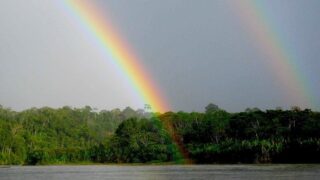
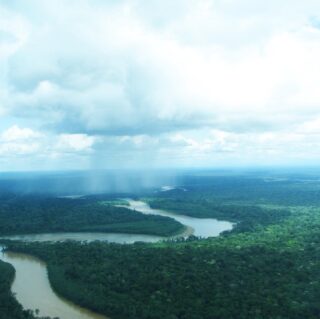
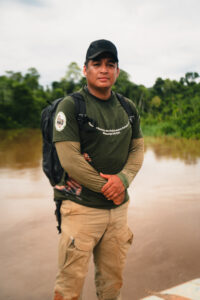 When the boat engine falls silent in the middle of a river that serves as both road and lifeline, nature seems to reclaim the landscape. The water becomes still again, a heron soars across the sky, the wind stirs the crowns of towering trees. And for a fleeting moment, everything seems to breathe without hurry. Jefferson watches. Then smiles.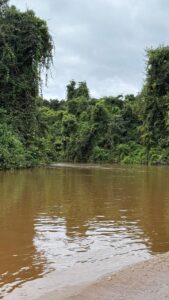
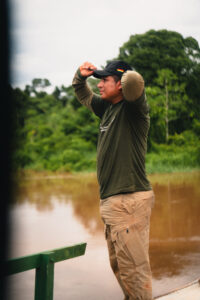 But perhaps the most important lesson a park ranger can learn takes place neither in the forest nor at school. It happens at home.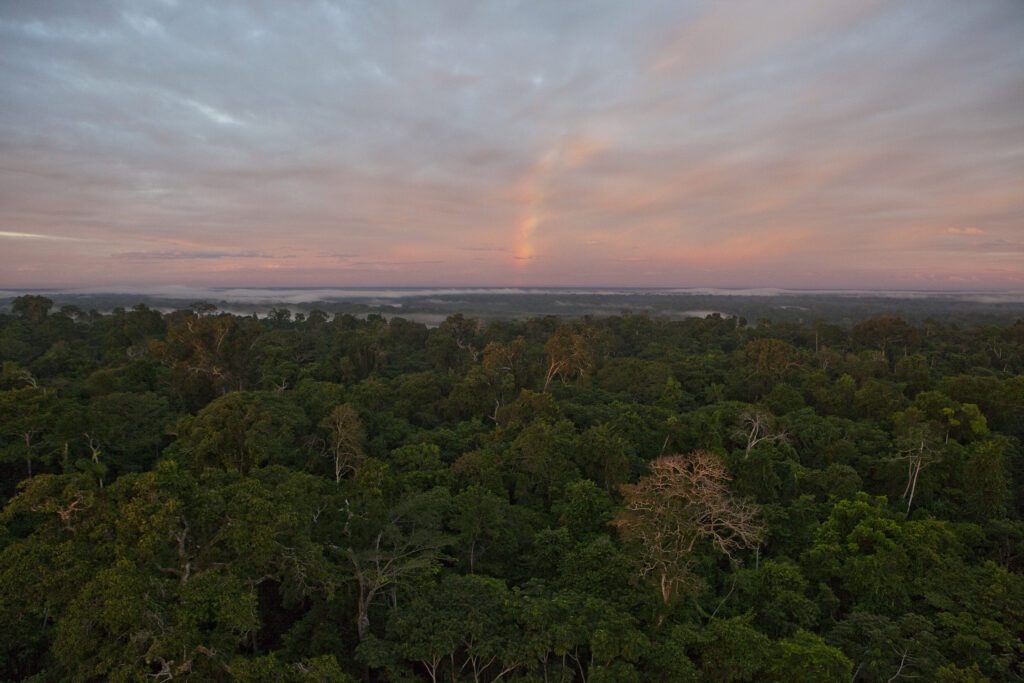
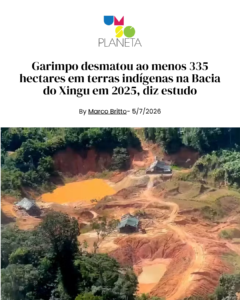
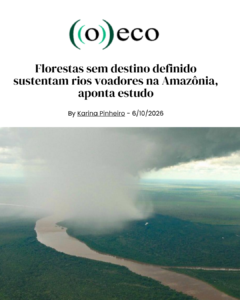
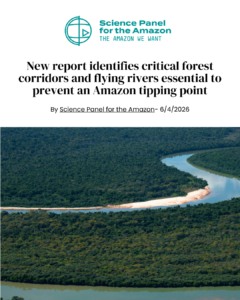
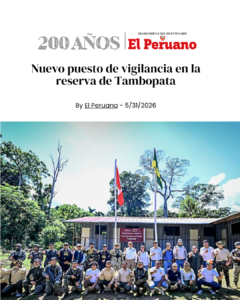
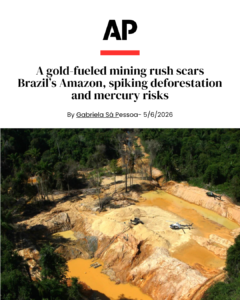
 Behind every success at Amazon Conservation is an array of individuals with a shared passion for the Amazon: our generous donors and funders, dedicated staff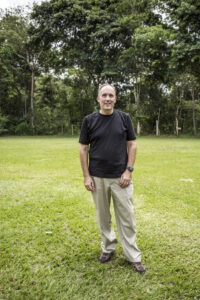
 The Problem These Ratings Solve
 Candid (formerly GuideStar) evaluates nonprofits on a single, essential question: how openly does an organization share information about itself? Financials, governance, leadership, strategy, impact metrics — Candid wants it all on the table.
 Charity Navigator takes the broadest view of any major watchdog, evaluating nonprofits across financial health, program effectiveness, cost efficiency, long-term stability, and accountability practices. Its four-star rating, the highest it awards, signals that an organization exceeds best practices across nearly every dimension it measures.
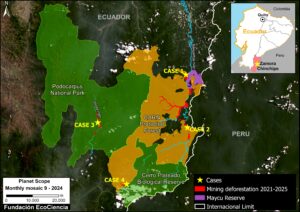 The analysis identifies approximately 111 hectares affected by mining within protected areas and conservation zones across four case studies monitored between 2011 and 2025. The impacted areas include Podocarpus National Park, the Cerro Plateado Biological Reserve, the Maycú Nature Reserve, and the Cuenca Alta del Río Nangaritza Protective Forest, territories that are essential for ecological connectivity and for conserving emblematic species such as the jaguar, tapir, and spectacled bear.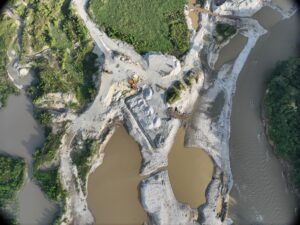
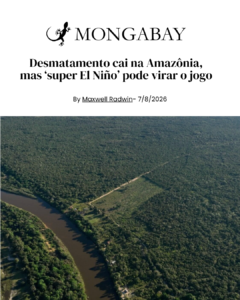
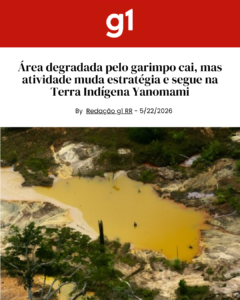
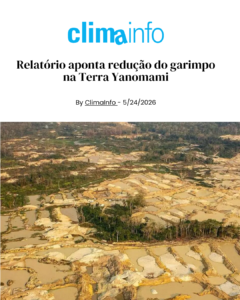
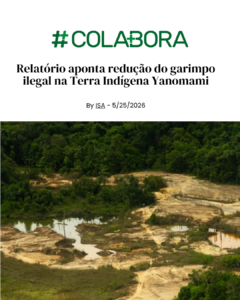
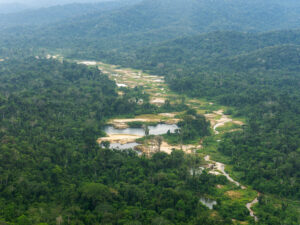 The new report released by Instituto Socioambiental (ISA) in partnership with our MAAP initiative, documents a sharp decline in mining-driven deforestation inside the Yanomami Indigenous Territory following the Brazilian government’s large-scale intervention in 2023. Newly cleared mining areas dropped from roughly 1,800 hectares in 2022 to just 45 hectares in 2025. This means a reduction of over 90%.
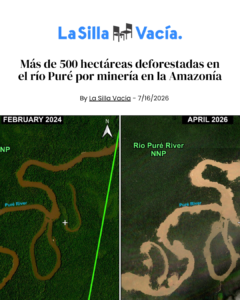
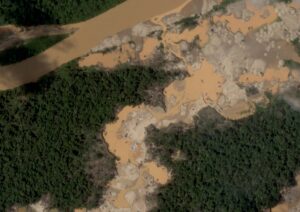 The analysis conducted by Conservación Amazónica–ACCA, in partnership with our MAAP initiative, documented more than 500 hectares of forest lost, and identified 183 active mining structures, 67 illegal camps, and an estimated 1,000 people currently operating within the protected area.
 Loading...