 Bats are among the least understood and most loathed mammals on the planet. Myth and legend paint them as cruel vampires that would not hesitate to drink all the blood from their innocent victims. While it is true that three blood-sucking species exist in the world, they are not as cruel as myths make them seem, and there are many other species that have important roles in their ecosystems. In rainforests in particular, bats control insect populations, serve as pollinators and seed dispersers for numerous plant species, and in some cases regulate populations of small vertebrates, providing balance to the intricate web of life in the forest.
Bolivia is one of the countries with the highest levels of biodiversity in the world, a fact which is evident in the number of mammal species that exist. This charismatic group of fauna includes 125 species of bat, which is close to half of the total mammal species in the country. Madidi National Park, a protected area of international importance and a jewel of biodiversity, spans numerous ecological zones, from permafrost to Amazonian forest, and is home to more than 90 bat species.
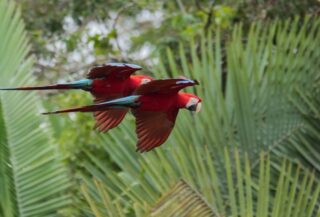
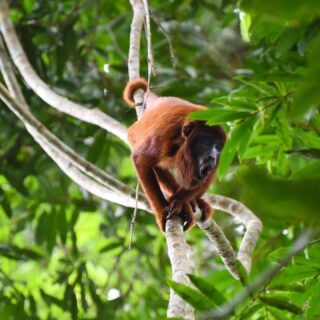
Bats are crucial for all the ecosystems they inhabit, yet we still know far too little about the species found in this region. We continue to identify new species in the Park, but information about their natural history and ecology is still very limited. Most of the species of bats in Madidi were recorded through a combination of sampling methods, including the use of mist nets at ground and canopy level complemented by acoustic monitoring. This mix of sampling methods provides a more complete view of the species present in a particular ecosystem. Even though ACA-Bolivia has made great progress in recording this region’s bat species, there are still many ecosystems and forest types to be sampled. Further study will certainly increase the known diversity of bats in this protected area and will make evident the great intrinsic and ecological value of these species while adding to our ability to conserve this magnificent landscape. (Photo above by Graham Anderson and illustration by Adrian Tejedor.)
 REDD—
REDD— degraded lands with green firebreaks that are enriched with profitable Andean plant species. Already, ACA has developed fire prevention workshops in partnership with Manu National Park and begun hosting them in local communities.
 forest degradation, and greenhouse gas emissions in the Andes. These studies will provide communities with information they need to make good decisions about resource management.
 ACA’s research station functioned as a world-class photo studio for Graham D. Anderson, a leading wildlife photographer, who served as
  “My experience at Los Amigos was fabulous. I am looking forward to my travels to
  The Peruvian Minister of Environment, Dr. Antonio Brack Egg, attended the 8th annual
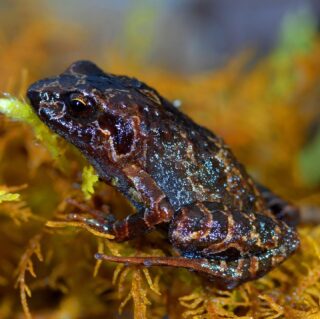
  Scientists have described a new species of frog from ACA’s
  Edgar Lehr from the Senckenberg Natural History Collection in Dresden, Germany and ACA scholarship recipient Rudolf von May from Florida International University’s Department of Biological Sciences describe this new species in the latest issue of the
  On September 7, 2009, ACA/ACCA’s
  Washington-based Amazon Conservation Association will be featured in the
  iology majors at the Universidad Mayor de San Andrés in La Paz, Bolivia have input productivity and physical data into ACA’s Brazil nut tree database for thousands of Brazil nut trees located in northern Bolivia, near Madidi National Park.
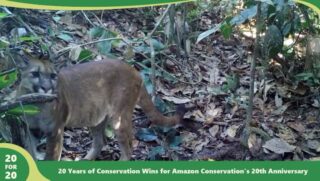
 Photos of animals like the ones here were recorded by three camera traps, each just 250 meters from the CICRA biological station in the Los Amigos Conservation Concession in Madre de Dios, Peru.
 terrestrial mammal.
 (Article by Scott Harris) The Peruvian government reversed course on two controversial laws following a deadly clash earlier this summer between indigenous tribes and police.
 The Madre de Dios region was not directly affected by the protests or the decrees, although it could have been eventually impacted by the precedents set by the decrees had they remained in place. Madre de Dios president Santos Kaway will be a member of the government’s new Amazonian Peoples group, along with four representatives of the government’s executive branch, the presidents of Peru’s Loreto, Ucayali, Amazonas, and San Martin regions, and 10 representatives of Amazonian native communities.
 Loading...