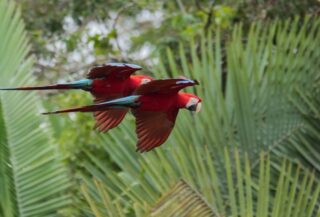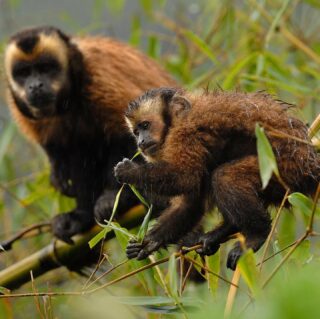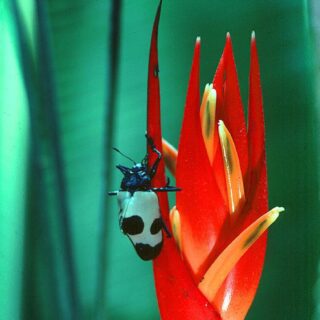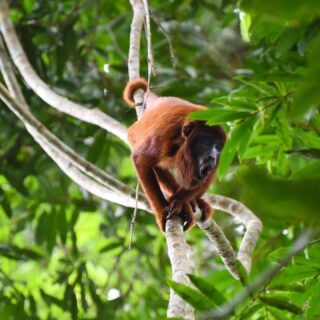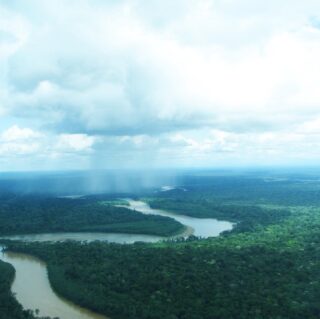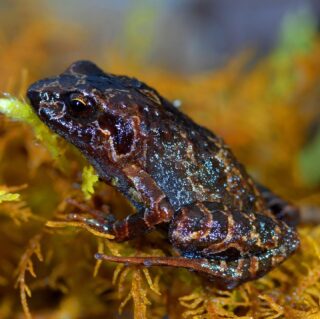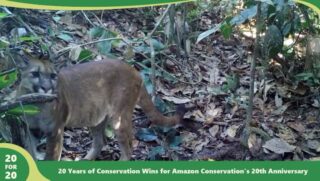


ACA’s four year-old grant program for students and researchers working at Los Amigos recently gave its 100th grant. ACA has now given a total of 108 grants at Los Amigos: 36 to Peruvian undergraduates, 36 to graduate students, and the same number again to established researchers. Fully 60% of ACA grant winners to date have been Peruvian, helping drive a nationwide boom in biodiversity training and research.
Last month ACA awarded the first 15 grants in a similar program for Wayqecha Cloud Forest Research Station. To see a list of the winning projects at Wayqecha, click here. The impact of these programs is easy to measure.
This year alone, they will help more than two dozen students from around the world defend undergraduate, master’s and Ph.D. theses based on research done in the Amazon headwaters. Alumni from Los Amigos are now publishing theses and peer-reviewed papers at the rate of more than two per month, on everything from bird morphology to primate behavior to epiphyte distributions
Ensuring that the next generation of tropical scientists has first-hand experience working in the Amazon doesn’t come cheaply. Over the last three years we’ve invested more than half a million dollars in direct grants to students and researchers.
 Five extraordinary new books on Amazonia’s sprawling river system were recently published with the support of ACA. Authored by an international team of aquatic conservation ecologists, the books distill research results from across the Amazon basin into volumes packed with photos and written for a broad audience. To further increase the books’ usefulness, they have been published in English, Spanish and Portuguese versions:
 From June 26th trough 30th, members of the weavers association of the community of Quico participated in the VI Feria Internacional Huancaro 2006, celebrated in the Peruvian district of Santiago, Cusco. Quico is one of the eight traditional Quechua communities in the Q’eros Nation, and ACA has been supporting this community in efforts to generate income through the sales of weavings made with traditional patterns and natural dyes.
  During daylight, butterflies reign over the rainforest, but at night other winged marvels appear to claim the throne: Moths. ACA’s Wayqechas and Los Amigos Research Stations are the two most important sampling stations for the Botanical Research Institute of Texas (BRIT), which is currently conducting studies of selected moth families in the Andes-Amazon region of southeastern Peru.
  As some of you may remember, Vanessa Sequeira, a dear friend of us and colleague passed away in Brazil last year while doing her thesis research.
  At the end of last year we had a spectacled bear sighting at our Wayqecha Research Station. Two of our staff workers where doing maintenance work in a trail near the station when a strong, big, messy-coated bear slowly approached them. Our staff stood still, nervous, but still. The bear in turn, was quietly chewing a chunk of Bromelia sp. 5 meters was all that separated our staff from that powerful, robust but yet adorable beast.
  Loading...