 (Article by Scott Harris) The Peruvian government reversed course on two controversial laws following a deadly clash earlier this summer between indigenous tribes and police.
On June 18, Peru’s Congress voted 82-14 to overturn legislative decree 1090, which would have removed protected status from more than 170,000 square miles of northeastern Peruvian forest, and Decree 1064, which made it easier for companies to conduct oil or gas exploration without obtaining prior approval from local and indigenous communities. Furthermore, in a sign of willingness to increase indigenous involvement in future decision-making regarding Amazon lands, the government has formed the National Coordination Group for the Development of Amazonian Peoples, which will include several indigenous leaders in its membership.
Daysi Zapata, acting president of the Inter-Ethnic Association for the Development of the Peruvian Amazon (AIDESEP), said in a statement on the group’s Web site that “we are grateful that the will of the indigenous peoples has been heard and we only hope that in the future governments listen and attend to indigenous peoples.”
The changes occurred after thousands of indigenous demonstrators, centered largely around the town of Bagua about 600 miles north of Lima, were allegedly fired upon by security forces. Peru’s government temporarily placed the region under a state of emergency after the incident, which left between 30 and 100 people dead, according to various estimates. After the protest, schools and markets in Puerto Maldonado, the capital city of the Madre de Dios region and home of one of ACCA’s offices, closed their doors for 48 hours in response to the incident.
James Anaya, the United Nations Special Reporter for Indigenous People, has called for an investigation into allegations of abuse of indigenous people by security forces in Peru.
 The Madre de Dios region was not directly affected by the protests or the decrees, although it could have been eventually impacted by the precedents set by the decrees had they remained in place. Madre de Dios president Santos Kaway will be a member of the government’s new Amazonian Peoples group, along with four representatives of the government’s executive branch, the presidents of Peru’s Loreto, Ucayali, Amazonas, and San Martin regions, and 10 representatives of Amazonian native communities.
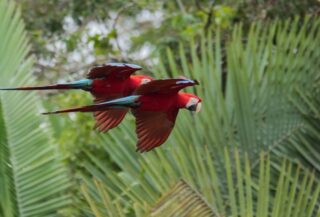
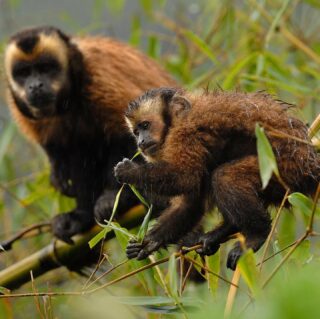
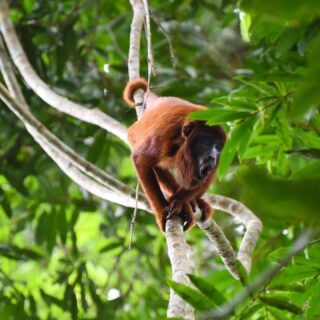
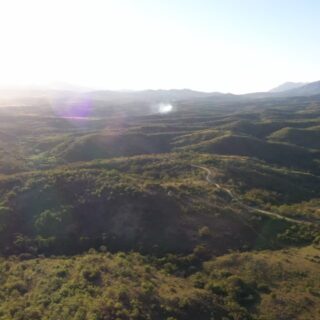
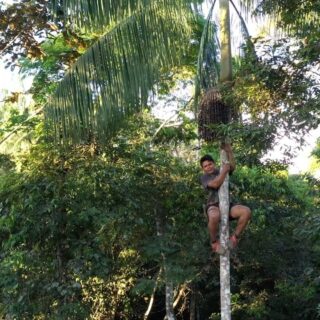
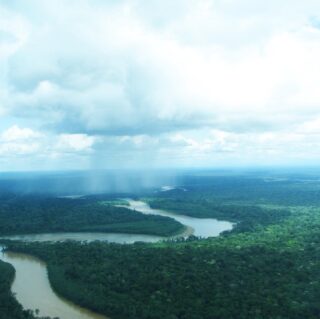
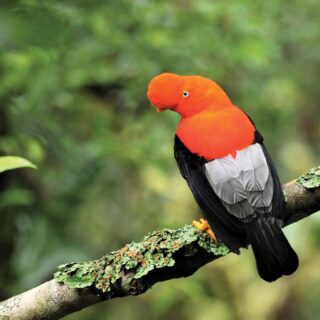
Peru’s government has in recent years been openly courting energy company investments, which Peruvian president Alan Garcia has said would provide a boon to the nation’s economy. On July 7, Houston-based BPZ Resources Inc., an oil and gas exploration and production company, announced that a subsidiary company had secured a $70 million line of credit for oil development in Peru. In April, French firm Perenco announced it would invest $2 billion for oil exploration in Peru’s Loreto region. Other companies currently involved in drilling and exploration in Peru include Argentina’s PlusPetrol, Canada’s Petrolifera, Spain’s Repsol, and Brazil’s Petrobras. (Photos above by Adrian Tejedor)
 ACA and our Peruvian sister organization, ACCA, hosted an international conference on REDD (Reducing Emissions from Deforestation and Forest Degradation) from May 4-6, 2009, in Madre de Dios, Peru. A market-based strategy for mitigating climate change, REDD offers carbon buyers a way to “offset” their greenhouse gas emissions and sellers to earn a profit from protecting their forests. Co-hosted by the Regional Government of Madre de Dios (GOREMAD), the conference addressed economic, social, and environmental opportunities and challenges for REDD in Madre de Dios and the rest of the MAP Region (Madre de Dios, Peru; Acre, Brazil; Pando, Bolivia).
 nizations and other civil society groups, and students from Universidad Nacional Amazónica de Madre de Dios (UNAMAD). The event was also broadcast in real time via closed-circuit TV with local and regional press in attendance.
 The Amazon Conservation Association, our Peruvian sister organization,
  extraordinary plant life. Other bridges lead visitors across forested slopes that cover eight distinct eco-zones, providing a view from more than 10,000 feet in elevation down to the Amazon basin.
 Oxford University professor Yadvinder Malhi has been working at ACA’s
 YM: There is a strong collaboration between us; with UNSAAC (Universidad Nacional de San Antonio Abad del Cusco) through students and professors and ACA, which offers a good deal of support through scholarships for Peruvian and foreign students as well as the entire infrastructure of the
  We are happy to welcome Dr. Adrian Tejedor as our new Science Manager based at
  The Manu-Tambopata Corridor Initiative (MAT) was launched in February 2009 to conserve one of the most important biodiversity hotspots in the world, a 519,000 acre (210,000 hectare) area of rainforest in the Peruvian Amazon. This initiative is the centerpiece of ACA’s efforts to lessen the environmental impacts of the Interoceanic Highway, a transcontinental road that models predict could produce a swath of deforestation the size of Massachusetts and Connecticut combined.
 Establishing the
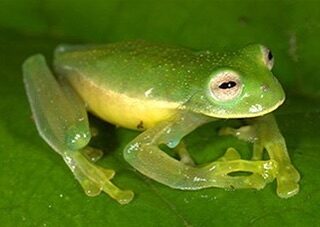
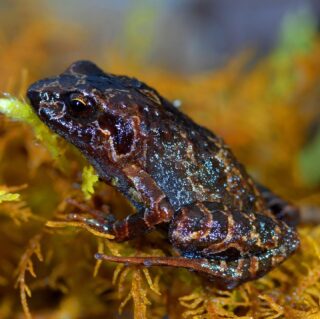
  The Andean region’s smallest known frog was recently discovered in the cloud forest near Peru’s Manu National Park. Over the past two years, 10 new frog species have been found in the forest around ACA’s
  studying at Wayqecha because it contradicts the informal rule that high altitude vertebrates tend to be larger than low altitude vertebrates. Noble’s pygmy frog is among the smallest vertebrates ever found at this altitude, and one of the smallest amphibian species in the world.
 The end of 2008 has been a time of change for ACA. In our most recent news, we would like to say goodbye to Dr. Nigel Pitman, ACA’s Science Director, who is moving to Brazil. We at ACA want to express our gratitude to Nigel, who has led the charge for strong and innovative science in all ACA’s programs.
 ACA has been working hard to ensure that students living near Manu National Park learn how to protect the majestic cloud forest in their back yard. The cloud forests where the eastern slopes of the Andes meet the Amazonian lowlands constitute one of the world’s greatest conservation priorities, and with the support of the Sea World & Busch Gardens Conservation Fund, we’re doing our best to protect this area.
 Over 300 students submitted
  In October 2008, ACA embarked on the final stage of our project to map all the Brazil nut stands in the northern territory of the indigenous Tacana. The tree census in the Bolivian Amazon is intended to support the Tacana petition for government recognition of their territorial land claim, known as a TCO in Bolivia.
 Loading...