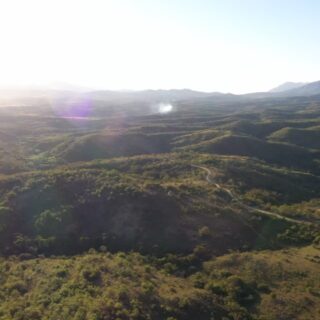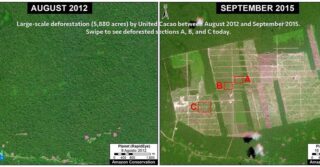
 As the Interoceanic Highway is paved across highly biodiverse southeastern Peru, it is expected that forest loss will increase dramatically. Road improvement in the Amazon is typically associated with increased rates of deforestation, colonization, illegal logging, and land clearing for farming, artisanal gold mining, and cattle ranching. These practices spread through the construction of illegal secondary roads and increased in-migration. By some estimates, the paving could result in a 60 mile-wide swath of deforestation between Manu National Park and Tambopata National Reserve.
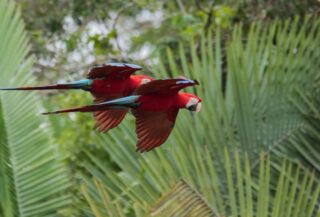
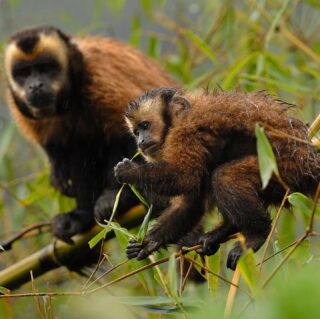
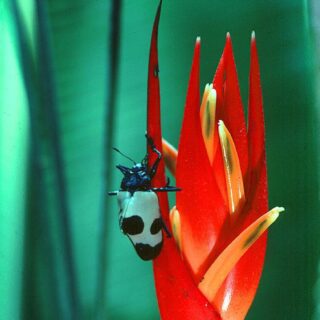
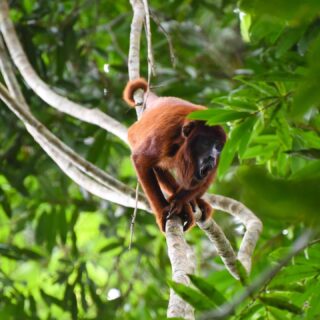
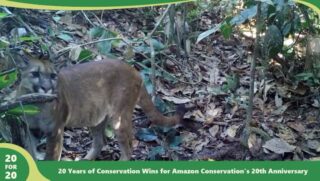
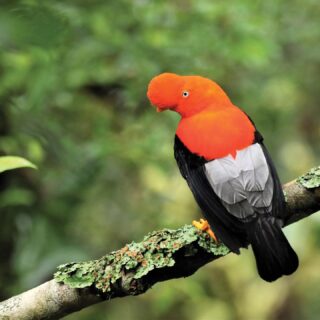
The Interoceanic Highway is especially problematic because it runs through previously remote, sparsely populated areas of pristine tropical forest. These forests are home to jaguars, giant river otters, rare bush dogs, and Harpy eagles.
ACA’s Interoceanic Highway Mitigation Strategy aims to reduce rampant deforestation by creating three major conservation corridors, which protect forest at high risk of logging and burning. The first corridor to be designed is the Malinowsky Conservation Corridor, which will conserve 210,000 hectares (518,920 acres) of primary forest. The Malinowsky Corridor preserves a forested corridor between Manú National Park and Tambopata National Reserve via ACA’s Los Amigos Conservation Concession
In dialogue with regional government and local partner organizations, ACA is designing the Malinowsky Corridor to include a mosaic of protected areas and support sustainable development alternatives to logging and slash-and-burn farming. Some of the proposed sustainable development alternatives include: sustainable forestry, community agroforestry, ecotourism, and carbon finance. These tools can ensure conservation of forest and biodiversity across the last continuous forest in the southwestern Amazon. They can also avoid the emissions of millions of tons of carbon dioxide into the atmosphere.
 ACA is partnering with schools to develop environmental awareness both nationally and internationally. With ACA’s support, students at these schools have learned about biodiversity conservation and have sponsored fundraising events to help support ACA’s work.

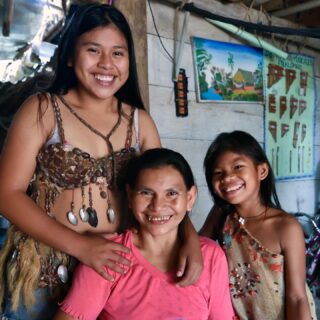
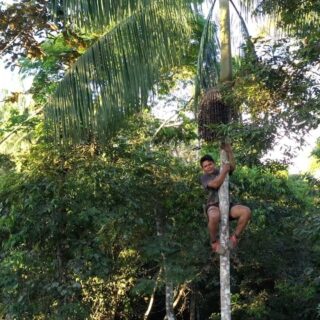
 On June 5, 2008, ACA’s Peruvian sister organization, ACCA, was awarded the Public Recognition for Environmental Stewardship by the Regional Government of Cusco. This prize is awarded annually in celebration of World Environment Day through Cusco’s Agency of Natural Resources and Environmental Management. ACCA won for its work creating the first conservation concession for an indigenous Peruvian community, the Huachipaire Haramba Queros.
 Since early 2007, ACA has partnered with the
 July 2, 2008 marked the establishment of the world’s first conservation concession managed by an indigenous group. The Haramba Queros Wachiperi Ecological Reserve protects 6,976 hectares (17,238 acres) of highly biodiverse forest located in the Amazon rainforest of southeastern Peru.
 The signing ceremony took place in Lima with Haramba Queros leaders, representatives of Peru’s Natural Resource Agency (INRENA), and members of ACA and ACCA that brokered the agreement.
 These kids are separated by 6,097 km, but
 they’re pulling together. This spring in Longmeadow, Massachusetts, at Lubavitcher Yeshiva Academy’s annual education fair, three 6th grade students raised money for ACA with a display on Amazon conservation. At the same time, schoolchildren from the small town of Boca Amigos were visiting ACA’s field station in Amazonian Peru, doing field work side by side with resident researchers.
 On 15 April 2007 the University of California, Davis Chapter of the Society for Conservation Biology and the UC-Davis Graduate School hosted a blues concert to benefit ACA. All proceeds will go to our Pampas del Heath Project, which aims to conserve Bolivia’s Amazonian savanna ecosystem in partnership with Tacana indigenous communities.


 Five extraordinary new books on Amazonia’s sprawling river system were recently published with the support of ACA. Authored by an international team of aquatic conservation ecologists, the books distill research results from across the Amazon basin into volumes packed with photos and written for a broad audience. To further increase the books’ usefulness, they have been published in English, Spanish and Portuguese versions:

 Loading...