 Behind every success at Amazon Conservation is an array of individuals with a shared passion for the Amazon: our generous donors and funders, dedicated staff (both on the ground in Latin America and at our headquarters in Washington,DC), and world-class Board of Directors. Our Board brings together passionate leaders in science, business, and conservation who selflessly lend their invaluable expertise, vision, and financial support to help protect the rainforest we all love and the people who depend on it.
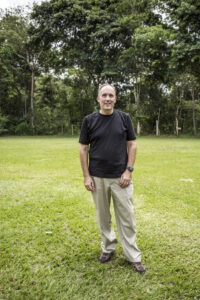
Doug Sarno has focused on bringing people together to solve complex challenges. Trained as a civil and environmental engineer, he soon discovered that lasting environmental solutions depend not only on science and technology, but also on collaboration, trust, and shared vision. Over the years, he became a recognized facilitator and strategic planner, helping governments, nonprofits, and communities navigate some of the most difficult environmental issues of our time.
That passion for building partnerships eventually led him to Amazon Conservation. What began as a consulting role supporting strategic planning and board development evolved into a deeper commitment to the organization’s mission. Today, as Board Chair, Doug brings decades of experience in stakeholder engagement and consensus-building to help strengthen regional collaboration across the Amazon.
In this Q&A, Doug reflects on his path to conservation, the importance of creating trusted partnerships, and why he believes collaborative action is essential to protecting one of the planet’s most critical ecosystems.
_________________________________________________________________________________________________________________________________
Tell us a little bit about yourself.
I am originally a civil and environmental engineer, but have spent the majority of my career as a facilitator and strategic planner. Much of my work has been to convene and facilitate diverse stakeholders to create consensus on how to address the types of complex and controversial environmental issues I had worked on as an engineer. My real passion has always been planning and process. In the late 1990’s I had the opportunity to serve as Executive Director of the International Association for Public Participation where I oversaw the development of a number of seminal tools and foundational training in establishing the formal practice of Public Participation. Since then I have worked with government agencies and nonprofits as a consultant, facilitator, trainer, and strategic planner in a wide range of issues related to strategic planning, organizational effectiveness, and stakeholder collaboration.
What sparked your interest in conservation?
I have always been interested in environmental issues. In engineering school I sought to focus on environmental engineering at a time when it barely existed as a discipline. This allowed me to begin my career working for environmental consulting firms, environmental nonprofits and the Environmental Protection Agency before starting my own environmentally-focused consulting firm. Much of my work has been for agencies and nonprofits focused on conservation, environmental protection, and environmental remediation. The more I worked in this field exploring solutions to hazardous and radioactive waste disposal, recycling, and the protection of natural resources, the more I witnessed the incredible damage caused by our careless attitudes toward nature. This resulted in my commitment to be part of the solution. I look for opportunities to find balance between human activity and ensuring a sustainable environment both in my work and in my volunteer activities.
How did you first connect with Amazon Conservation?
A former client was hired by Amazon Conservation and was looking for a consultant to support strategic planning and Board Effectiveness activities. It was a good fit and I worked with Amazon Conservation on a variety of initiatives over a number of years. In the middle of one facilitation, the Board Chair asked me if I would like to join the board. I of course said yes. We joked that it was a clever way to get my services for free, but that was a deal I was more than happy to make.
From your perspective as a Board Chair, what is it that sets Amazon Conservation apart from other similar organizations?
We are a convener and collaborator of the organizations, tools, and science needed to help tackle this enormous and enormously important challenge. In that role we are able to work across political borders without any specific agenda, and without the constraints that country-specific organizations might face. This collaborative regional approach is the only way to get impact at scale. I truly believe that Amazon Conservation is committed to our work to protect and preserve the Amazon without trying to draw attention to ourselves or build the organization with any functions other than what is essential for the mission. This allows us to make sure the vast majority of all money raised goes directly to conservation efforts.
What have you learned from your Board service thus far?
I think the passion of board members for the Amazon Conservation mission is what makes this board special. There is genuine excitement to learn about the work that is happening and it is always a pleasure to be working with such a diverse group of talented people. Working with partners throughout the region provides us with a big picture view of the causes and challenges of deforestation which allows us to contemplate holistic solutions. On this board we get a front row seat to the challenges and solutions to one of the most important conservation initiatives on the planet.
Why is our mission of protecting the Amazon so important?
Beyond the oceans, the Amazon is perhaps the single largest and most important ecosystem in helping to regulate the earth’s climate. There are so many reasons to protect this diverse wild space, but it’s service as a carbon sink is especially important to maintaining a human-friendly planet. The more we see of large areas of the Amazon shifting from a carbon sink to carbon release, the more essential it becomes to find sustainable solutions to managing deforestation in our lifetime.
What advice would you give to others seeking to make a difference?
I think many of us are struggling with the immensity of the world’s challenges right now. We want to see a fairer, more humane, and greener planet but struggle to know how to be part of the solution. As so many of our institutions struggle to evolve to meet the technologies and challenges of the 21st Century, I have become more convinced that many of the solutions will fall to civil society. I am reminded of the Margaret Mead quote “Never doubt that a small group of thoughtful, committed citizens can change the world; indeed, it’s the only thing that ever has.” We need to shift our energy from doomscrolling about what a mess things are to taking some action, no matter how small, toward a future that you want to see. It does not matter what issue or how overwhelming the problem might seem. Find an organization that matches your passion and ask what you can do to help.
Is there anything else you’d like people to know about Amazon Conservation?
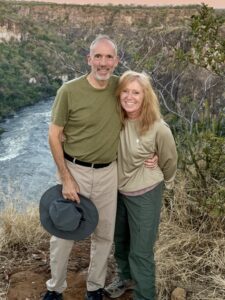
I was recently in Africa and spent some time with former poachers who are now part of the teams helping to protect wildlife. They explained that poaching was never something they wanted to do, but what was available to them to feed their families. They were paid little while others made a fortune on the tusks and horns that were sold for high prices. It reminded me that the solution to conservation is not brute force protection, punishing the small players while the true perpetrators continue their activities. Indeed, much of the gold mining currently destroying large areas of forest is happening in protected areas, by poor people working in terrible conditions. Catching and punishing those people might stop that mine but will not solve the problem itself. The answers are rooted in creating approaches and systems that allow the forest and humans to sustainably co-exist. I think this holistic and sustainable approach to conservation is at the heart of how Amazon Conservation works and is built into our regional partnership approach to all of our activities.
Based on your area of expertise, how would you describe the importance of creating collaborative and participatory spaces in conservation, and how do you think Amazon Conservation contributes to this?
I think that I have touched on this throughout but will add one more essential piece of the puzzle. Just as the environmental issues we are seeking to address are almost entirely the result of human action, the success of the solutions we need to build are entirely dependent on human inter-action. It is the human element that must be solved to allow nature to do its thing. To allow conservation to take place, we first need to build the understanding, trust, and relationships to change human behavior in a permanent and sustainable way. That can only occur through ongoing collaboration to address the wide range of needs and conditions that result in deforestation. In my very biased opinion as a lifelong facilitator, meaningful and sustainable collaboration can only occur within a meaningful process and with the support a trustworthy facilitation. I believe that Amazon Conservation has been demonstrating its ability to create and facilitate those collaborative spaces in its ability to convene cross border partnerships and provide the overall facilitation of parties to achieve successful outcomes.
“To allow conservation to take place, we first need to build the understanding, trust, and relationships to change human behavior in a permanent and sustainable way.”
 The Problem These Ratings Solve
 Candid (formerly GuideStar) evaluates nonprofits on a single, essential question: how openly does an organization share information about itself? Financials, governance, leadership, strategy, impact metrics — Candid wants it all on the table.
 Charity Navigator takes the broadest view of any major watchdog, evaluating nonprofits across financial health, program effectiveness, cost efficiency, long-term stability, and accountability practices. Its four-star rating, the highest it awards, signals that an organization exceeds best practices across nearly every dimension it measures.
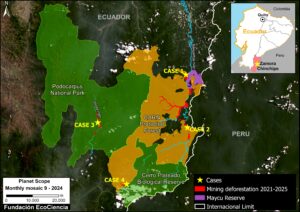 The analysis identifies approximately 111 hectares affected by mining within protected areas and conservation zones across four case studies monitored between 2011 and 2025. The impacted areas include Podocarpus National Park, the Cerro Plateado Biological Reserve, the Maycú Nature Reserve, and the Cuenca Alta del Río Nangaritza Protective Forest, territories that are essential for ecological connectivity and for conserving emblematic species such as the jaguar, tapir, and spectacled bear.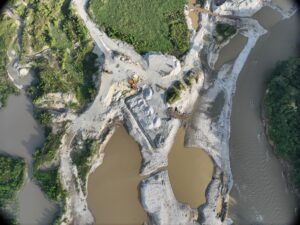
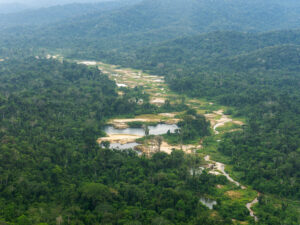 The new report released by Instituto Socioambiental (ISA) in partnership with our MAAP initiative, documents a sharp decline in mining-driven deforestation inside the Yanomami Indigenous Territory following the Brazilian government’s large-scale intervention in 2023. Newly cleared mining areas dropped from roughly 1,800 hectares in 2022 to just 45 hectares in 2025. This means a reduction of over 90%.
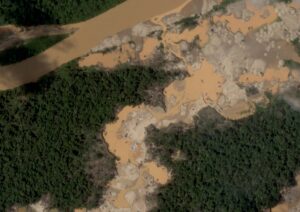 The analysis conducted by Conservación Amazónica–ACCA, in partnership with our MAAP initiative, documented more than 500 hectares of forest lost, and identified 183 active mining structures, 67 illegal camps, and an estimated 1,000 people currently operating within the protected area.
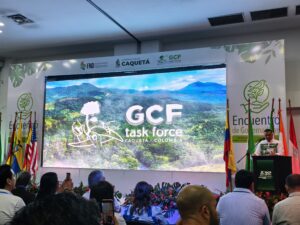 Earlier this month, Amazon Conservation joined climate and forest leaders from around the world at the 16th Annual Meeting of the Governors’ Climate and Forests Task Force (GCF Task Force), held in Caquetá, Colombia from May 18–22, 2026. The GCF Task Force unites 45 subnational governments across 11 countries, representing more than a third of the world’s tropical forests.The meeting brought together subnational governments, Indigenous Peoples and local communities, civil society, and the private sector around the theme “New Forest Economy for Climate Action: Territorial Development and Innovation.”
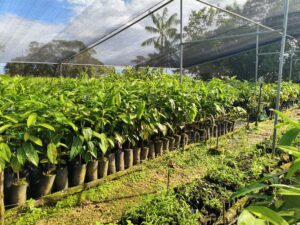 sustainable ranching, agroforestry, and bioeconomy, living proof that forest-compatible economies are not just possible, but already being built. “During the field visit to the “Territorial Space for Training and Reintegration – ETCR Aguabonita” we could witness first hand how a new and prosperous forest economy can help social reconciliation in post conflict zones by harvesting and transforming fruits such as Açaí, Canangucha, Copoazú and other Amazonian products. That is true peace with nature” states Santana.
  Loading...