Introducing Hannah Stutzman, ACA’s New Executive Director!

As the new Executive Director of the Amazon Conservation Association, I’m thrilled for the chance to work with all of our supporters to help the world’s lungs, the Andes–Amazon, breathe a little easier. Before this, I spent 4 years as Director of Programs at ACA, overseeing our Manu–Tambopata Corridor  (MAT) project as well as managing other large-scale grants and strategies.

This year is an anniversary one for our organization: it’s the 15th for both ACA and our sister organization in Peru, Conservación Amazónica–ACCA, and the 10th for our main partner organization in Bolivia, ACEAA. It’s a good opportunity to reflect on where we’ve been and where we’re going. I am so excited to work with our talented team as we take ACA into its next 15 years, and continue doing my part to further its mission to conserve Amazonian biodiversity.

Working in conservation in the Andes-Amazon was a natural fit for me. I grew up in a family that lived in and traveled in Latin America, and as a kid immediately fell in love with the wonder of tropical forests. I’ve followed this passion by working for environmental organizations in Colombia and the U.S. I was drawn to ACA because of its focus on putting resources in the field, developing innovative solutions to conservation challenges, and creating science-based programs.

All of this clicked for me when I was in the field with the MAT Corridor, talking to community members participating in the project. They shared with me how legal support and planting trees for agroforestry was helping them protect their land from illegal invasion by gold miners. It was powerful to see firsthand how our work was helping forests and communities.

As you know, it takes all of us to protect the Andes–Amazon. I want to thank you for sharing ACA’s message on social media, sending in donations, getting your boots muddy visiting our three biological stations, and all of the other ways you have supported ACA  over the past 15 years—your involvement creates greater success for our efforts. You are an integral part of our global network (2.2 million acres conserved and counting), so I hope you will continue to stay connected to us. I would love to hear about what’s important to you about our work. 

I am eager to work with you in the months and years ahead. Thank you in advance, and here’s to ACA’s next 15 years! 

Sincerely,

Letter from our ED_HannahSignature

Hannah Stutzman

ACA Staff Report Demonstrates Illegal Logging Rampant in Peru

Dr. Matt Finer standing beside a felled tree in Peru. According to the new study, much of this timber may have come from unauthorized areas, including protected areas and indigenous territories outside of legal concessions.

Dr. Matt Finer, ACA’s Research Specialist, is the lead author of a paper published yesterday in Scientific Reports, an open access, peer-reviewed journal affiliated with Nature. Focused on logging in Peru, the paper analyzes 609 logging concessions with data obtained from OSINFOR, the supervisory body in Peru that oversees post-logging inspections. Finer, along with colleagues representing the Center for International Environmental Law and the Instituto de Pequisas Ecologicas, found that 68% of officially inspected concessions are either cancelled or under investigation for major violations of Peru’s forestry laws. (Sound familiar?  Newsweek and The Guardian have published articles reporting on this study.) 

Each logging concession represents a 40-year lease to officially manage public land for timber use. Reasons for cancelling logging concessions include timber extraction outside of concession limits, extraction or transport of illegal timber, non-compliance with management, and submission of false information; often, as this paper describes, OSINFOR discovered no stumps where legally sanctioned logging was to have taken place.

“Our new study presents evidence that the illegal logging concession system is in reality enabling an illegal logging crisis in the Peruvian Amazon despite important reform efforts,” says Finer. “As a consequence, logging is not contained to concessions, and instead it threatens all forested lands, including protected areas and indigenous territories.”  But another key finding is that OSINFOR’s regulatory work is critically important to improving the concession system. Finer adds, “OSINFOR deserves additional support, not less, as the office is increasingly criticized by loggers whose concessions have been canceled.”  

Featured photo: Dr. Matt Finer standing beside a felled tree in Peru. According to the new study, much of this timber may have come from unauthorized areas, including protected areas and indigenous territories outside of legal concessions. (Credit: Clinton Jenkins)

Partnering to Protect Cusco’s Biodiversity

Earlier this year, ACCA (ACA’s Peruvian sister organization) signed a formal cooperative agreement with Cusco’s regional government to support the creation of two new regional protected areas, Urusayhua-Koshireni and Ausangate. As part of this partnership, ACCA will also support the regional government in the management of the Choquequirao Regional Conservation Area, a span of forest which includes ancient Incan ruins just 30 miles from Machu Picchu.  

In Peru’s park system, a regional protected area is the equivalent of a U.S. state park. Urusayhua-Koshireni and Ausangate span over 1.5 million acres; Choquequirao, Cusco’s first regional conservation area, stands at 256,530 acres. ACCA hopes to have Urusayhua-Koshireni and Ausangate officially declared as regional protected areas by 2015. Once officially declared, this Partnering to Protect Cusco's Biodiversity Danielle Poglianipartnership will offer additional protection for close to 2 million acres of forested and culturally significant land. 

Daniela Pogliani, ACCA’s Executive Director, and Efraín Samochuallpa Solis, Cusco’s Regional Manager of Natural Resources and Environmental Management, signed the agreement February 20 on behalf of their respective institutions. The partnership took effect the same day.

Over the coming months and years, ACCA will assist Cusco in implementing its plan for Choquequirao and provide additional support for hiring staff, equipping rangers, developing a research plan, and seeking long-term financing for the area.


Who Lives in These Protected Areas?

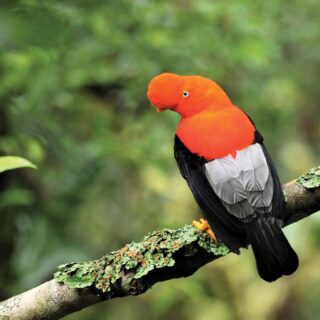
Protected areas give wildlife the space they to need to thrive. Here are just a few of the majestic species that the partnership between ACCA and the Cusco regional governmentto create these protected areaswill help:

Logging Concessions Enable Illegal Logging Crisis in the Peruvian Amazon

View the PDF here

WASHINGTON, DC (April 17, 2014)—The megadiverse Peruvian Amazon is a globally important arena when it comes to promoting sustainable logging. Despite efforts to achieve sustainability, including a modern Forestry Law and an important Forestry Annex in the US–Peru Trade Promotion Agreement, illegal logging continues to plague the region.

These instruments reformed the legal logging concession system – which allows the Peruvian government to grant long-term contracts for logging rights on specific tracts of public land – and the seemingly comprehensive regulatory framework to manage it. There are currently 609 logging concessions in the Peruvian Amazon.

In a new study published today in the open-access journal Scientific Reports, researchers found that 68% of officially inspected concessions are either cancelled or under investigation for major violations of forestry regulations. Moreover, the nature of the violations indicates that the permits associated with legal concessions are used to harvest and transport trees in unauthorized areas.

“Our new study presents evidence that the legal logging concession system is in reality enabling an illegal logging crisis in the Peruvian Amazon despite important reform efforts,” said Matt Finer of the Amazon Conservation Association. “As a consequence, logging is not contained to concessions, and instead, it threatens all forested lands, including protected areas and indigenous territories.”

The findings derive from analyzing nine years of official information from OSINFOR1 , the supervisory body in Peru that conducts post-logging inspections. In the majority of inspected concessions, OSINFOR documented: timber extraction outside of concession limits, extraction or transport of illegal timber, non-compliance with management plans, and submission of false or incomplete information.

Many of the violations pertain to the illegal extraction of threatened cedar species that are listed under the Convention on International Trade in Endangered Species of Wild Fauna and Flora (CITES), which aims to ensure that international trade in species does not threaten their survival.

“Overall, we found a troubling, yet common, pattern indicating that legal logging permits are often used to facilitate the extraction and transit of timber outside the concession area,” said Melissa Blue Sky of the Center for International Environmental Law.

Through the analysis of reports of inspected concessions, the study found that logging concession owners often indicate the presence of abundant timber, particularly cedar, in their management plan and then claim authorized logging took place. However, when OSINFOR eventually inspects the concession area, they often find that the information in the management plan was false because there are no stumps of the supposedly harvested trees.

“Despite important reforms, much of the timber coming out of the Peruvian Amazon is still likely sourced outside of authorized concession areas,” said Clinton Jenkins of the Instituto de Pesquisas Ecológicas in Brazil. “More reforms and enforcement of regulations are obviously still needed.”

Another key finding of the study is that OSINFOR’s regulatory work is critically important to improving the concession system. “OSINFOR deserves additional support, not less, as the office is increasingly criticized by loggers whose concessions have been canceled,” said Finer.

A new Forestry Law was passed in July 2011, but has not yet gone into effect due to delays in the adoption of the implementing regulation. “Unfortunately, the new 2011 Forestry Law and implementing regulation, which is under development, currently fall short of what is needed to address this problem,” said Blue Sky.

++++++

CONTACT Matt Finer (Amazon Conservation Association) mfiner@amazonconservation.org, Tel: 202-234-2356

Clinton N. Jenkins (Instituto de Pesquisas Ecológicas) clinton.jenkins@gmail.com

Melissa Blue Sky (Center for International Environmental Law) mbluesky@ciel.org

Justin Pine (Northern Arizona University) jrp263@nau.edu

Amazon Conservation Association (ACA) and its sister organization in Peru, Conservación Amazónica-ACCA, have been pioneers in conserving biodiversity in the southwest Amazon since 1999. They seek to preserve the world’s richest forests, train the next generation of Amazonian conservationists, and help people in the Amazon live better lives through sustainable means.

Center for International Environmental Law (CIEL) uses international law and institutions to protect the environment, promote human health, and ensure a just and sustainable society. CIEL is a non‐profit organization dedicated to advocacy in the global public interest, including through legal counsel, policy research, analysis, education, training and capacity building.

The Instituto de Pesquisas Ecológicas (IPÊ) is one of the largest environmental NGOs in Brazil with over ninety professionals working in more than forty projects throughout Brazil. IPÊ undertakes an integrated action model, developed through decades of experience, which combines research, environmental education, habitat restoration, and community involvement with sustainable development, landscape conservation and policy-making.

1 Organismo de Supervisión de los Recursos Forestales y de Fauna Silvestre

Illegal logging

Illegal logging
 Logs passing through an Iquitos port. According to the new study, many of these giant logs may have come from unauthorized areas, including protected areas and indigenous territories, outside of legal concessions (photo: Matt Finer).

Dr. Matt Finer, ACA’s Research Specialist, is the lead author of a paper published on April 17th, 2014 in Scientific Reports, an open access, peer-reviewed journal affiliated with Nature. Focused on logging in Peru, the paper analyzes 609 logging concessions with data obtained from OSINFOR, the supervisory body in Peru that oversees post-logging inspections. Finer, along with colleagues representing the Center for International Environmental Law and the Instituto de Pequisas Ecologicas, found that 68% of officially inspected concessions are either cancelled or under investigation for major violations of Peru’s forestry laws. 

Each logging concession represents a 40-year lease to officially manage public land for timber use. Reasons for cancelling logging concessions include timber extraction outside of concession limits, extraction or transport of illegal timber, non-compliance with management, and submission of false information; often, as this paper describes, OSINFOR discovered no stumps where legally sanctioned logging was to have taken place.


“Our new study presents evidence that the illegal logging concession system is in reality enabling an illegal logging crisis in the Peruvian Amazon despite important reform efforts,” says Finer. “As a consequence, logging is not contained to concessions, and instead it threatens all forested lands, including protected areas and indigenous territories.”  But another key finding is that OSINFOR’s regulatory work is critically important to improving the concession system. Finer adds, “OSINFOR deserves additional support, not less, as the office is increasingly criticized by loggers whose concessions have been canceled.” Read more about this topic in Newsweek or The Guardian»

Fire-fighting beans help save Manu!

For 11 communities in Challabamba, just south of Manu National Park’s tip in southern Peru, the Amazon Conservation Association’s work can be measured in hundreds of acres of one particular bean: tarwi.

For these Andean communities, subsistence farming is a way of life. But growing potato and corn crops on the same land year after year is hard on the soil. Eventually, yields suffer and farmers typically “slash and burn” forest to open up new farmland and add nutrients to the soil.

However, these fires can easily spread out of control, devastating hundreds of acres of forest, often even burning into Manu National Park.  

There’s a connection between burning for farmland, soil quality, and Manu—and that’s where sustainable crops like tarwi come in.

Tarwi, or Lupinus mutabilis, is a native nitrogen-fixing legume; it naturally converts atmospheric nitrogen into a form usable by plants. Planted alongside corn and potato crops, tarwi helps to replenish nutrient-depleted soil. Crop rotation ensures that farm soil stays fertile, and that in turn diminishes the need to burn (or otherwise clear) forest for farmland.

But that’s not all. As its nickname “Andean soy” suggests, tarwi is protein-rich and an important source of calcium and iron for the area’s residents (some of the poorest in the region). The bean is hardy enough to thrive in the chilly mountain highlands, and boasts low start-up costs, high yields, a strong regional market—and, as ACA discovered, an unmet consumer demand.

Since 2010, ACA has helped 40 families produce and sell more than 20 tons of tarwi annually through Flor Azul, the local producers’ association. Surveys done this year confirm that 72 percent of participants no longer burn for new farmland (and can better control fires when they do occur, thanks to ACA’s trainings on forest fire prevention and control) after growing sustainable crops like tarwi.

In 2014, ACA aims to improve ways Flor Azul can bring its tarwi to market, as well as engage at least 20 new members in the group.

We can’t do that without your support. Help ACA promote sustainable agriculture to reduce “slash-and-burn” deforestation for farmland in one of the regions with the highest levels of biodiversity in the world.

Leading her people to a better future

Marisabel Dumas RamosMeet Marisabel Dumas Ramos, the first female leader of the indigenous Matsigenka-Wachiperi community of Santa Rosa de Huacaria in southern Peru.

Since the start of her term in 2011, Marisabel has worked alongside the Amazon Conservation Association (ACA) to protect her community’s land. Huacaria borders Manu National Park, where many indigenous people still live in voluntary isolation.

Huacaria’s location on the Piñi-Piñi and Palotoa rivers makes it a major point of illegal entry into the park, and both Marisabel and ACA were concerned about squatters invading Manu through their land. 

In 2012, ACA and the Huacaria community thwarted an attempted invasion of the Park and then went on built a guard post and began funding community members to patrol the Huacaria side of the park’s border. 

Now, ACA is going a step further by helping the 130-person community officially expand its indigenous territory by 22,211 acres—forest that would have been otherwise lost to logging or agriculture. 

Marisabel explains: “We want to preserve this area for our brothers and sisters living in voluntary isolation. They need space for hunting and fishing. This area used to all belong to the indigenous people.” 

ACA is also helping the Huacaria residents develop sustainable economic opportunities, such as ecotourism and farming native fish, that allow them to earn the funds they need to access better healthcare and education while protecting their natural resources. 

Fish is a major source of protein for the area surrounding Huacaria, but concerns about overfishing and mercury levels (in both the river’s fish as well as its water) make aquaculture a great solution. In 2014, ACA plans to help the Huacaria community build four aquaculture ponds and a production lab for fish hatchlings, which currently must be shipped in from the coast.

Manu’s woolly monkeys

Woolly monkeySadly, the gray woolly monkey pictured is endangered.

ACA is tracking these monkeys in the cloud forests in and around Manu National Park in southern Peru. Groups are moving higher into the mountains to escape the overhunting and habitat loss they face at lower elevations. As fruit eaters, these monkeys play a little-known, but important, role in the seed dispersal of canopy-level tree species—significant as trees need to migrate upslope in response to climate change. 

While ACA studies these monkeys (species: Lagothrix cana), we are also taking important action to ensure that their habitat is protected. For the past two years, ACA has been assisting a group of young conservationists from Alto Photo of Mario OcsaPilcomayo—children of loggers who moved near Manu’s Andean slope decades ago—to create a new 12,040-acre conservation concession.

Led by Mario Ocsa (pictured), the young conservationists plan to call this new reserve “Qosilloq llaqta qcahuanan”—“land of the gray woolly monkeys” in Quechua. ACA is already training the community to patrol the concession, prevent access by hunters, and closely monitor the woolly monkey populations living there. In 2014, we plan to complete the process of officially establishing Alto Pilcomayo’s concession, one of eight new protected areas we are working on in the greater Manu landscape.

Villa Carmen celebrates 3 years of conservation research!

People on boatToday ACA’s Villa Carmen Biological Station & Reserve celebrates its third birthday! In 2012 alone, Villa Carmen welcomed over 800 researchers, students, government officials, conservationists, volunteers, and birders, while steadily enhancing facilities to include a new lab and dorm space, an extensive trail network, organic gardens, and more.

Villa Carmen rounds out ACA’s network of three biological stations, which are strategically positioned to span the vast array of unique ecosystems from the high Andean cloud forest to the lowland Amazon basin.

In just three years, Villa Carmen has established itself as a bustling hub for scientists and conservationists. Over 150 researchers have visited the station from institutions around the world, cataloguing more than 590 species of plants and animals, and leading 38 research projects to date, studying everything from native fish and ants, to woolly monkeys and spectacled bears. Villa Carmen has also hosted numerous field courses on biodiversity, climate change, conservation, and culture, such as this group from the University of Minnesota (right).

Villa Carmen is also a living laboratory for best practices in sustainable agriculture, and shares lessons learned with residents from surrounding communities. Villa Carmen grows its own local organic crops, while researchers study ways to enhance soil fertility using biochar. Last year, Villa Carmen hosted an international workshop on sustainable agriculture where world experts and local Amazonian farmers shared techniques and experiences.

Motion-Sensing Cameras Capture Elusive Wildlife

Jaguar on motion sensing camerasVilla Carmen’s camera traps photograph a diverse array of wildlife, allowing researchers to catch a glimpse of many rare and endangered species in their natural habitat, including:

  • 10 individual jaguars, including 2 pregnant females
  • A female giant armadillo with her pup
  • Lowland species including tapirs, giant anteaters, short-eared dogs, and curassows
  • Rare birds like the white-cheeked tody tyrant, rufous-vented ground cuckoo, and grey-bellied hawk
  • 28 different species in total so far!

Innovations in Biochar

Research at Villa Carmen has focused on biochar, a form of charcoal made by cooking plant biomass under reduced oxygen levels, producing a porous surface ideal for the growth of beneficial soil fungi and bacteria. When introduced to tropical soils, biochar not only sequesters carbon, it also boosts plant yields by as much as 40%, which reduces deforestation and carbon emissions, all while making use of the abundant but underutilized resource of fast growing bamboo.

Trees race upslope in response to climate change

Around ACA’s Wayqecha Cloud Forest Biological Station, it was noticed that the cloud forest’s tree species were slowly creeping up the Andean mountainside, moving at an average rate of 8 to 12 vertical feet per year. Why were the trees heading uphill? As the weather heats up due to gl obal climate change, trees must migrate upslope toward cooler, more hospitable temperatures.

But while individual trees can move up, they face a barrier when they come to the tree line. In a paper published in September, authors including Dr. Dave Lutz, one of the first researchers to set foot in Wayqecha after its creation, and Dr. Miles Silman, an ACA board member, found that forests above 6,500 feet are hardly moving—barely half a foot upslope each year, nearly 100 times slower than needed to keep pace with climate change.  

Additionally, intentional grassland fires (set by local communities to create more farmland or grazing pasture for cattle) often blaze out of control and spread into the cloud forests, lowering the treeline and preventing trees at the top from further movement upslope. Unmanaged cattle, left to wander in grasslands, also eat young tree seedlings trying to establish themselves along the forest edges. 

According to a study by evolutionary ecologist Dr. Ken Feeley, we could be looking at massive tree and plant extinctions over the next 50 to 75 years. 

That’s why ACA has been focusing its efforts on helping the trees have room to move. By working with local communities, ACA aims to improve cattle management and agricultural practices while training the communities to prevent and fight forest fires, like in the photo below. 

Silman, Lutz, and Feeley are all members of a consortium called the Andes Biodiversity and Ecosystems Research Group (ABERG for short). ACA has been closely collaborating with these scientists and using their research findings to improve the impact of our conservation projects in Peru. 

ABERG’s work was recently profiled in a series of articles and radio interviews entitled “Peru: Race in the Rain Forest,” written by Pulitzer Prize nominee Justin Catanoso. Check them out for more information!