Putting Science and Technology to Work at our Biological Stations in Peru

Establishing the first state-of-the-art genomics lab in the Amazon.


All of our biological stations in Peru feature laboratories equipped with cutting-edge technology for scientists and students to conduct research.

Recently, Jhakelin Reyes Vasquez, a Peruvian scientist, has been working in the Wildlife Conservation Laboratory studying genomics and collecting data on zoonotic diseases. Your support allows laboratories like this to exist. Using these tools, we can more closely and accurately monitor the health of the forest and its wildlife inhabitants at a closer scale and do it all on-site with our own equipment – allowing our biological stations to become important sites for science throughout the Amazon.

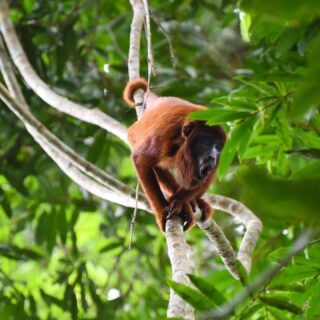
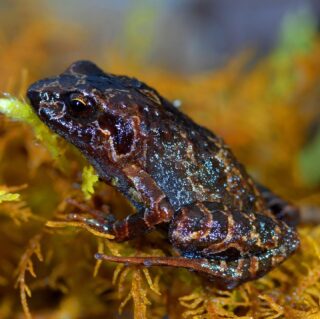
There is much still undiscovered in the Amazon. This one-of-a-kind lab enables scientists to conduct cutting-edge studies on advanced wildlife genomics and monitoring of key species right in the heart of the Amazon without the delay, cost, and complications of transporting samples to bigger labs. By safely taking DNA samples of wildlife and domestic animals in the region – without harming or killing any animals and following strict security protocols –scientists at the Wildlife Conservation Laboratory will monitor the health and disease status of a range of species, including frogs, snakes, and monkeys, even plant life. To achieve this, some of the scientific activities carried out at the Laboratory include sample bio-banking, expanding biological archives for the Amazon rainforest, field testing pathogens and environmental contaminants, and developing sequencing solutions for population monitoring of key species. 

Your support can create opportunities like the Wildlife Conservation Laboratory for local scientists like Jhakelin so that cutting-edge scientific research is not simply a top-down effort, but rather one that is home-grown and fosters the next generation of biologists.


Empowering Future Generations of Conservationists

We believe empowering people starts with the youngest generations of future forest friends.

Our innovative programs allow people like Rosa Quete to establish protected areas where education, conservation, and play come together to make a lasting impact on young learners.

In the community of Motacusal, Rosa Quete established and leads the Bosque de Niños (Children’s Forest), which she hopes will serve as an example of effective sustainable agroforestry practices for youth and a source of knowledge sharing between generations. 

Motacusal is the first community with this type of forest, which covers over 116 acres of forest set aside strictly for the children of Motacusal. With access to their own protected area, the children can experience first-hand all that the forest provides and gain a better understanding of the importance of protecting for the present and future health of the greater environment around them.

Thanks to your support, Rosa can promote education as a means to empower future leaders — especially young women — to preserve the forest’s natural biodiversity through sustainable agroforestry.


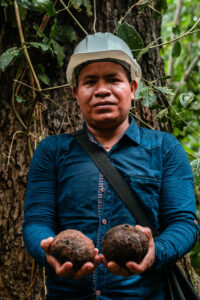
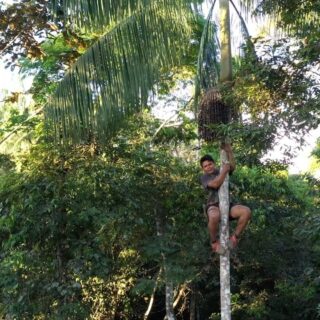
Meet Misael Campos – an açaí and Brazil nut producer in Bolivia

Amazon Conservation is committed to empowering people through strengthening and creating forest-based economies that are both climate-resilient and sustainable.

We partner with people like Misael Campos who brings his own wealth of knowledge of forest productivity to bolster our efforts to empower people through strengthening forest-based economies. 

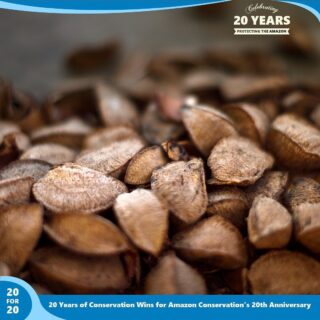
In the Bolivian Amazon, Brazil nuts and açaí berries are key forest products for regional economies and unique in that they can only be grown in a healthy forest ecosystem. To keep forests standing and help these forest economies adapt to a changing climate, we are working closely with local producer families like Misael Campos’s family in the Pando region to strengthen local forest-friendly businesses. 


We have helped them build production facilities and safety equipment to increase the value of their products while minimizing the great risks of harvesting these forest products, provided training on conservation best practices, and connected them to new markets to minimize the role of intermediaries. These efforts make sure they can have a strong, fully sustainable business centered around protecting their forest home.

What’s more, producers like Misael are seeing the benefits of this support for their families and are eager to share this experience, technology, and equipment with others. Through empowering families in one community, your support continues to grow and have an exponential impact for families across the region!


The 2022 Forest-Friendly Holiday Shopping Guide is Here!

This holiday season, shop with intent and support conservation in the Amazon while getting gifts for your friends and family that they are sure to love! These forest-friendly companies have partnered with Amazon Conservation because they too believe in protecting our planet’s greatest forest. These generous businesses have dedicated a portion of their sales to our innovative conservation programs. Therefore, any purchase from one of these small businesses already includes a contribution that will serve to keep the Amazon thriving. This way, shopping with these partners ensures you can give your loved ones a unique gift, support small businesses, and do your part to conserve nature all in one!

Already shopping on Amazon.com?

Did you know that Amazon.com also has a charitable giving site? Shop through this link to support our organization with every purchase you make through Amazon Smile at no extra cost to you.


Makeup and Beauty


Wisdom of Qara skincare uses botanicals from the Amazon combined with science to create wellness products that will help you exist in balance with yourself, your community, and Mother Earth. Their commitment to ethical skincare affects every decision they make about formulas, ingredients and packaging. View their skincare line here. (Currently only shipping to within the Europe Union). 


Fashion and Style

Marc Skid underwear is made with the world and its people in mind, crafted using organic Pima cotton grown on family farms that strictly adhere to tried-and-true farming practices that exclude GMOs. Also, one recycled plastic water bottle is used in every waistband, meaning one less bottle in a landfill. Learn more.


Fun and Cheer

Ready for some fun holiday fun? Reckless Conversations is the most hilarious party game of all time! Everyone’s responses to the real life statement cards will have you and your friends laughing for hours, if not for days afterwards!

Recap of This Year’s AmazonTEC

Each year, Amazon Conservation, along with our Peruvian partners, Conservación Amazónica – ACCA, hold an important webinar series entitled AmazonTEC. AmazonTEC is an international platform to present successful experiences on the application of science and technology for a sustainable Amazon. It is the space that brings together innovators, regulators, and friends of the forest, to assess the needs of the Amazon, the progress and pending efforts in terms of data, information, science, technology, and innovation, in order to make urgent decisions for the protection and sustainability of the Amazon.

The 2022 edition of AmazonTEC was comprised of 3 sessions (one virtual, one live, and one in hybrid format) featuring biologists, conservationists, ecologists, government entities, and more representing 5 countries and bringing expertise from a multitude of diverse backgrounds and experiences.  This year, attendees were treated to presentations from scientists working with NASA, GIS specialists from various North American universities and Peruvian organizations, officials from USAID, and many others.

By joining and presenting a diverse array of scientists, conservationists, and advocates for the environment, AmazonTEC brings together minds from all over the world who are committed to protecting the greatest forest on Earth by utilizing cutting-edge technologies and perspectives informed by decades of research and experience.

Recordings of this year’s sessions can be found at the link below.


MAAP #166 Mennonites have Deforested 4,800 hectares (11,900 acres) in the Peruvian Amazon

Since 2017, the Mennonites have arrived in the Peruvian Amazon and created 5 new colonies.

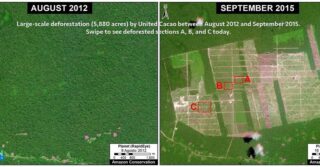
Here, in MAAP #166, we show that these colonies have caused the deforestation of more than 4,800 hectares of tropical forests, including 650 hectares in 2022.

First, we present an updated Base Map that shows the current situation of Mennonites in Peru.

Base Map. Mennonite colonies in the Peruvian Amazon

Next, we detail the deforestation history in each colony since 2017, with an emphasis on the most recent loss in 2022.

We emphasize that the most urgent current situation is developing in the Padre Marquez colony, located on both sides of the border between the regions of Ucayali and Loreto. It is the newest colony, with the deforestation of 976 hectares since its creation in 2021 (including a large expansion of 491 hectares in the current year 2022).

We also highlight the massive deforestation of 2,884 hectares in the three colonies (Vanderland, Osterreich and Belize) near the town of Tierra Blanca in the Loreto region. These colonies are also expanding in 2022.

The Masisea colony, located south of the city of Pucallpa (Ucayali region), has caused the deforestation of 960 hectares.

In total, we documented the deforestation of 4,819 hectares in the five new Mennonite colonies in the Peruvian Amazon since 2017, including active expansion at the present time in 2022

In the more detailed report we track the deforestation history in each colony since 2017, with an emphasis on the most recent loss in 2022.

Follow the link below to read the full report.


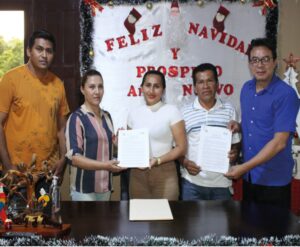
Our Partners in Bolivia, Conservación Amazónica – ACEAA, co-host the First Congressional Meeting of FEDAFAP

Highlighting the importance of a climate-smart and diverse productive forest, our sister organization in Bolivia, Conservación Amazónica – ACEAA, directly supports the efforts of the Departamental Federation of Açai and Amazonian Fruit Harvesters of Pando (FEDAFAP). FEDAFAP’s mission is to bring together small-scale producers of açaí with business leaders and other local agricultural associations. FEDAFAP has been a key player in raising awareness and value of açaí and other regionally produced fruits to more diverse and competitive markets, ultimately securing access to greater income for families which depend on the production and sale of these fruits for their livelihood. In addition to açaí, its initiatives have ventured into the production and marketing of other regional fruits such as majo, cupuaçu, and the royal palm.


With our support, FEDAFAP also forms part of the initiatives of the Plataforma Inter-Institucional de Articulación de Complejos Productivos de Frutos Amazónicos (PICFA). It is PICFA’s goal to provide a space and opportunity for the coordination and articulation between the public and private sectors aimed at promoting and strengthening the use of these fruits in the Bolivian Amazon, as well as strengthening the position of the vocation within the labor market. PICFA seeks to support the improvement of the income of peasant families and producer organizations in the department of Pando by contributing and promoting policies and regulations for the protection of Amazonian forests and prioritizing the visibility of Amazonian fruits as part of the regional identity and the productive capacity of the Amazon.


Allying with and supporting associations like PICFA and FEDAFAP  is a key process in our greater strategy to empower people and establish healthy forest-based economies. By strengthening community-based enterprises and improving innovation, we help grow local economies and advance conservation.


Supporter Spotlight: From Birders to Conservationists Championing Sustainable Livelihoods

Each and every one of our supporters have a favorite project or initiative that brings them to Amazon Conservation and gets them excited about protecting the Amazon. With a broad portfolio of work spanning wildlife, landscapes, science, people, and technology, it’s hard not to find a piece of our work that resonates with you. And for some of our long-time donors, the all-encompassing nature of Amazon Conservation’s work and the real impact of our small organization on the ground is what keeps them as part of our community.

Connie and Jeff Woodman have been active supporters of Amazon Conservation since 2010. The seeds of conservationism were planted when an old birding book met an aptly-timed camping trip in Big Bend National Park; the seeds began to bud as they became more dedicated birders and eventually met one of Amazon Conservation’s co-founders, Adrian Forsyth. Since then, Connie and Jeff have nurtured a growing appreciation for the importance of protected areas, not only for their birding hobby but also for the well-being of wildlife and people. Over the years, they have become more than lifelong supporters; they are an integral part of the family that is making sure that Amazon Conservation has boots on the ground for the long term.

Read on to learn more about why Connie and Jeff support Amazon Conservation.

Connie and Jeff on a balsa raft in the Peruvian Amazon

Can you tell us a little background about yourselves? How did you initially learn about Amazon Conservation? 

Connie: We spent our honeymoon in Big Bend, in a tent. We’re birders. That’s one of the ways we became interested in conservation. So we like to go birding, and we’re thinking, we’ve got to do more than just going around looking at birds, so we became interested in conservation. Jeff started out on the board of ABC—American Bird Conservancy, so we learned quite a bit with that organization. 

Jeff: And then we met Adrian [Forsyth] through [ABC]. ABC had a trip down to Costa Rica, so we went and met Adrian. His charisma inspired us to join him and others on a trip to Peru, and that’s when we got introduced to Amazon Conservation. He can inspire people. 

Connie: Hard to say “no” to that much enthusiasm and knowledge; it’s just incredible all those stories! 

When did you get into birding? What initially inspired you to support environmental causes generally? 

Jeff: We got into birding on our honeymoon; Connie brought a really old bird book. We’d been interested, but we were in Big Bend without realizing it was early May when all the birds were migrating through. It was so cool. So we had this old bird book… 

Connie: …and sharing a tiny little pair of binoculars. Some person we met said, “that’ll change”.

Jeff: And then we got back to Houston, and people were saying Houston is a great place to bird right on the Texas coast. So we went down to High Island in July, not realizing… we were like, “where are all the birds?” We only saw a kingfisher. But, that got us thinking about conservation. We didn’t realize it before, but if you’re birding on the Texas coast where millions of birds are flying across the Gulf of Mexico from the tropics, there are so few places for them to stop over. There are people that had the foresight to protect these areas.

Connie: Like Houston Audubon was doing that, right on the coast where we were birding. We joined them, then we realized the importance of conservation. If we don’t take care of these [birds], we’re not going to be able to go birding and from that, we realized we can’t just care about a bird. We have to care about the insects and the butterflies and the plants and the PEOPLE! That was a really big thing with Amazon Conservation because when we were down there on that trip [in Peru], we were introduced to the Wachiperi…

Jeff: …near Villa Carmen, a community where people were logging and trying to get titles to their land. That was an experience we’d never had, meeting them, and it was really interesting. It seemed like there had been a lot of projects with Amazon Conservation over the years, but we really felt—and feel—like Amazon Conservation is trying to obviously protect areas in the Amazon, but doing it by working with these communities, with local people, trying to empower them and make it easier for them to live on the land, get an income from that, and they try to come up with creative solutions to do that. And just the staff too, the people working for the organization, as I’m sure you see, and in Peru and in Bolivia, people care, they’re working hard. It’s an inspiring group to be a part of. 

Jeff: Connie didn’t go, but I did go to Bolivia, and that was an amazing trip. We went from Peru, took a boat into Bolivia with Marcos Teran and Lucio, and we met and stayed with people from the Tacana indigenous group living in a large area in northern Bolivia. Their primary means of income is harvesting Brazil nuts. It was really cool because Marcos had had a number of meetings with them, asking them what they need, rather than us trying to impose [by saying], “Here’s what you should do.” What they needed was this form of a drying rack to dry the Brazil nuts because what they had been doing was collecting and carrying these heavy bags and putting these bags down outside, and the harvest happens during the rainy season, so they’d lose 15% of all this harvest through spoilage. So Amazon Conservation raised money for them to get materials to build an open-air barn, but smaller, where they could lay out the Brazil nuts so that they could dry. And the production loss dropped to almost 0%. So more money for them, and it was generated by their thinking. There’s a lot more to the story, but it’s really interesting. 

Connie: I think you got to go out with them and try to carry one of those bags. 

Jeff: I was with them when they were harvesting. Seriously, they’re built like wrestlers, really muscular, maybe 5’4”, not really tall, but they would carry these bags that could be 130 lbs, really heavy and carrying them up and down the terrain, which is not flat, up and down hills and through mud. They just did it, and they did it for generations. So it felt meaningful to do something that could help the community and the community’s livelihood depended on harvesting Brazil nuts—and Brazil nut trees are a keystone species. So protecting the forest helps both the Tacana and obviously works to protect the Amazon.

Connie, do you have a favorite program or initiative of Amazon Conservation?

Connie: I don’t know that I have a favorite one, but I really admire how Amazon Conservation works with a community. And I think Amazon Conservation and the communities are really hard-working, forward-thinking people, and I really appreciate that. 

The other thing is the MAAP program where they use drones to monitor deforestation. I think that is hugely important, to know when fires are breaking out, illegal logging, and gold mining too. And I think they’ve earned a lot of respect from the government too.


Your first gift to Amazon Conservation was in 2010. Why have you chosen to donate to us for so long? What makes Amazon Conservation special to you? 

Jeff: We feel like the donations are being put to good use, that is the bottom line; the way the organization works with communities, protecting the forest, and a lot of different things that Amazon Conservation does. It’s not just a one-style approach. They’re trying to study the areas, use research to determine what kind of strategies work best to conserve a certain area. You have a cloud forest, you have the lowlands, you have now in Bolivia the Beni, which is a whole different type of habitat, requiring lots of ranchers. So they’re really trying to figure out the best ways to conserve an area. And I think they’re lean.

Connie: That’s what I was going to say. I feel like it’s kind of like a personal organization. We know some of the people, we’ve been down there, and it’s not like we’re donating to an organization that’s so huge. 

Jeff: You can see the benefits of a donation. Trying to conserve the Amazon, it’s a huge problem.But I feel like Amazon Conservation is trying to identify areas where they can effect change.. They’re getting partners who can donate, partners who can help with research, partners on the ground. I think they’re doing a good job. 

Why is continued support important for conservation efforts and ongoing, local projects in the Amazon?

Jeff: I mean, serving the Amazon is a long-term proposition. You can’t expect to go in for one, three, five years. Five years maybe you can get things going in an area, but you have to be in for the long term. That’s been a core belief of Amazon Conservation, to be there for the long term. In certain areas, like a new area in Peru,  you can’t just drop in and start working in an area. You have to build trust, and that takes years. But once you get trust, that trust can filter through to different areas and you get a reputation of trying to do good work and doing the things that you say. Gaining and building trust with communities makes all the difference.

Is there something you want to say to someone who wants to get involved and make a difference in the Amazon and/or in general to help fight climate change?

Connie: I would tell people first and foremost how much we feel like a family with Amazon Conservation. I think that if I was a new donor, I would want to reach out to whomever and let them tell me more about it, rather than just your webpage. I think that you guys are responsive to questions from new and even older donors. You guys really know how to stretch a dollar and put it to good use.

Jeff: I would also add, for a new donor wondering, “is this going to make a difference?” Pick a program or something that seems interesting to them that can benefit, because there are a number of programs and areas, from indigenous people, sustainability, trying to improve livelihoods, the many programs you have. Someone could donate something to one of those and see the impact, see what’s happening, and ask staff for updates. For us, you learn a bit about what’s going on and what’s happening, and the feeling that a donation is making a difference is important and for us, that’s meaningful. Like Connie was saying, as opposed to: you just donate, you don’t really know what’s going on, you hope it’s doing good, but you don’t know. But here [with Amazon Conservation], you can see how your donation is making a difference.

Do you have anything else to add that you’d like people to know?

Jeff: I feel like it’s a good organization, the Board is excellent, and people care!

Jeff and Connie on the Blanding River near Bears Ears National Monument the very day that the original boundary for Bears Ears was reinstated


Check out the real impact our supporters are having in the Amazon, learn more about our long-term strategy from our 10-year strategy for 2020-2030, and help support this critical work by making a contribution today!

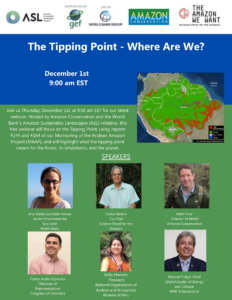
MAAP #164 Tipping Point

Base Map. Total Amazon forest loss. Data: ACA/MAAP.

It is increasingly reported that the largest rainforest in the world, the Amazon, is rapidly approaching a tipping point.

As repeatedly highlighted by the late Tom Lovejoy (see Acknowledgements in full report), this tipping point is where parts of the rainforest will convert into drier ecosystems due to disrupted precipitation patterns and more intense dry seasons, both exacerbated by deforestation.

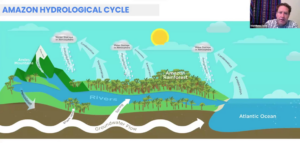
The Amazon generates much of its own rainfall by recycling water as air passes from its major source in the Atlantic Ocean. Thus, high deforestation in the eastern Amazon may lead to downwind impacts in the central and western Amazon (see Background section in full report).

The scientific literature indicates this tipping point could be triggered at 25% Amazon forest loss, in conjunction with climate change impacts.

The literature, however, is less clear on the critical first part of the tipping point equation: how much of the Amazon has already been lost?

There are numerous estimates, including 14% forest loss cited in the recent Science Panel for the Amazon report, but we did not find any actual definitive studies specifically addressing this question.

Here, we directly tackle this key question of how much of the original Amazon has been lost to date.

First, we present the first known rigorous estimate of original Amazon biome forest prior to European colonization: over 647 million hectares (1.6 billion acres; see Image 1 below).

Second, we estimate the accumulated total Amazon forest loss, from the original estimate to the present: over 85 million hectares (211 million acres; see Base Map in full report).

Combining these two results, we estimate that 13% of the original Amazon biome forest has been lost.

More importantly, however, focusing on just the eastern third of the Amazon biome, we estimate that 31% of the original forest has been lost, above the speculated tipping point threshold. This finding is critical because the tipping point will likely be triggered in the eastern Amazon, as it is closest to the oceanic source of the water that then flows to the central and western Amazon.

Original Amazon Forest

Image 1 shows the first known estimate of original Amazon forest prior to European colonization. Note that we use a broader biogeographical definition of the Amazon that covers nine countries (the Amazon biome) rather than the strict Amazon watershed.

Image 1. Original Amazon biome forest. Data: ACA/MAAP.

This represents the most rigorous effort to date to recreate the original Amazon. For example, we attempted to recreate original forest lost to historic dam reservoirs.

The map has just three classes: Original Amazon forest, Original non-forest (such as natural savannah), and Water.

We found that the original Amazon forest covered over 647 million hectares (647,607,020 ha). This is equivalent to 1.6 billion acres.

Of this total, 61.4% occurred in Brazil, followed by Peru (12%), Colombia (7%), Venezuela (6%), and Bolivia (5%). The remaining four countries (Ecuador, Guyana, Suriname, and French Guiana) make up the final 8%.

Comparing today’s map of forest loss with the extensive recreation of the original Amazon biome paints an impactful picture of the history and current trajectory of deforestation on a grand scale.

Follow the link below to read the full report.


State of the Amazon: Fires, Deforestation, and Climate Change Recap

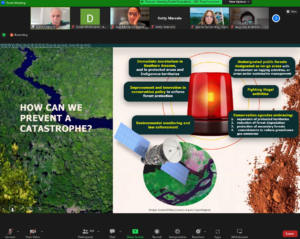
Wednesday, September 7th, saw the first installment of our State of the Amazon Webinar Series. This edition’s focus was on Fires, Deforestation, and Climate Change. The webinar was co-hosted by us and the Norwegian Agency for Development Cooperation (Norad) and featured speakers from five of our partners representing five key Amazonian countries. Participants had the privilege of hearing from Fundación EcoCiencia (Ecuador), Instituto Centro de Vida (Brazil), Conservación Amazónica – ACCA (Peru), Conservación Amazónica – ACEAA (Bolivia), Fundación para la Conservación y al Desarrollo Sostenible (Colombia), and MAAP and Global Forest Watch from the US. The broad scope of our panelists and partners allowed us to offer a vast perspective on the threats of fires, deforestation, and climate change and their relation to forest loss from a global scale, down to a focused “on-the-ground” perspective of the effects of those same threats in the 5 different countries represented therein. Apart from their country-specific experiences with environmental threats to the Amazon, each presenter spoke about how fires, deforestation, and climate change are interrelated and work together to create challenging hurdles to achieve a thriving Amazon. Watch the full webinar recording here.

Hilde Dahl, Head of Section for Forests with Norad, opened the session by expressing the urgency with which the environment must be addressed, stating, “Without halting deforestation and bolstering reforestation with urgent action it will be impossible to meet the UN sustainable development goals and the goals of the Paris Agreement.” She also laid out some of the methods and objectives that the Norwegian government has committed to foster in order to address these concerns, including direct support for organizations and initiatives that are heading programs and processes to bolster the well-being of the Amazon with the over-arching goal of Norad being to prevent widespread tropical forest loss. Hilde added finally, “The Amazon is undoubtedly important for the health of our climate, but it is also simply home to millions of people.”

Carmen Josse from EcoCiencia moderated the discussion and opened by introducing the the two scientists presenting in the first section of the webinar – two wide perspectives of forest loss. First, a global perspective from Michelle Sims from Global Forest Watch and World Resources Institute.


Understanding Trends in Global Forest Loss

Our first presenter, Michelle Sims, from Global Forest Watch at World Resources Institute, presented a global overview on forest loss. She described what the data is telling us are the actual main drivers of forest loss today. She also presented where the most forest loss is happening by country, stating that Bolivia has overtaken Indonesia for third place for country experiencing most forest loss for the second year in a row. Interestingly, Michelle reports that commodities production, sourcing wood from tropical forests for manufacturing or clearing large swaths of forest for cattle raising, was also a significant driver of forest loss around the world in 2021.


Zooming in to a regional view of the Amazon as a whole, Amazon Conservation’s own Matt Finer, Director of the Monitoring of the Amazon Project, presented his latest findings using satellite imagery to pinpoint deforestation drivers and shared some thought provoking data. Dr. Finer clearly illustrated how fires, deforestation, and climate change only work to feed each other. These three environmental phenomena are often studied individually or separately, however, it is becoming more and more evident that deforestation brings about more fires and fires bring about more deforestation and both affect the climate and are a result of the changing climate, an interesting and powerfully dangerous relationship indeed.


Implications for the Amazon (Bolivia)


We heard our first country-specific perspective from Daniel Larrea, Science and Technology Program Coordinator from Conservación Amazónica – ACEAA. Daniel shared that one of the strongest drivers of deforestation in the Bolivian lowlands of the Amazon is forest clearing for cattle raising, a fact echoed by Michelle Sims’s global studies. Daniel reported that what the science is showing in Bolivia as a result of increased cattle production and decreased natural forest cover is an increase in CO2 levels and an increase in high temperature changes in the region’s climate. Daniel ended with a powerful quote summing up the goals of his and ACEAA’s work saying, “If we protect our forest they will be healthy. If our forest are healthy, they will be productive. If they are healthy and productive, they will be resilient.”


Science and Data for Advocacy and Action (Brazil)

Alice Thuault, the Executive Director of Instituto Centro de Vida (ICV), then explained that the future of the Amazon depends scientists and advocacy groups to use the data these new technologies are showing us to reinforce each others’ efforts and best protect the forest. She pointed out that the Amazon is a vast region, one that spans at least 9 countries, that requires strong coordination and action from multiple entities to ensure its protection. Luckily, we have organizations like ICV and the rest that presented at this webinar who are actively heading this union of scientific data and advocacy work to better inform conservation efforts throughout the entire Amazon forest.


Understanding the Arc of Deforestation and Road Construction (Colombia)

Luz Alejandra Gomez, GIS Coordinator with Fundación para la Conservación y el Desarrollo Sostenible (FCDS), presented some of her recent work with high-resolution satellite imagery that helped us all to better understand the trends of deforestation in Colombia specifically caused by the construction of new roads. If you have kept up with any  of our MAAP reports, you already know that carving out new roads or even maintaining pre-existing roads is a significant driver of deforestation in the Amazon. Accordingly, Luz Alejandra’s findings show a slight uptick of deforestation caused by road construction from 2019 up to the present, especially surrounding legally protected national parks and reserves. She also offered a stark reminder that the current main objective of these roads is to provide access and link to similarly illegal and unregulated farming and other sites of extractive activities.


Composition and Threats (Ecuador)

Attendees then heard from Carmen Josse, Executive Director of Fundación EcoCiencia. Carmen presented an informative look at the composition of the Ecuadorian Amazon regarding land use and classification. 44% of the Ecuadorian Amazon is dedicated Indigenous Territory, 18% is both Indigenous Territory and Natural Protected Area, 17% is Natural Protected Area only, and 21% is without any protection whatsoever. Over all of these combined areas, we see from EcoCiencia’s data that up to at least 14% of the Ecuadorian Amazon is experiencing deforestation due to agricultural activities, authorized or otherwise. Carmen reports that since 2001, EcoCiencia has confirmed 623,151 hectares of deforestation and areas dedicated to extractive mining activities have tripled since as recent as 2010.

Strengthening Environmental Governance (Peru)

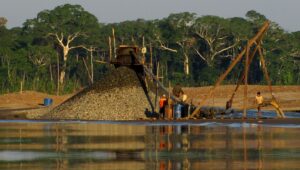
For our last country-specific presentation, Humberto Balbuena, Director of Policy and Environmental Governance at Conservación Amazónica – ACCA, offered a look at important conservation and governance efforts in Peru. Humberto identified a few main hurdles to conservation faced by governance objectives. 1) Increase in agricultural activity in forested areas that have potential for greater sustainably productive practices. 2) Expansion of illegal mining activities. 3) A decrease in state presence to effectively combat environmental crimes. 4) Delays in the process of institutionality in the forest sector. Humberto highlights these obstacles as a reminder that the fight to protect the Amazon has to be won not only on-the-ground in the forest, but also within policy and legal frameworks. By using monitoring systems and near real time reports, policy makers and legal actors are better equipped to take justified and informed stands against illegal activity in the Amazon.


Q & A

Carmen Josse moderated our Q & A session in which attendees could pose questions to each or all of the speakers. One question pur to Dr. Matt Finer was, “What is the impact of Indigenous Territories and Protected Areas on fires and deforestation?” To which he responded and showed on maaproject.org, “…pretty remarkably we can clearly see that the best protections against the Amazon continue to be Indigenous Territories and Protected Areas. You can almost draw a map of these two classifications based on where the fires are not.”

Closing Remarks

Carlos Nobre provided some profound statements on the urgency of protecting the Amazon when issuing his closing remarks, especially, “We know very well that the Amazon is near its tipping point. Fires, deforestation and climate change are synergistic obstacles which make each other more difficult to combat. The saving grace of the Amazon is its incredible ability to recycle water throughout its ecosystems. Without urgent action, this land use change that we are seeing become the trend, could take away that ability from the Amazon and see it turned into what would be more closely related to a dry savannah.”

To view the full question and answer session and watch the entire presentation, click here.