 April is not just a time for spring blossoms and warmer weather—it’s also Earth Month, a time to reflect on our planet’s incredible biodiversity and the urgent need to protect it. The Amazon’s rich biodiversity and all that depend on it – including local families, wildlife, and the world’s ability to regulate climate change – are under threat from a variety of drivers, one of the most significant being nature crimes. These illegal activities, ranging from illegal wildlife trafficking to deforestation, not only pose a severe threat to the overall forest cover of the Amazon and ecosystems worldwide but also undermine the conservation efforts and progress that have taken decades to put in place.
As we delve into Earth Month, we want to highlight how combating these nature crimes is essential for safeguarding biodiversity and how our working as a founding member of the recently-established Nature Crime Alliance is a crucial next step in protecting biodiversity across the Amazon.
Deforestation: A Global Challenge
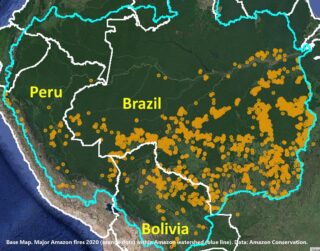
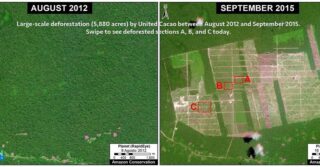
Some of the leading drivers of deforestation in the Amazon are criminal forms of logging, mining, fishing, wildlife trade, and land conversion. These nature crimes frequently converge with each other and other forms of international criminal activity.
The region’s forests are biodiversity hotspots, teeming with life found nowhere else. However, rampant deforestation threatens this biodiversity, pushing species to the brink of extinction.
Combating deforestation requires a multifaceted approach since local law enforcement and environmental agencies responsible for addressing nature crimes are often underfunded, understaffed, overworked, and exacerbated by how commonplace corruption is. With this myriad of challenges in fighting illegal activities, joint efforts between civil society organizations, local communities, and governments are crucial to effectively combat the alarmingly increasing rates of illegal deforestation and nature crimes through real-time satellite monitoring, swift action on the ground, and reinforcing local land and territorial rights.
Through our Monitoring of the Andean Amazon Program and our integral role with the Nature Crime Alliance, we are working alongside local families, Indigenous communities, and regional governmental agencies to quickly identify and halt harmful economic activities that contribute to deforestation, offering a path toward both climate action and biodiversity preservation.
 The Price of Biodiversity Loss
Biodiversity is the foundation of all healthy ecosystems. It encompasses all living organisms from microscopic bacteria to towering trees — each of which plays a vital role in maintaining ecological balance. When biodiversity is lost, ecosystems become vulnerable. This vulnerability extends to the well-being of humans, impacting our food security, water quality, and resilience to natural disasters.
Nature crimes drastically affect biodiversity loss by directly targeting unique species and key habitats. Poaching, for example, decimates populations of iconic species like the jaguar, Andean bear, and tropical birds. Deforestation, often driven by illegal logging, destroys the homes of countless plant and animal species. These crimes don’t just harm wildlife; they disrupt entire ecosystems, leading to a domino effect of environmental degradation.
The Link to Climate Change
Beyond the immediate loss of species and habitats, nature crimes have broader implications, including their contribution to climate change. Deforestation, for instance, not only destroys biodiversity-rich ecosystems but also releases stored carbon into the atmosphere, intensifying the effects of global warming.
 Unchecked agricultural activities can also speed up the destruction of critical ecosystems, as experienced by communities in the Andean Highlands when over-grazing for wild alpacas and vicuñas destroyed a vulnerable wetland ecosystem. Preserving forests and other natural habitats is a vital strategy for mitigating climate change and protecting biodiversity simultaneously.
Individual Actions for Collective Impact
While these challenges may seem daunting, individuals can make a difference! Making a donation to Amazon Conservation’s sustainable conservation efforts and joining our Wild Keepers community of monthly givers are tangible ways to make an impact this Earth Month.
As we celebrate Earth Month, let’s remember that protecting biodiversity is not just an ecological issue; it’s a human imperative. Combating nature crimes, whether through tackling illegal wildlife trade, stopping illegal gold mining, or preserving forests, is fundamental to this mission. By safeguarding biodiversity, we not only protect the incredible variety of life on Earth but also secure a healthier, more resilient future for generations to come. This Earth Month, let’s stand together as stewards of the Amazon and of our planet, committed to halting nature crimes and to preserving the rainforest’s precious biodiversity for all.
Your contribution this Earth Month helps protect biodiversity across the Amazon

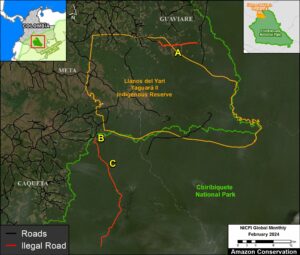 Primary forests in the Colombian Amazon are at risk from a variety of drivers such as illegal roads, which expose them to further threats of deforestation due to cattle pastures, land grabbing, and coca production. These illegal roads threaten protected areas, national parks, and Indigenous territories (referred to as Resguardos in Colombia).
 This month, we continue to celebrate Earth Month by honoring nature and all of the unique biodiversity and resources that the Amazon offers us.
  As an integral part of our work to prioritize a forest-based economy across the region, sustainable production also means empowering local producers and families by providing the capacity, tools, and infrastructure that support a sustainable forest-based economy, higher and more stable income, safer harvesting conditions, and improved well-being for local families. As we expand this successful economic model to more communities across the Bolivian Amazon, we have simultaneously supported the growth of local producer associations and their resilience to the impacts of climate change by helping develop local platforms like the
  Over the next decade, Amazon Conservation aims to create a true forest-based, climate-resilient economy across 37 million acres of the Amazon by strengthening local communities to fully benefit from the sustainable production of forest-friendly products provided by these rich forests.
  Last year, in collaboration with the organization






 Our Bolivian sister organization
 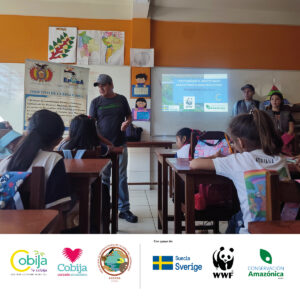 The workshop carried out by the Cobjija Municipal Environmental Brigade and EPSAS aimed at educating these young students to understand where their water comes from, the value of the ANGICAB protected area, and impactful changes they can implement in their daily routine to save water in their homes. The following topics were also covered during this workshop:
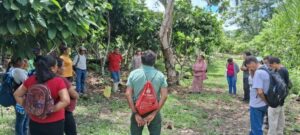 Our Peruvian sister organization
 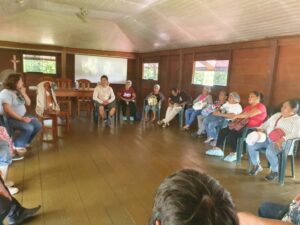 The Agroforestry Association of the Infierno Native Community has 21 hectares (about 52 acres) of agroforestry systems dedicated to the cultivation of cacao, in addition to having a processing plant with the capacity to process 19 thousand kilos (41,888 pounds) of cacao pulp per month. Partnering with the Agrobosque Cooperative would help provide them with technical support in the post-harvest processes, delivery of quality cacao, and the opportunity to obtain and maintain organic certification for crops associated with their agroforestry systems. Additionally, this exchange of experiences helped them open doors to jointly participate in various trade promotion activities and business conferences at the national level.
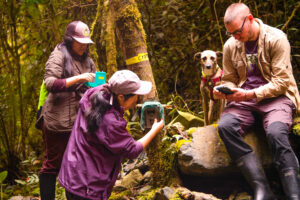 In addition to GPS tracking technologies, camera traps placed throughout the region capture images of the bears in their natural environment, providing vital information about their behavior and distribution. Through these monitoring efforts, our grounds team has recorded 43 medium to large-sized bears in more than 70,000 camera trap images throughout the studied area. As scientists continue their analysis of the Andean bear population, the exact total number of bears in the area is still unknown.
 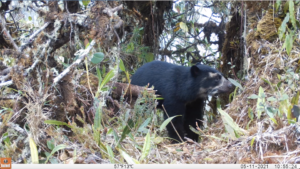 With the collection of this data, scientists can better understand these bears’ needs, habits, and impacts on the environment to fully understand their role in conservation, and allow organizations to prioritize the protection and restoration of their habitat accordingly. As an extension of this collaborative research, environmental education programs, and implementing sustainable conservation practices further prioritize this work to reduce human-bear conflicts and foster peaceful coexistence.
  In a series of previous reports such as
  Loading...